
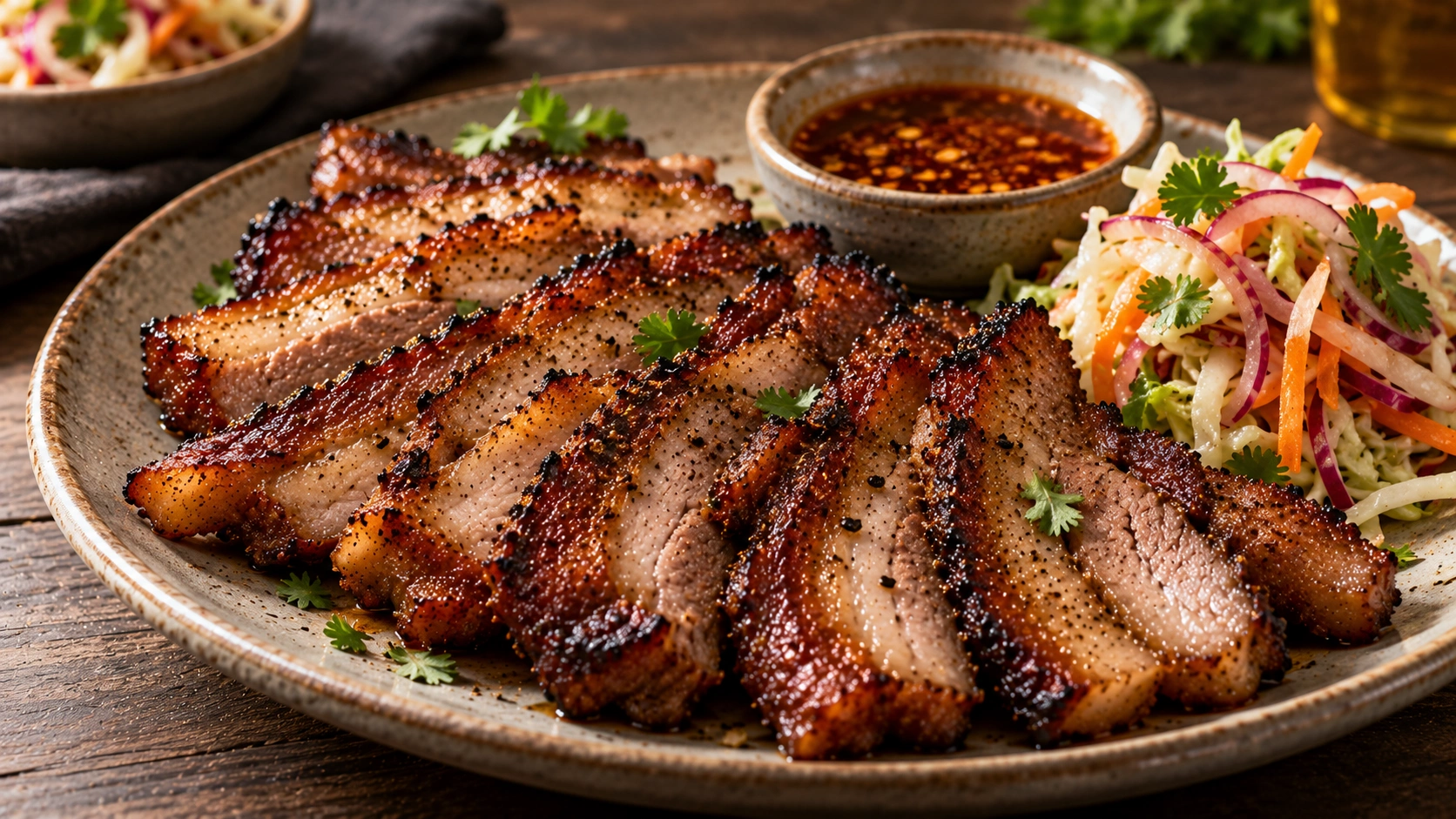
Pork jowl is one of those cuts that can surprise you the first time you cook it.
It comes from the cheek area of the pig and has a very high fat content with plenty of connective tissue. Cook it the right way, and that richness becomes the best part of the dish rather than a problem.
I went through the three recipes you shared and compared their cooking methods, ingredients, timing, and serving ideas. They take very different approaches: one braises the jowl until tender and then crisps it, one uses it in a rich Italian-style braise, and the Thai version marinates and grills it quickly.
That makes pork jowl recipes especially interesting. The same cut can become meltingly tender, deeply browned, or smoky and juicy depending on how you cook it.
For a US home kitchen, I’m focusing this article on the techniques that are easiest to reproduce, while also explaining when grilling, braising, or crisping makes the most sense.
What Is Pork Jowl?
Pork jowl is the fatty cut located around the pig’s cheek and jaw area.
It is different from pork belly and different from pork cheek. Pork jowl has a particularly high fat content, which is why it can become incredibly rich when cooked.
That fat is also what makes the cut so useful for grilling. The Thai recipe you shared specifically points out that the fat running through the jowl helps keep it flavorful and juicy over the grill.
You may also see cured pork jowl sold as guanciale. That’s a different preparation from fresh pork jowl and is commonly used in Italian cooking, including dishes such as amatriciana.
For the recipes here, we’re talking about fresh, uncured pork jowl.
Why Pork Jowl Is Worth Cooking
The main reason to try pork jowl recipes is texture.
This cut has enough fat to stay juicy, while the connective tissue benefits from slower cooking.
A braised jowl can become extremely tender before being browned or broiled to give the outside a crisp finish. Healthy Recipes Blog uses exactly this two-stage approach: braise first, then brown the sliced jowl under the broiler.
Grilling takes a completely different route.
The Thai method marinates the jowl for at least two hours and then grills it for roughly 4–5 minutes per side, depending on thickness and grill heat.
So instead of treating jowl like a lean pork chop, think of it as a rich, highly marbled cut that needs the right cooking method.
How Does Pork Jowl Taste?
Fresh pork jowl has a rich, savory pork flavor with noticeably more fat than many common pork cuts.
When braised, the texture becomes soft and almost melt-in-your-mouth.
When finished under high heat, the fat can become beautifully browned and crisp.
When grilled, the exterior develops smoky char while the interior stays juicy. The Thai version pairs that richness with a bright, spicy-sour dipping sauce to keep each bite from feeling too heavy.
Because the cut is so rich, you generally don’t need a huge serving.
Healthy Recipes Blog recommends small portions and notes that one jowl can be divided into several modest servings.
The Best Ways to Cook Pork Jowl
There isn’t one single cooking method that works for every piece of jowl.
Your choice should depend on whether you want crispy, tender, smoky, or intensely savory results.
Braising
Braising is a great choice when you want very tender meat.
The jowl cooks gently in a flavorful liquid until the connective tissue softens. Healthy Recipes Blog cooks fresh jowl at 300°F for about two hours, then slices and broils it to crisp the fat.
Grilling
Grilling is ideal when you want charred edges and a juicy center.
The Thai recipe marinates the jowl with garlic, lemongrass, cilantro, palm sugar, coconut milk, oyster sauce, and soy sauce before grilling.
Braise and Crisp
This may be the most useful technique for a home cook who wants both textures.
First, cook the jowl slowly until tender. Then slice it and finish it under a broiler, in the oven, or in a skillet until the fatty edges become browned and crisp.
That’s the approach behind one of the strongest examples among the sources you provided.
What Kind of Pork Jowl Should You Buy?
For these pork jowl recipes, look for fresh, uncured jowl.
Avoid automatically buying smoked or cured jowl unless the recipe specifically calls for it. Healthy Recipes Blog specifically recommends fresh jowl rather than smoked or cured for its braised version.
A good piece should have plenty of fat, but you don’t need to remove every bit of it.
The Thai recipe notes that some fat is useful because it helps keep the meat moist during grilling.
If the piece has a very thick layer of hard exterior fat or tough membrane, trim only what looks excessive.
Where to Buy Pork Jowl
Pork jowl can be harder to find than pork shoulder, pork belly, or pork chops.
Healthy Recipes Blog notes that it may not be readily available even at larger grocery stores and may need to be special-ordered or purchased online.
For US shoppers, try:
- A local butcher shop
- Asian grocery stores with a meat counter
- Specialty meat markets
- Online meat suppliers
- A supermarket butcher counter that accepts special orders
If you’re ordering from a butcher, ask specifically for fresh pork jowl, not cured guanciale.
Ingredients for a Simple Braised Pork Jowl
For the main braised version, the ingredient list stays fairly short.
- 1½ lb fresh pork jowl
- 1 tsp kosher salt
- ½ tsp black pepper
- 1 cup chicken broth
- 2 tbsp apple cider vinegar
- 1 tbsp hot pepper sauce
- ½ tsp smoked paprika
- ½ tsp garlic powder
- ½ tsp dried thyme
This flavor combination follows the braising approach in the Healthy Recipes Blog recipe, which uses broth, apple cider vinegar, hot pepper sauce, smoked paprika, garlic powder, and thyme.
The vinegar and hot sauce are especially useful because they give the rich pork some acidity and heat.
Ingredient Substitutions
You don’t need to make a special grocery trip for every ingredient.
Chicken broth: Beef or vegetable broth can work, although chicken broth keeps the flavor lighter.
Apple cider vinegar: Rice vinegar or white wine vinegar can be used for acidity.
Hot pepper sauce: Use your favorite vinegar-based hot sauce.
Smoked paprika: Regular paprika works if you don’t want a smoky flavor.
Fresh jowl: Don’t substitute cured guanciale in this braising method. They are different products and behave differently during cooking.
How Much Pork Jowl Should You Serve?
This is one place where portion size matters.
Pork jowl is exceptionally rich, so a small serving can be satisfying.
For the braised version, 1½ pounds of jowl can serve about six people in small portions, which is consistent with the recipe provided by Healthy Recipes Blog.
If you’re serving it as the main protein with several sides, plan around the richness of the meat rather than treating it like a lean pork roast.
A Few Important Cooking Tips
When making pork jowl recipes, the biggest thing to remember is that fat is both the advantage and the challenge.
Don’t try to remove all of it before cooking.
Instead, use a method that gives the fat time to render and the connective tissue time to soften.
For grilled jowl, slice the finished meat thinly and across the grain. The Thai recipe specifically emphasizes this because thicker pieces or slicing with the grain can make the meat feel chewy.
For braised jowl, don’t rush the first stage. The meat should be genuinely tender before you move on to crisping or slicing.
And if you’re using the broiler, stay close to the oven. Fat can splatter and the slices can brown quickly. Healthy Recipes Blog notes that baking or pan-frying are alternatives if you want to avoid broiler splattering.
Which Cooking Style Should You Choose?
| If You Want… | Choose |
|---|---|
| Very tender meat | Braising |
| Crispy browned fat | Braise + broil |
| Smoky char | Grilling |
| Thai-style flavors | Grilling + nam jim jaew |
| Italian-inspired flavor | Tomato-based braise |
| Easy weeknight preparation | Oven braise |
The important takeaway from the recipes you provided is that pork jowl isn’t limited to one style of cooking. Food Network’s version takes a more elaborate braising route and finishes sliced jowl in a cast-iron pan, while the Thai recipe treats it as a fast-grilling cut.
That range is exactly what makes the ingredient worth experimenting with.
How to Make Pork Jowl Recipes
For the main method, we’re using the braise-then-crisp technique because it solves the two biggest challenges with fresh pork jowl: the connective tissue needs time to soften, while the rich fat benefits from high heat at the end.
This approach is closely supported by the braised-and-crisped method from Healthy Recipes Blog.
Cooking Timeline
- 10 minutes: Season and prepare the jowl
- 5 minutes: Mix the braising liquid
- 2 hours: Covered braise at 300°F
- 10 minutes: Slice and prepare for broiling
- 4–6 minutes: Broil until browned and crisp
- 5 minutes: Rest and serve
Step 1: Prepare the Pork Jowl
Preheat your oven to 300°F.
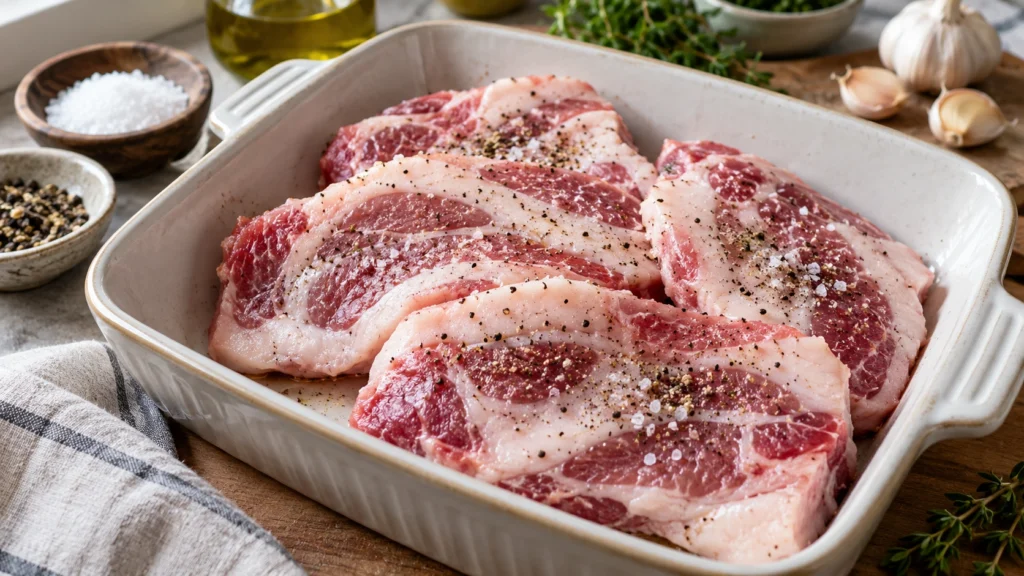
Place the fresh pork jowl in a rimmed baking dish and season it with kosher salt and black pepper.
Make sure you’re using fresh, uncured pork jowl for this method. Cured guanciale is a different product and should not be treated the same way.
Step 2: Mix the Braising Liquid
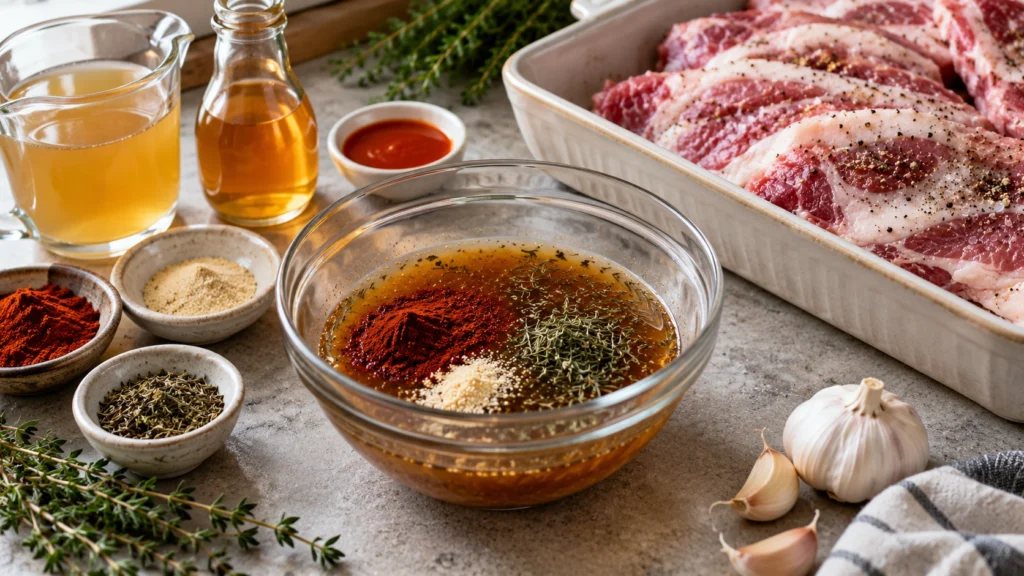
Combine the chicken broth, apple cider vinegar, hot pepper sauce, smoked paprika, garlic powder, and dried thyme.
Pour the mixture around the pork jowl in the baking dish.
The vinegar and hot sauce bring acidity and heat to a very rich cut, while the broth provides enough moisture for the slow braise. This combination follows the tested ingredient approach from Healthy Recipes Blog.
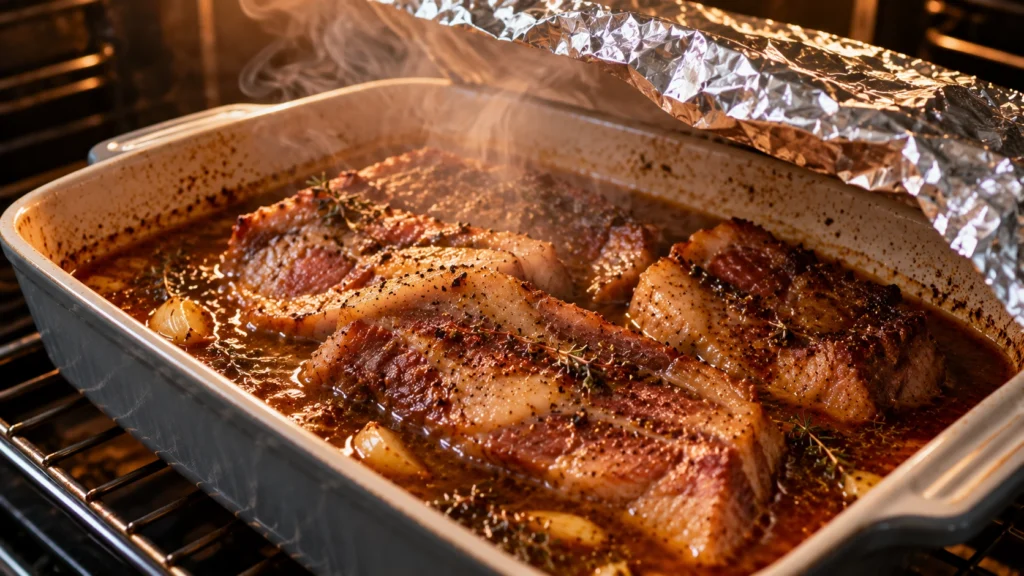
Step 3: Cover and Braise
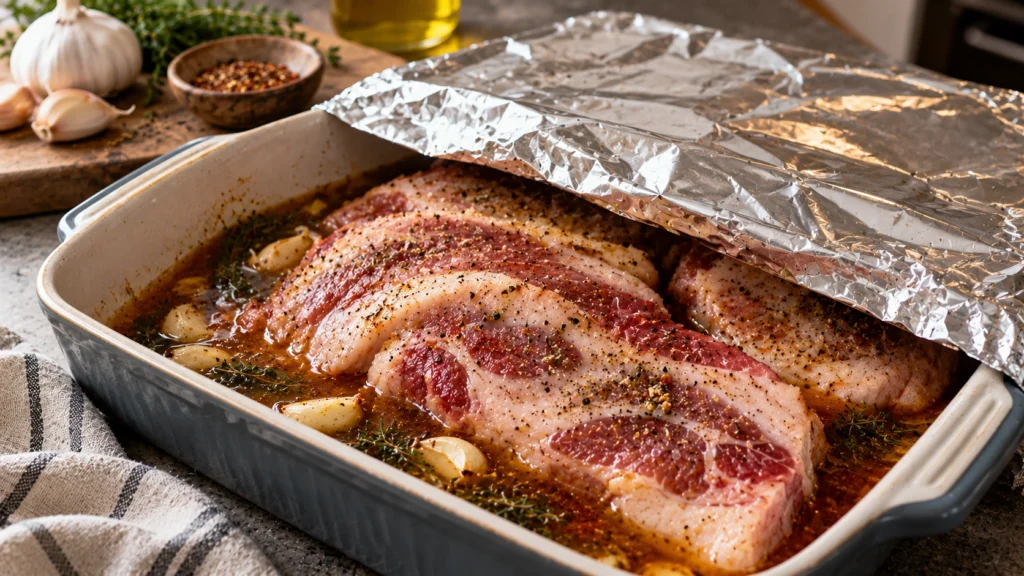
Cover the baking dish very tightly with foil.
A tight seal is important because you want the jowl to braise rather than dry out during the long cooking time.
Bake for approximately 2 hours, or until the pork is very tender.
The exact time can vary slightly depending on the thickness of the jowl.
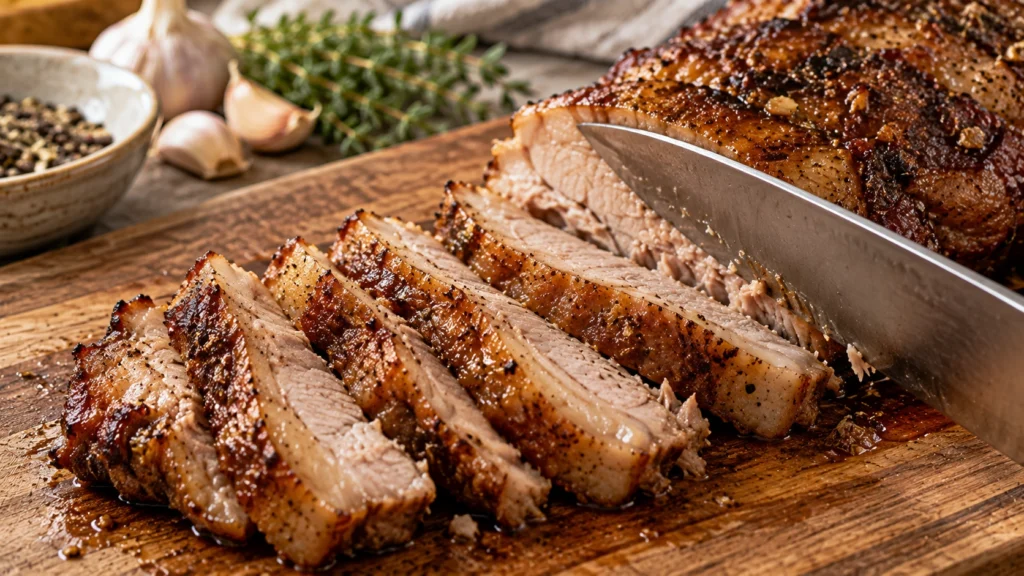
Step 4: Slice the Cooked Jowl
Carefully remove the foil because hot steam will escape.
Transfer the tender pork to a cutting board and let it sit briefly so it’s easier to handle.
Using a sharp knife, slice the jowl into pieces about ½ inch thick.
Step 5: Crisp the Pork
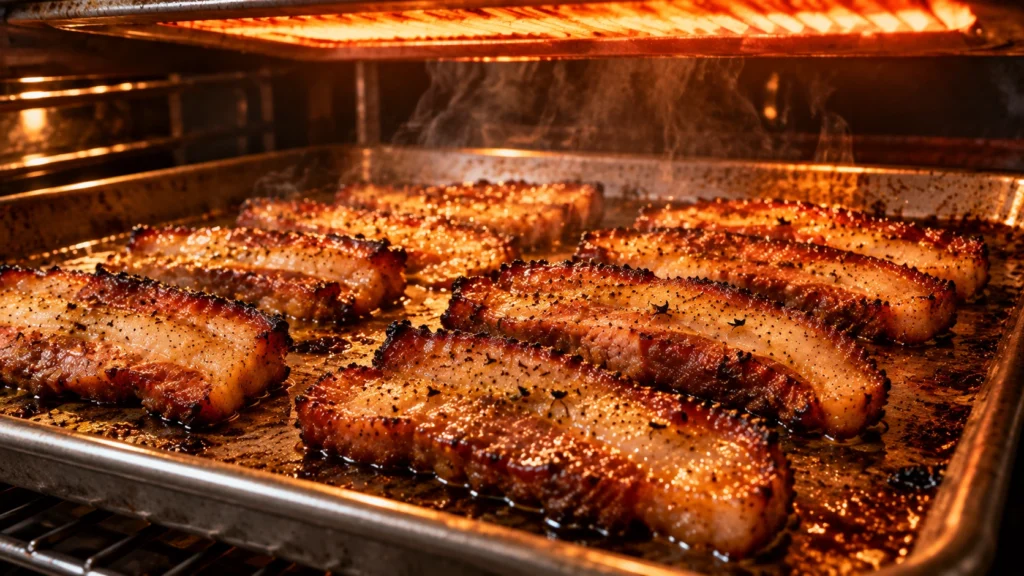
Switch the oven to broil and position the oven rack about 6 inches below the broiler.
Arrange the pork slices in a single layer on a broiler-safe baking sheet.
Broil for about 2–3 minutes per side, watching closely, until the fat is browned and crisp.
Because pork jowl contains a lot of fat, some splattering is normal. Baking or pan-frying the slices is an alternative if you’d rather avoid broiler splatter.
Step 6: Let It Rest
Remove the crispy slices from the broiler and let them rest for a few minutes.
Don’t cover them tightly while resting, or the trapped steam can soften the crisp exterior.
Step 7: Slice and Serve
Serve the pork while it’s still warm and crisp.
For a simple American-style plate, pair it with mashed cauliflower, sweet potatoes, roasted vegetables, or eggs.
For another direction, thinly slice the pork and use it in sandwiches, wraps, rice bowls, or breakfast plates.
Step 8: Finish With Something Fresh
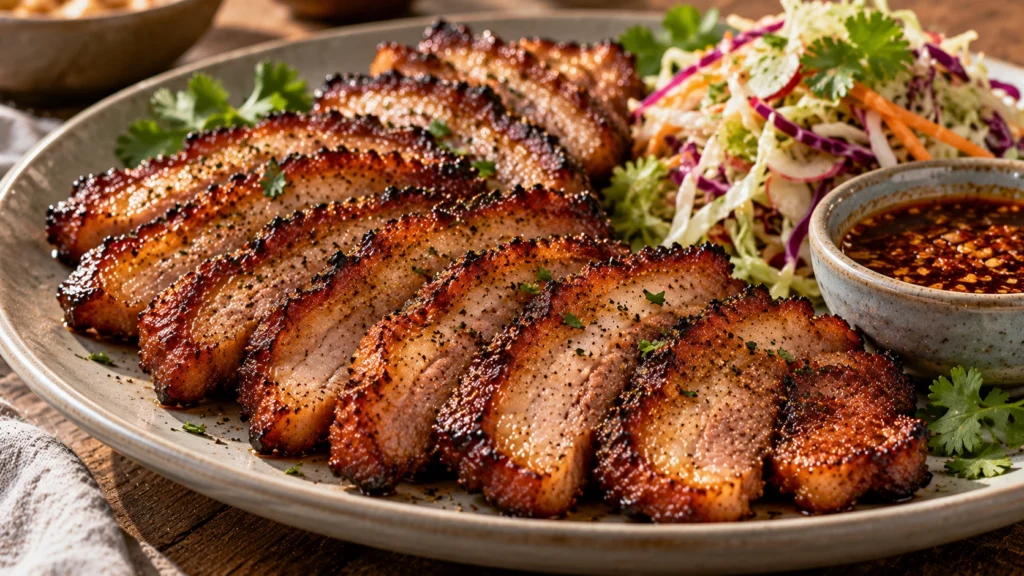
Because pork jowl is such a rich cut, a bright or acidic side works particularly well.
Pickled vegetables, a crisp salad, vinegar-based slaw, or a spicy dipping sauce can cut through the richness.
If you want to take the dish in a Thai direction, nam jim jaew is a natural pairing. Hot Thai Kitchen serves grilled pork jowl with this spicy, sour, sweet dipping sauce and sticky rice.
What to Serve With Pork Jowl
The best side depends on how you’re cooking the jowl.
For the braised version, creamy or roasted vegetables work particularly well because they don’t compete with the rich pork.
For grilled pork jowl, sticky rice and a bright dipping sauce are a classic Thai-style combination.
Some easy options include:
- Mashed cauliflower
- Mashed sweet potatoes
- Roasted Brussels sprouts
- Green beans
- Steamed rice
- Sticky rice
- Vinegar-based slaw
- Simple green salad
- Fried eggs
Expert Tips for Better Results
The most important thing with pork jowl recipes is to work with the cut rather than against it.
Use fresh jowl. Cured jowl and guanciale require different cooking methods.
Don’t trim away all the fat. The fat helps keep the meat juicy, especially when grilling. Hot Thai Kitchen recommends leaving some fat attached even when trimming a particularly fatty piece.
Seal the braising dish tightly. This keeps the moisture where you need it.
Don’t skip the crisping stage. The contrast between tender meat and browned fat is what makes the braised version special.
Watch the broiler. The fat can brown quickly once the slices are close to the heat.
Serve small portions. This is an exceptionally rich cut, and the Healthy Recipes Blog recipe recommends about two strips per person.
Common Mistakes to Avoid
Treating Jowl Like a Lean Pork Chop
Fresh jowl has much more fat and connective tissue. Give it the right cooking method instead of simply pan-searing a thick piece.
Removing Too Much Fat
Some trimming is fine, but removing nearly all the fat defeats one of the reasons this cut stays juicy.
Slicing It Too Thick
Thick pieces can feel overly chewy. If grilling, thin slicing is particularly important. Hot Thai Kitchen recommends slicing grilled jowl thinly and across the grain.
Overcrowding the Grill or Pan
Give the pieces room to brown. Food Network’s braised preparation also emphasizes cooking only a few slices at a time so they have enough space to caramelize properly.
Skipping the Acid
A rich cut benefits from something acidic. Vinegar in the braising liquid or a tart dipping sauce keeps the finished dish from tasting flat.
Recipe Variations
Thai Grilled Pork Jowl
For a completely different take on pork jowl recipes, marinate the jowl with garlic, lemongrass, cilantro stems, palm sugar, coconut milk, oyster sauce, and soy sauce.
Hot Thai Kitchen grills the marinated jowl for about 4–5 minutes per side, depending on thickness and grill heat, and recommends cooking pork to 145°F internal temperature.
Slice it thinly across the grain and serve with nam jim jaew and sticky rice.
Italian-Inspired Pork Jowl
Food Network’s all’Amatriciana preparation takes a more elaborate route, simmering whole jowls until fork-tender before slicing and crisping them in a cast-iron pan.
The crispy slices are served with an amatriciana sauce made from tomatoes, pancetta, red pepper flakes, garlic, Pecorino, and parsley.
Crispy Oven Jowl
If you have a particularly fatty jowl, you can skip the long braise and cook sliced pieces directly in the oven until browned.
Healthy Recipes Blog notes that this approach can work when the jowl is mostly fat.
Storage and Reheating
Store leftover pork jowl recipes in an airtight container in the refrigerator for up to 4 days.
For the best texture, reheat the slices in the oven, air fryer, or skillet rather than using high microwave heat.
If using a microwave, lower the power and heat in short intervals to reduce splattering. Healthy Recipes Blog specifically recommends 50% microwave power for reheating its braised jowl.
The pork can also be eaten cold, especially when sliced thinly and added to sandwiches or salads.
Nutrition Information
Pork jowl is an unusually fatty cut, so nutrition can vary significantly depending on the exact piece and how much fat is rendered during cooking.
As a reference, Healthy Recipes Blog lists approximately 340 calories per 2-ounce serving, with about 36g of fat and 3g of protein. The source notes that its nutrition estimate was based on commercial pork jowl bacon and may not be completely accurate for fresh jowl.
For that reason, nutrition should be treated as an estimate rather than an exact number.
Frequently Asked Questions
Is pork jowl the same as pork cheek?
No. They come from nearby areas but aren’t the same cut.
Pork jowl is located around the chin and behind the jaw and is generally much fattier than pork cheek.
Is pork jowl the same as pork belly?
No. Pork belly comes from the belly area, while jowl comes from the facial/jaw area.
Both are fatty cuts, but jowl can be considerably richer.
What temperature should grilled pork jowl reach?
For the Thai grilled preparation, Hot Thai Kitchen recommends approximately 145°F internal temperature, followed by a short rest.
Where can I buy fresh pork jowl?
It can be difficult to find in standard grocery stores. A butcher shop, specialty meat market, Asian grocery store, or online meat supplier may be more reliable options.
Can I use pork jowl for breakfast?
Yes. Thin slices can be served alongside eggs in place of bacon.
The rich flavor also works well chopped into rice, vegetables, sandwiches, and wraps.
Final Thoughts
The best pork jowl recipes don’t try to hide how rich this cut is.
Instead, they use that richness to create tender meat, crisp browned edges, or juicy grilled slices.
If you’re cooking it for the first time, the braise-and-crisp method is a good place to start because the slow cooking softens the meat before the final high heat gives the outside some texture.
Once you’re comfortable with the cut, try the Thai grilling method or an Italian-inspired tomato braise. Each approach brings out something different in the same piece of pork.
The key is simple: cook it with patience, brown it properly, slice it thoughtfully, and balance its richness with something fresh or acidic.

Pork Jowl Recipes
Ingredients
Equipment
Method
- Preheat the oven to 300°F. Place the fresh pork jowl in a baking dish and season it with kosher salt and black pepper.
- Combine the chicken broth, apple cider vinegar, hot pepper sauce, smoked paprika, garlic powder, and dried thyme. Pour the mixture around the pork jowl.
- Cover the baking dish tightly with foil. Bake for about 2 hours, or until the pork is very tender.
- Carefully remove the pork from the hot baking dish and transfer it to a cutting board. Let it cool briefly, then slice it into pieces about ½ inch thick.
- Arrange the slices in a single layer on a broiler-safe baking sheet. Place them about 6 inches below the broiler and cook for 2–3 minutes per side, watching closely, until browned and crisp.
- Remove the pork from the broiler and let it rest for a few minutes. Serve warm with your favorite sides or dipping sauce.
