
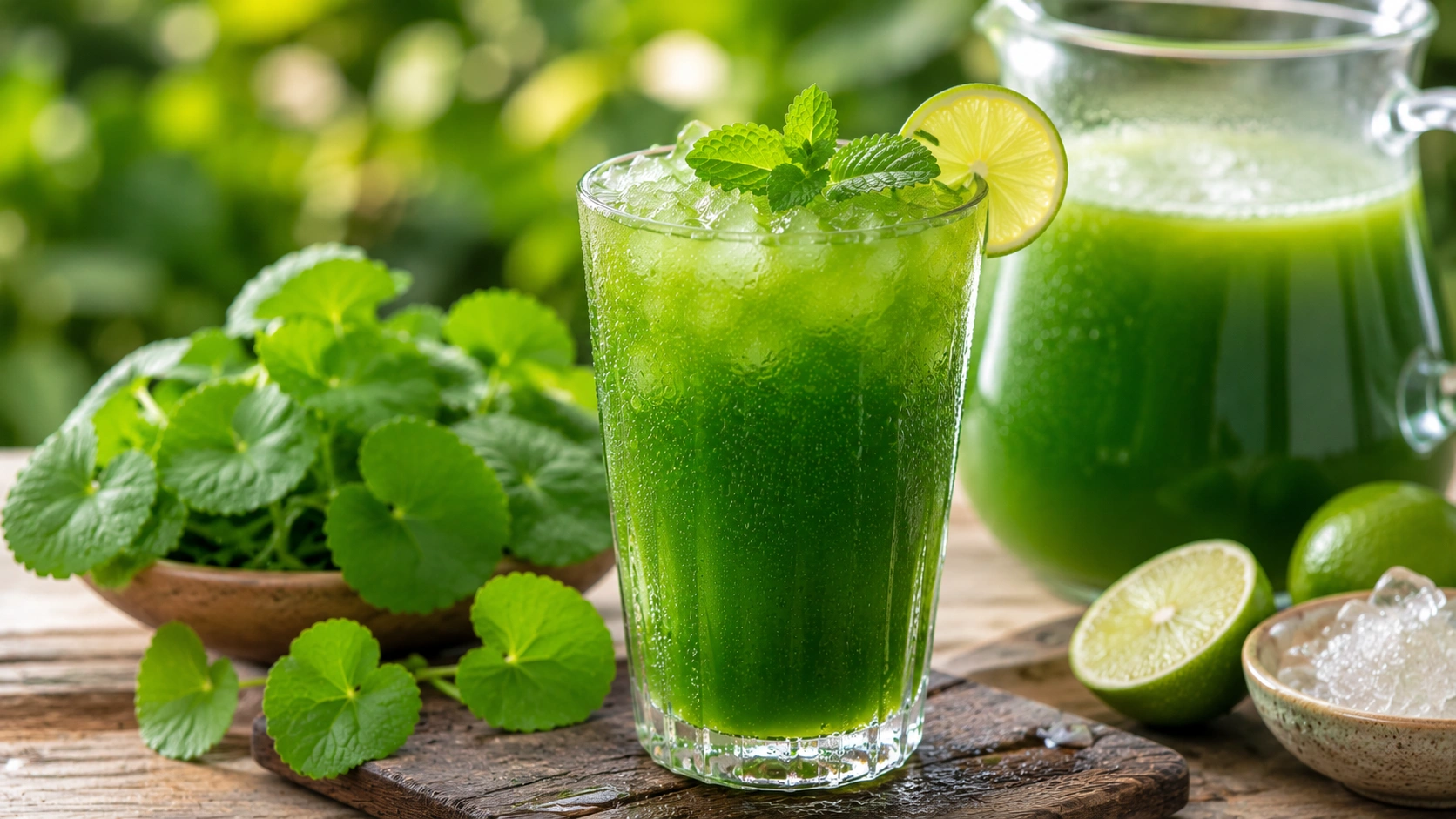
The first time I visited a Vietnamese café during a hot summer afternoon, I noticed nearly every table had a tall glass of bright green juice instead of soda or iced tea.
Curious, I ordered one.
The drink arrived ice cold with a vibrant green color that immediately stood out. After the first sip, I understood why it was so popular. It tasted incredibly fresh, lightly herbal, naturally earthy, and surprisingly refreshing without being overly sweet.
That drink was Rau Ma, also known as Vietnamese pennywort juice.
Unlike sugary bottled beverages, Rau Ma offers a clean, refreshing flavor that’s both simple and satisfying. It’s made by blending fresh pennywort leaves with water, then straining and lightly sweetening the juice before serving over plenty of ice.
After making it at home several times, I discovered that the secret isn’t adding more ingredients. It’s using fresh pennywort, blending it thoroughly, and balancing the natural herbal flavor with just the right amount of sweetness.
This Rau Ma Recipe recreates the authentic Vietnamese drink using fresh ingredients and easy techniques, making it perfect for warm afternoons, healthy breakfasts, or whenever you need a naturally refreshing beverage.
What Is Rau Ma?
Rau Ma is a traditional Vietnamese herbal drink made from fresh pennywort leaves, water, and a small amount of sugar.
Pennywort is a leafy green herb widely enjoyed throughout Vietnam and other parts of Southeast Asia. The leaves are blended with water until smooth, then strained to create a refreshing green juice that’s served chilled over ice.
Unlike smoothies, Rau Ma has a thinner consistency and a clean, refreshing finish. Some modern variations include coconut water, pandan, mung beans, or fresh fruit, but the classic version remains incredibly simple.
One reason this Rau Ma Recipe has remained popular for generations is its refreshing taste and easy preparation.
Why You’ll Love This Rau Ma Recipe
This homemade version is simple, naturally refreshing, and much fresher than bottled alternatives.
Here’s why you’ll enjoy making it.
| Feature | Why It Matters |
|---|---|
| Authentic Vietnamese Flavor | Traditional preparation |
| Naturally Refreshing | Perfect for hot weather |
| Simple Ingredients | Easy grocery shopping |
| Quick to Make | Ready in minutes |
| Beautiful Green Color | Fresh presentation |
| Easy to Customize | Adjust sweetness to taste |
Whether you’re trying Vietnamese drinks for the first time or recreating a favorite café beverage, this recipe is an excellent place to start.
What Does Rau Ma Taste Like?
Many people expect Rau Ma to taste like spinach or kale.
It doesn’t.
Fresh pennywort has a mild herbal flavor with light grassy notes and a clean, slightly earthy finish. When blended with chilled water and lightly sweetened, the drink becomes refreshing rather than bitter.
The overall flavor is subtle, crisp, and cooling. It isn’t overly sweet or overpowering, making it an excellent alternative to sugary soft drinks.
That’s exactly why this Rau Ma Recipe continues to be one of Vietnam’s most popular homemade beverages.
Why Fresh Pennywort Makes All the Difference
The quality of the leaves has the biggest impact on the finished drink.
Fresh, vibrant leaves create brighter color and cleaner flavor.
| Fresh Pennywort | Older Leaves |
|---|---|
| Bright green color | Dull appearance |
| Mild herbal flavor | Slight bitterness |
| Fresh aroma | Weaker aroma |
| Better texture | More fibrous |
Whenever possible, choose crisp, bright green leaves without yellow spots or wilted stems.
Ingredients
The ingredient list couldn’t be much simpler.
Fresh ingredients allow the natural flavor of the pennywort to shine.
For the Juice
| Ingredient | Amount |
|---|---|
| Fresh Pennywort Leaves | 8 ounces |
| Cold Water | 3 cups |
| Granulated Sugar | 3 tablespoons |
| Ice Cubes | As needed |
Fresh pennywort is the star ingredient, so selecting high-quality leaves makes a noticeable difference.
Optional Garnishes
These additions aren’t traditional, but they make the drink even more refreshing.
| Ingredient | Amount |
|---|---|
| Lime Wedges | Optional |
| Fresh Mint Leaves | Optional |
| Crushed Ice | For serving |
A squeeze of fresh lime adds brightness without overpowering the herbal flavor.
How to Make Rau Ma Recipe
Although this drink is incredibly simple, a few techniques will help you achieve the smooth, refreshing texture found in Vietnamese cafés.
Step 1 – Wash the Pennywort Thoroughly
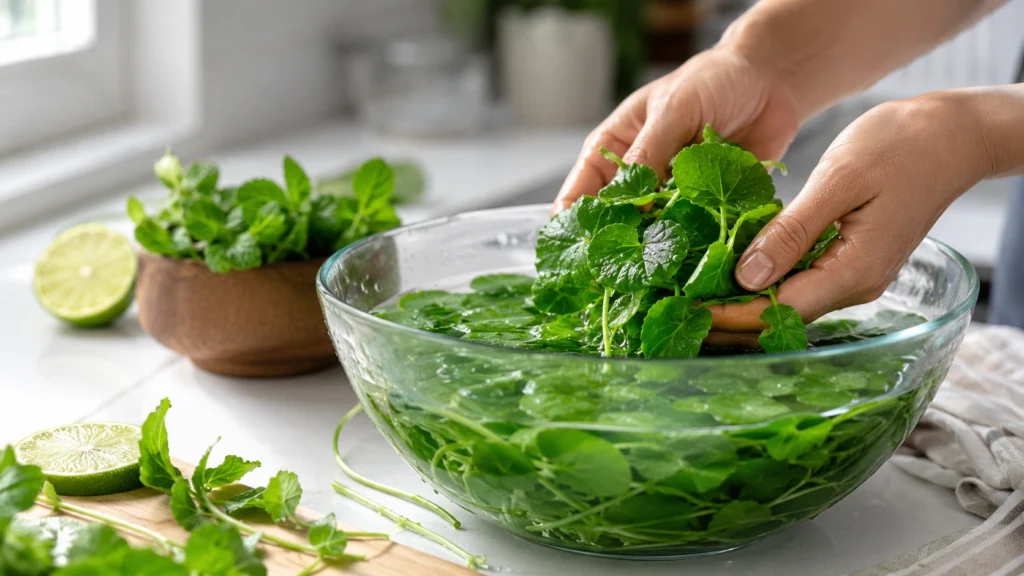
Place the pennywort leaves into a large bowl of cold water and gently swish them around to remove any dirt or grit.
Lift the leaves out of the water rather than pouring them through a strainer, allowing any sand to remain at the bottom of the bowl. Repeat this process two or three times until the water stays clear.
Finally, rinse the leaves under cool running water and drain well. Clean leaves are essential for producing a fresh-tasting drink without any unwanted grit.
Step 2 – Trim and Prepare the Leaves
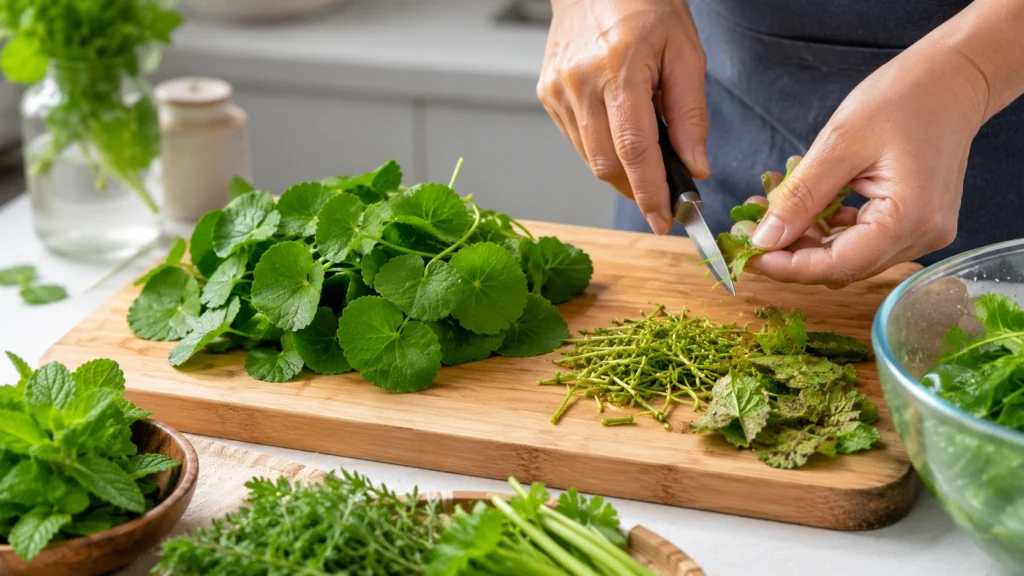
Remove any thick stems, damaged leaves, or yellow pieces before blending.
Although tender stems can be used, removing older, woody stems creates a smoother juice with a cleaner flavor. Roughly chop the leaves into smaller pieces if necessary to help them blend more easily.
Preparing the pennywort properly also reduces strain on the blender and produces a more even consistency.
Step 3 – Blend the Ingredients
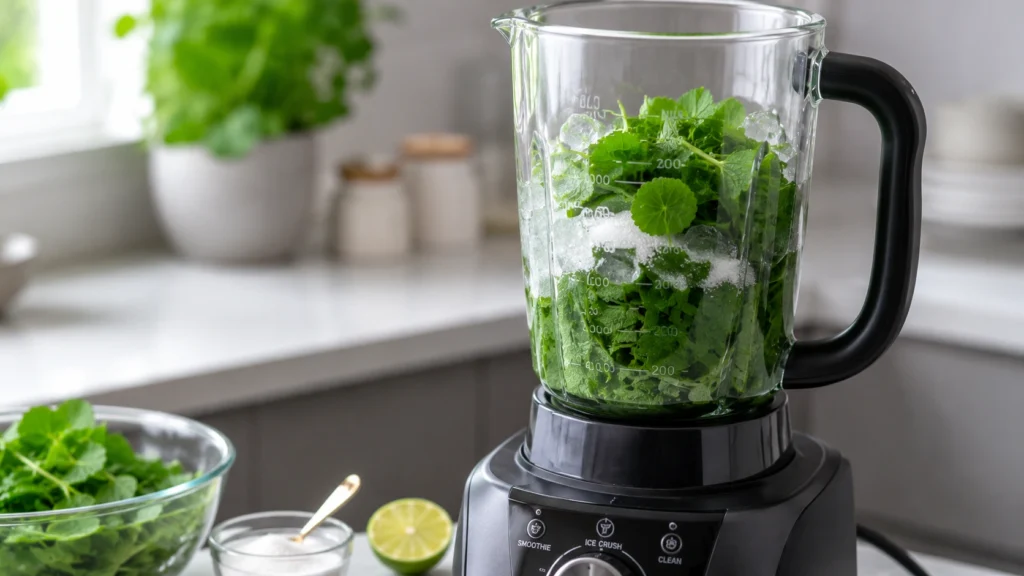
Add the cleaned pennywort leaves to a high-speed blender along with the cold water and granulated sugar.
Blend on high speed for 1 to 2 minutes until the leaves are completely broken down and the mixture becomes a smooth, vibrant green liquid.
Blending thoroughly extracts as much flavor and color as possible from the fresh herbs while creating the refreshing base for the drink.
Step 4 – Strain the Juice
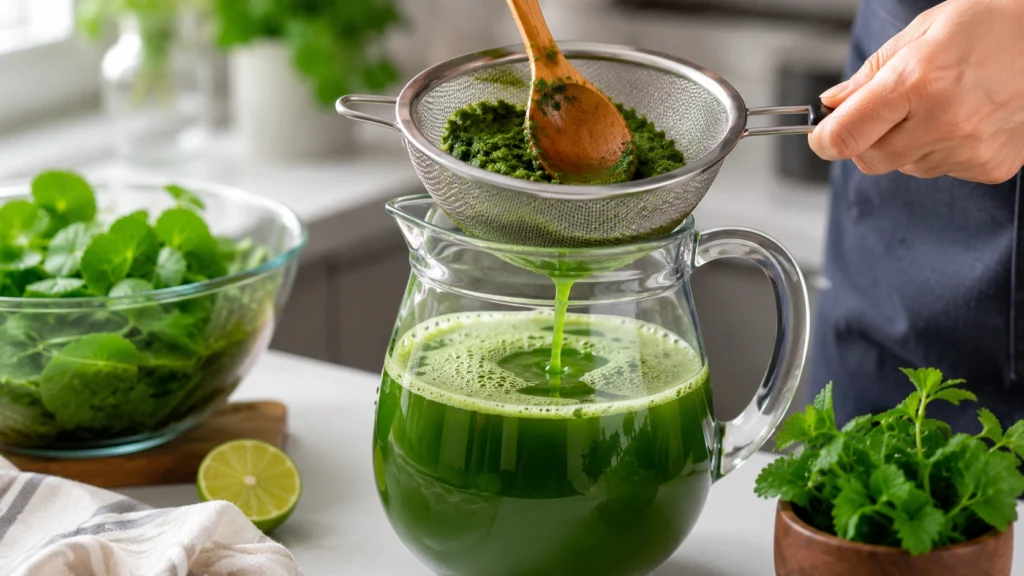
Place a fine-mesh sieve or cheesecloth over a large pitcher or bowl.
Slowly pour the blended mixture through the strainer, pressing gently with the back of a spoon to extract as much liquid as possible.
Discard the remaining pulp once most of the juice has been extracted. Straining gives Rau Ma its smooth, refreshing texture that’s characteristic of authentic Vietnamese cafés.
Step 5 – Taste and Adjust the Sweetness
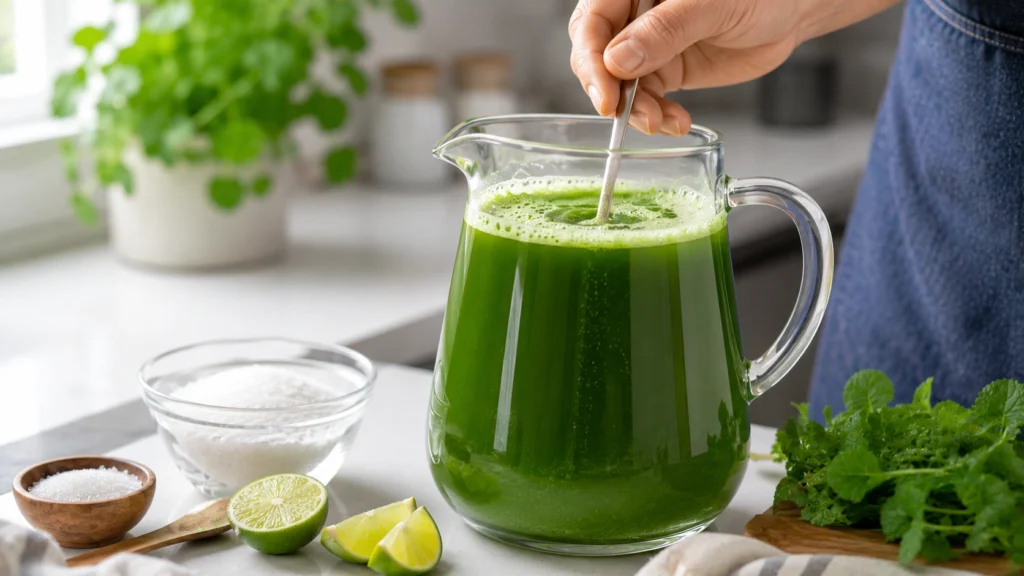
After straining the juice, taste it before serving.
If you prefer a sweeter drink, stir in an additional teaspoon or two of sugar until it dissolves completely. If the herbal flavor feels too strong, add a little more cold water to soften it without losing its refreshing character.
Taking a moment to adjust the sweetness ensures the drink matches your personal preference while keeping the authentic Vietnamese flavor intact.
Step 6 – Chill the Juice
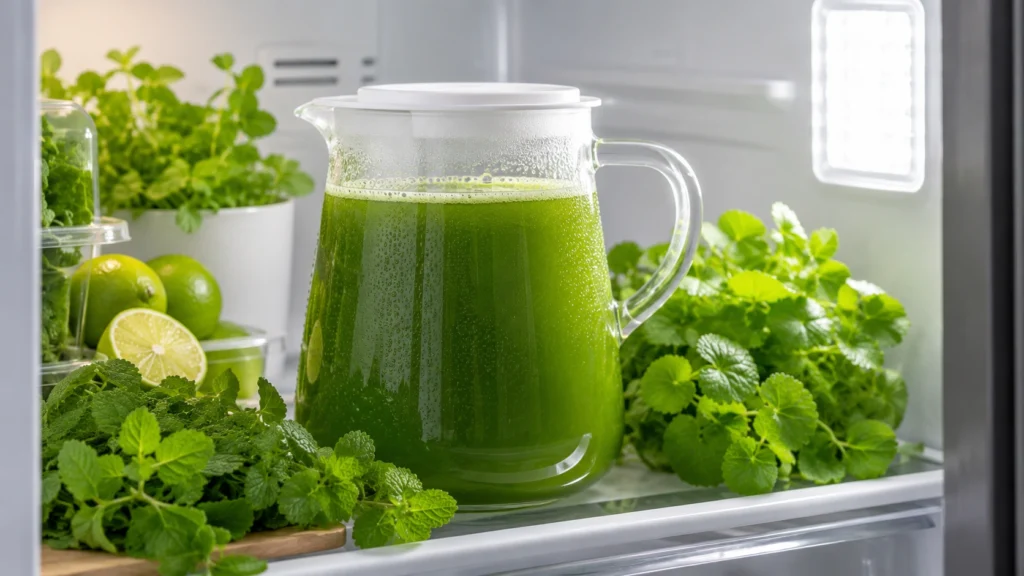
Transfer the strained juice to a pitcher and refrigerate for 30 to 60 minutes before serving.
Serving Rau Ma thoroughly chilled enhances its naturally refreshing taste and allows the flavors to blend together. Although you can drink it immediately, chilling it first creates a smoother and more enjoyable experience.
A cold pitcher of Rau Ma is especially refreshing on warm summer days.
Step 7 – Pour Over Ice
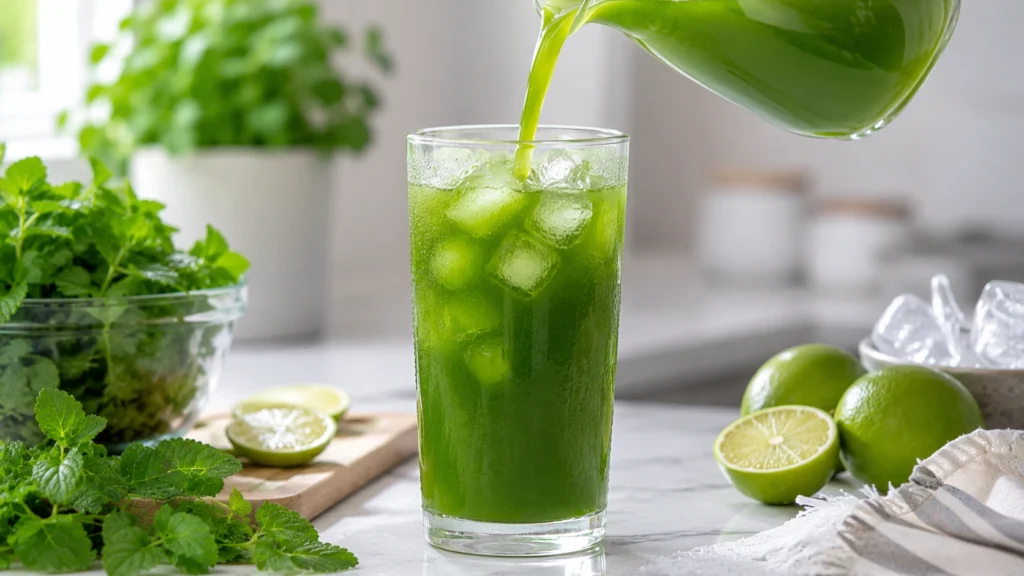
Fill tall serving glasses with plenty of ice cubes.
Slowly pour the chilled Rau Ma over the ice until each glass is nearly full. The ice keeps the drink crisp and refreshing without changing its beautiful vibrant green color.
For an even colder drink, use crushed ice instead of regular cubes.
Step 8 – Garnish and Serve
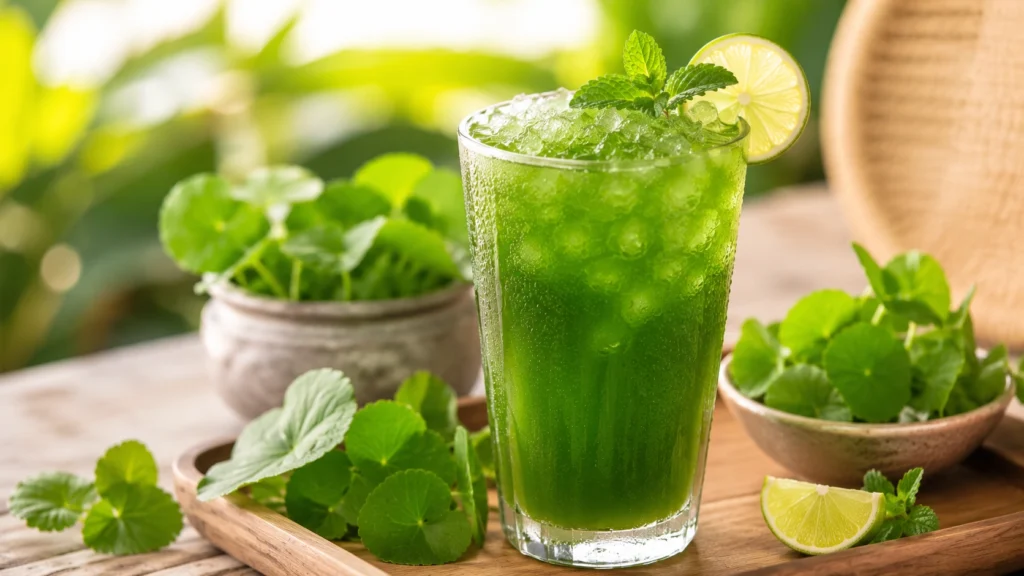
Garnish each glass with a fresh mint sprig or a small lime wedge if desired.
Serve immediately while the juice is cold and vibrant. The clean herbal aroma, refreshing flavor, and naturally bright green color make this drink both visually appealing and incredibly satisfying.
Enjoy it as a refreshing afternoon beverage, alongside light meals, or whenever you want a naturally cooling homemade drink.
What to Serve with Rau Ma
Rau Ma is light and refreshing, making it an excellent companion to many Vietnamese and Asian-inspired dishes.
| Dish | Why It Works |
|---|---|
| Vietnamese Spring Rolls | Fresh and light pairing |
| Bánh Mì Sandwich | Balances rich flavors |
| Grilled Chicken | Refreshing contrast |
| Fried Rice | Cleanses the palate |
| Rice Paper Rolls | Healthy combination |
| Shrimp Skewers | Light tropical meal |
| Fresh Fruit | Naturally refreshing |
| Sticky Rice Desserts | Mild sweetness balance |
Because Rau Ma isn’t overly sweet, it complements both savory and lightly sweet dishes.
Expert Tips for the Best Results
Making authentic Rau Ma is simple, but these small details improve both flavor and presentation.
| Tip | Benefit |
|---|---|
| Use Fresh Pennywort | Brightest flavor and color |
| Blend Thoroughly | Better juice extraction |
| Strain Twice | Extra smooth texture |
| Chill Before Serving | More refreshing taste |
| Serve Immediately | Best color and freshness |
Following these tips will help you recreate the fresh café-style drink at home.
Common Mistakes to Avoid
Although this recipe is beginner-friendly, avoiding these mistakes makes a noticeable difference.
| Mistake | Result |
|---|---|
| Using Wilted Leaves | Bitter flavor |
| Skipping the Straining | Pulp-heavy texture |
| Too Much Sugar | Overpowers herbal flavor |
| Warm Water | Less refreshing |
| Serving Without Chilling | Duller taste |
Fresh ingredients and proper chilling are the biggest keys to success.
Recipe Variations
Once you’ve mastered the traditional version, try these delicious variations.
| Variation | Change |
|---|---|
| Coconut Rau Ma | Replace part of the water with coconut water |
| Honey Version | Sweeten with honey instead of sugar |
| Lime Rau Ma | Add fresh lime juice |
| Pandan Rau Ma | Blend with pandan leaves |
| Mung Bean Rau Ma | Blend cooked mung beans for a creamier drink |
Each variation keeps the refreshing nature of the drink while introducing a new layer of flavor.
Storage
Fresh Rau Ma is best enjoyed the day it’s made, but leftovers can be stored safely.
| Storage Method | Time |
|---|---|
| Refrigerator | Up to 2 Days |
| Freezer | Not Recommended |
Store the juice in a sealed glass bottle or airtight pitcher. Shake or stir before serving, as natural separation may occur.
Nutrition Information
| Nutrient | Amount |
|---|---|
| Calories | 55 |
| Protein | 1g |
| Carbohydrates | 14g |
| Fat | 0g |
| Saturated Fat | 0g |
| Fiber | 1g |
| Sugar | 12g |
| Sodium | 15mg |
Nutrition values are approximate and may vary depending on the ingredients used.
Frequently Asked Questions
Rau Ma is made from fresh pennywort leaves, cold water, and sugar. The leaves are blended, strained, and served over ice to create a refreshing Vietnamese herbal drink.
Fresh pennywort is strongly recommended because it provides the bright green color, clean flavor, and refreshing aroma that define authentic Rau Ma. Dried leaves won’t produce the same taste or appearance.
Bitterness usually comes from older leaves or thick stems. Choose fresh, young pennywort leaves and avoid over-blending or using wilted herbs.
Yes. You can leave out the sugar entirely or substitute honey, maple syrup, or another preferred sweetener. Adjust the sweetness to suit your taste.
For the freshest flavor, enjoy it the same day. It can be refrigerated in an airtight container for up to 2 days, but natural separation is normal, so stir well before serving.
Why This Rau Ma Recipe Is Worth Making
Some refreshing drinks rely on artificial flavors or excessive sugar.
This Rau Ma Recipe keeps things simple with fresh pennywort, cold water, and just enough sweetness to highlight the herb’s naturally refreshing flavor. The result is a light, cooling beverage that’s crisp, vibrant, and incredibly easy to make at home.
Whether you’re exploring Vietnamese cuisine for the first time or recreating a favorite café drink, this recipe delivers authentic flavor with minimal ingredients and effort. Once you experience its clean, refreshing taste, Rau Ma is sure to become one of your favorite homemade beverages for warm days and healthy everyday refreshment.

Rau Ma Recipe
Ingredients
Equipment
Method
- Wash the pennywort leaves thoroughly in several changes of cold water to remove any dirt or grit. Drain well.
- Remove any thick stems or damaged leaves, keeping only the fresh, tender leaves and stems.
- Place the pennywort, cold water, and granulated sugar into a high-speed blender.
- Blend on high speed for 1 to 2 minutes until the mixture becomes completely smooth and vibrant green.
- Pour the blended mixture through a fine-mesh strainer or cheesecloth into a large pitcher. Press gently to extract as much juice as possible.
- Taste the juice and adjust the sweetness with additional sugar if desired. Stir until completely dissolved.
- Refrigerate for 30 minutes until thoroughly chilled.
- Pour over ice, garnish with fresh mint or a lime wedge if desired, and serve immediately.
Notes
- Fresh pennywort produces the brightest color and freshest flavor.
- Always wash the leaves thoroughly before blending.
- Double-straining creates a smoother, café-quality drink.
- Chill before serving for the most refreshing taste.
- Stir the juice before serving if natural separation occurs.
