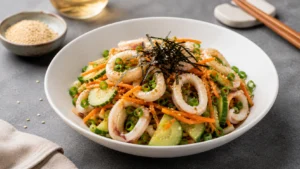
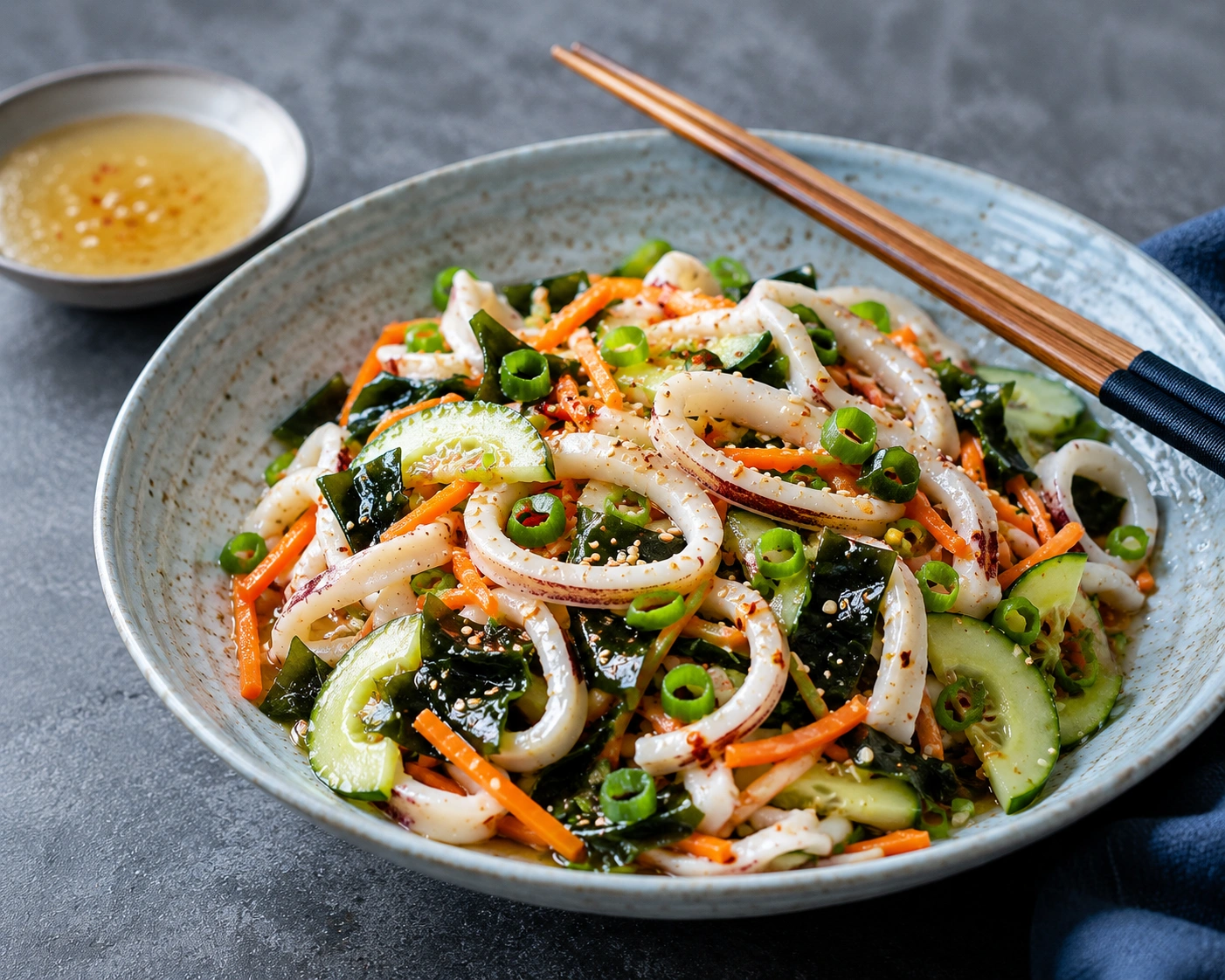

My neighbor showed me ika salad for the first time maybe three years ago now. She just walked in with a container, put it on my kitchen counter, didn’t say anything. I looked at it. Shredded squid, some vegetables, pale dressing. Honestly? I wasn’t excited. Then I tried it and ate basically the entire thing before she even pulled out a chair.
She’s Japanese-American, grew up in Honolulu, and apparently ika salad was just a normal weeknight thing in her house growing up. She seemed genuinely surprised that I’d never had it. We spent the rest of that afternoon in my kitchen and she showed me exactly how she makes it.
I’ve probably made it forty or fifty times since that day. My version has changed a little from what she taught me — I add a bit more ginger, I use a touch of garlic which she doesn’t — but the bones of the recipe are hers and I think about her every time I make it.
What Is Ika Salad, Really?
If you’ve never heard of it, you’re not alone. Ika salad doesn’t get nearly the attention it deserves outside of Japanese-American communities and Hawaii.
“Ika” is the Japanese word for squid. The dish is also called ika sansai — sansai meaning mountain vegetables — or chuka ika sansai, where chuka signals a Chinese-style preparation. The dish sits somewhere between Japanese and Chinese cooking traditions, which is actually pretty common in Japanese cuisine.
What you’re getting is thinly sliced blanched squid marinated with cucumber, carrot, and seaweed in a dressing built on rice vinegar, soy sauce, sesame oil, and fresh ginger. The whole thing is served cold. It’s light, tangy, deeply savory, and genuinely refreshing.
You’ll find packaged versions in the refrigerated section of Japanese supermarkets like Mitsuwa or H Mart. They’re fine. But they’re also usually too sweet, a bit salty, and made to last a week in a container rather than to taste as alive as possible. Homemade beats store-bought here and it’s not particularly close.
The Flavor, Because It Matters
The first thing that hits you is the vinegar — clean and bright and a little sharp.
Right behind that comes the soy sauce, which adds this savory depth without being heavy. Then the ginger, which is warm and slightly spicy but not aggressive. The sesame oil is in the background the whole time — you might not notice it separately but if you left it out you’d notice immediately that something was missing.
And then there’s the squid itself. Mild, slightly oceanic, and genuinely sweet in a very quiet way. It doesn’t taste fishy at all if you cook it right.
The texture is what really sets ika salad apart. The squid has a gentle chew — not rubbery, not soft, just pleasantly resistant. The vegetables stay crisp. The seaweed adds a slight brininess and a slippery texture that sounds weird but works completely.
Ingredients
| Ingredient | Amount | Notes |
|---|---|---|
| Fresh or frozen squid, cleaned | 1 lb | Slice bodies into thin rings or strips |
| Japanese or English cucumber | 1 medium | Slice thin, remove seeds if very watery |
| Carrot | 1 small | Julienned or grated coarse |
| Green onions | 3 stalks | Sliced thin |
| Dried wakame seaweed | 2 tbsp | Soak in cold water 5 minutes before using |
| Rice vinegar, unseasoned | 3 tbsp | Not sushi vinegar — plain rice vinegar |
| Soy sauce | 2 tbsp | Low sodium is better here |
| Toasted sesame oil | 1 tsp | Toasted, not plain — the flavor difference is big |
| Sugar | 1 tsp | Balances the sharpness of the vinegar |
| Fresh ginger | 1 tsp | Grated fresh — jarred ginger paste works in a pinch |
| Garlic | 1 small clove | I add it, traditional recipes sometimes don’t |
| Sesame seeds | 1 tsp | For the top |
| Red chili flakes | Small pinch | Optional but good |
Kitchen Equipment
| Equipment | Why You Need It |
|---|---|
| Medium pot | Blanching the squid |
| Bowl of ice water | Stopping the squid from overcooking — not optional |
| Large mixing bowl | Tossing everything together |
| Small bowl and whisk | Mixing the dressing |
| Sharp knife and cutting board | Slicing squid and vegetables thin |
| Microplane or fine grater | Fresh ginger — this tool makes it easy |
| Colander | Draining squid and seaweed |
How to Make It
Prep: 15 min | Cook: 2 min | Rest: 20 min | Serves 4
Step 1 — Prep the squid.
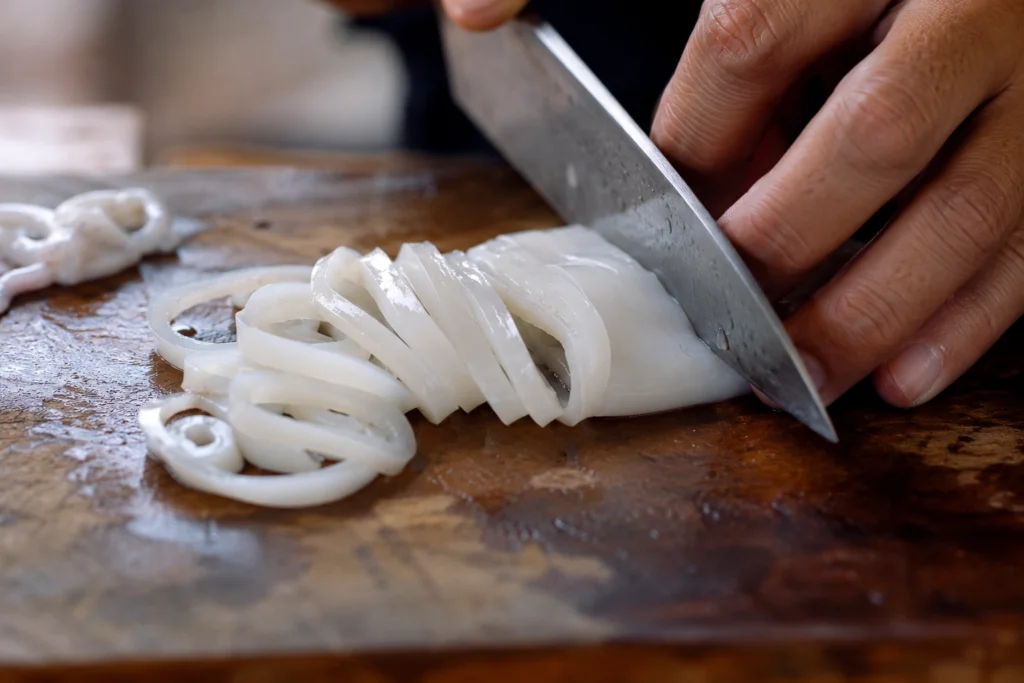
If you’re working with whole squid, clean them and slice the bodies into thin rings or strips about a quarter inch wide. Strips are more traditional. Rings are easier. Both are good.
Frozen pre-cleaned squid is completely fine and what I usually use. Thaw it in the fridge overnight — not on the counter — and pat it very dry before cutting. Wet squid won’t sear or blanch properly.
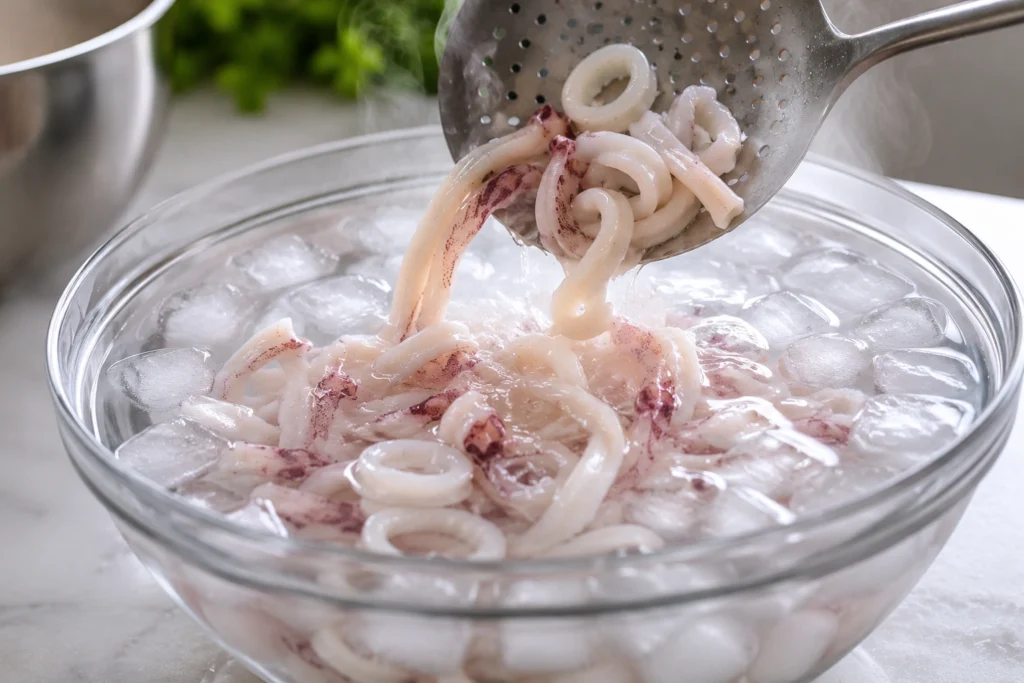
Step 2 — The blanch. Don’t mess this up.
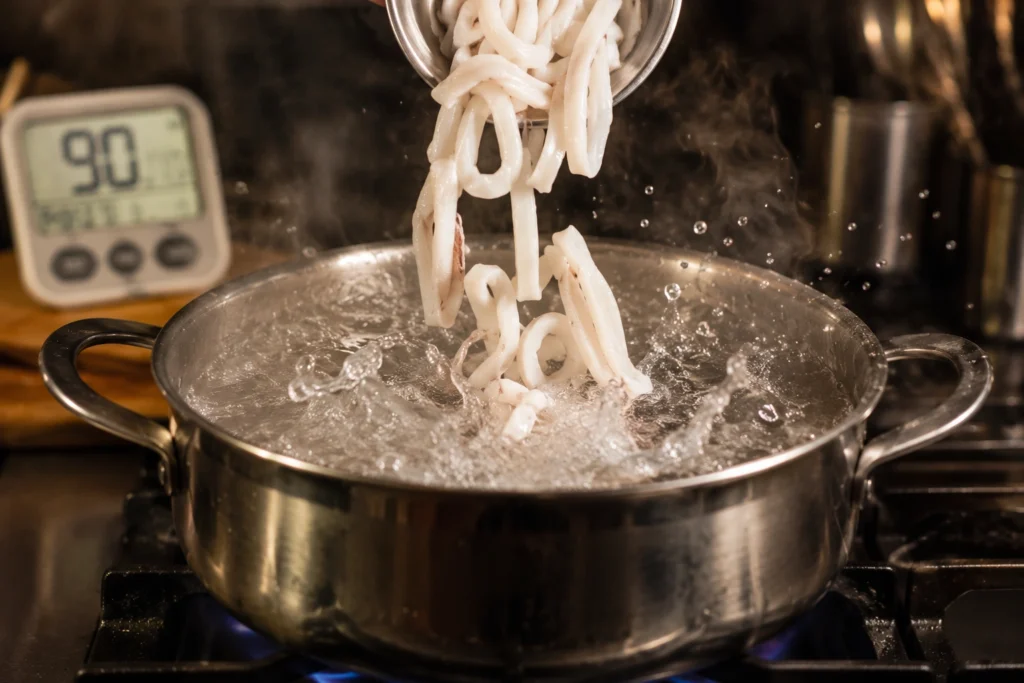
Bring a pot of water to a full rolling boil. Add a good pinch of salt. Drop the squid in and immediately start timing.
Ninety seconds. That’s your number.
Pull it out at 90 seconds and put it straight into the ice water. Don’t drain it into a colander and walk away. Straight into the ice. Let it sit two minutes then drain and pat dry.
I cannot stress this enough — squid goes from tender to rubbery in about 30 extra seconds. The ice bath stops the carryover cooking that keeps happening even after you drain it. My neighbor drilled this into me the first time and she was right.
Step 3 — Vegetables.
While the squid is cooling, slice the cucumber into thin rounds or half moons. Julienne the carrot into thin matchsticks or grate it coarsely — either works. Slice the green onions. Drain the wakame and squeeze the water out with your hands.
Step 4 — The dressing.
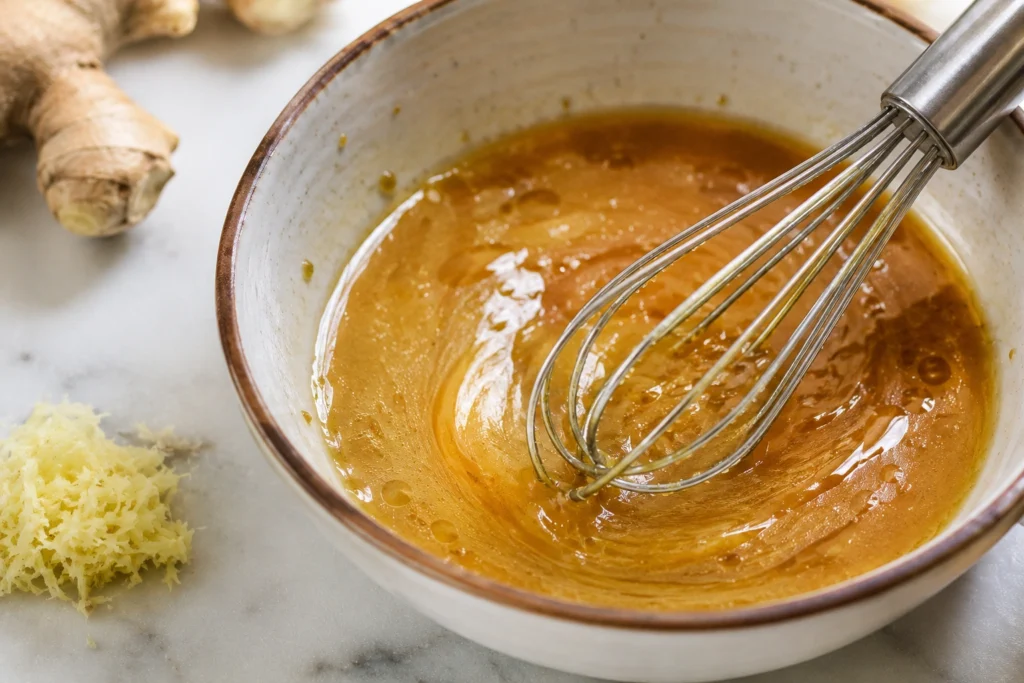
Whisk everything together in a small bowl. Rice vinegar, soy sauce, sesame oil, sugar, ginger, garlic. Taste it before you add it to anything.
It should be noticeably tart. Savory underneath. Slightly sweet at the very end. If the vinegar is overwhelming, a bit more sugar. If it tastes flat, few more drops of soy. This is the heart of the whole dish so get it where you want it.
Step 5 — Put it together.
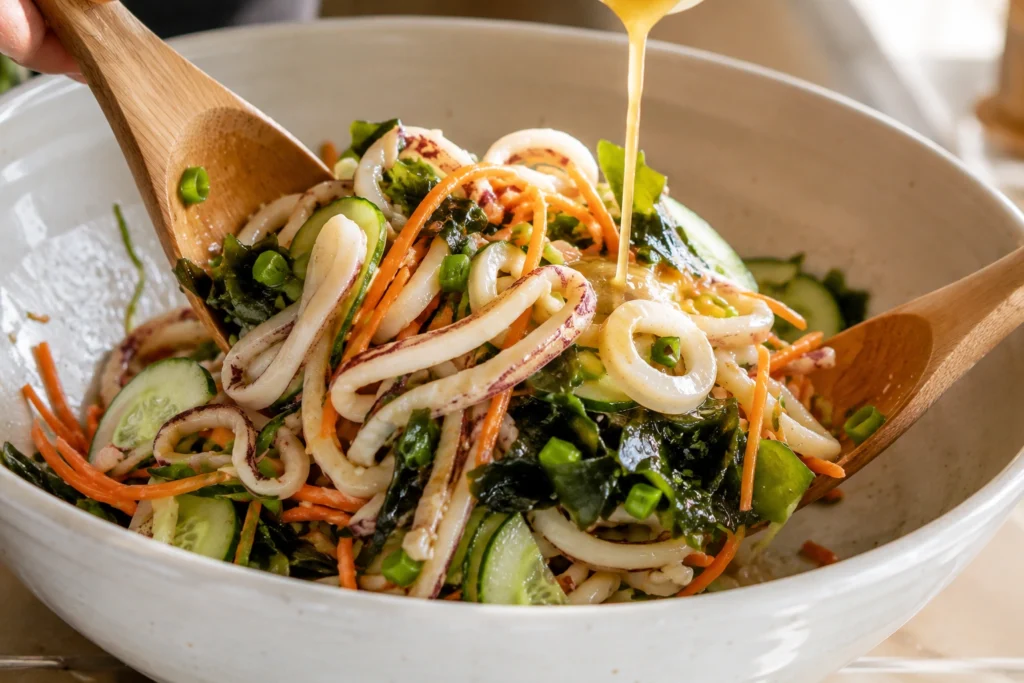
Add squid, cucumber, carrot, green onions, and wakame to your large bowl. Pour dressing over. Toss gently — you’re not making a stir fry, just coating everything evenly.
Cover and refrigerate for at least 20 minutes.
I know. You’re hungry and it smells good already. Do it anyway. That rest time is when the squid actually absorbs the dressing and everything comes together. Eat it right away and it tastes like a bunch of separate things. Wait 20 minutes and it tastes like a real dish.
Step 6 — Serve cold.
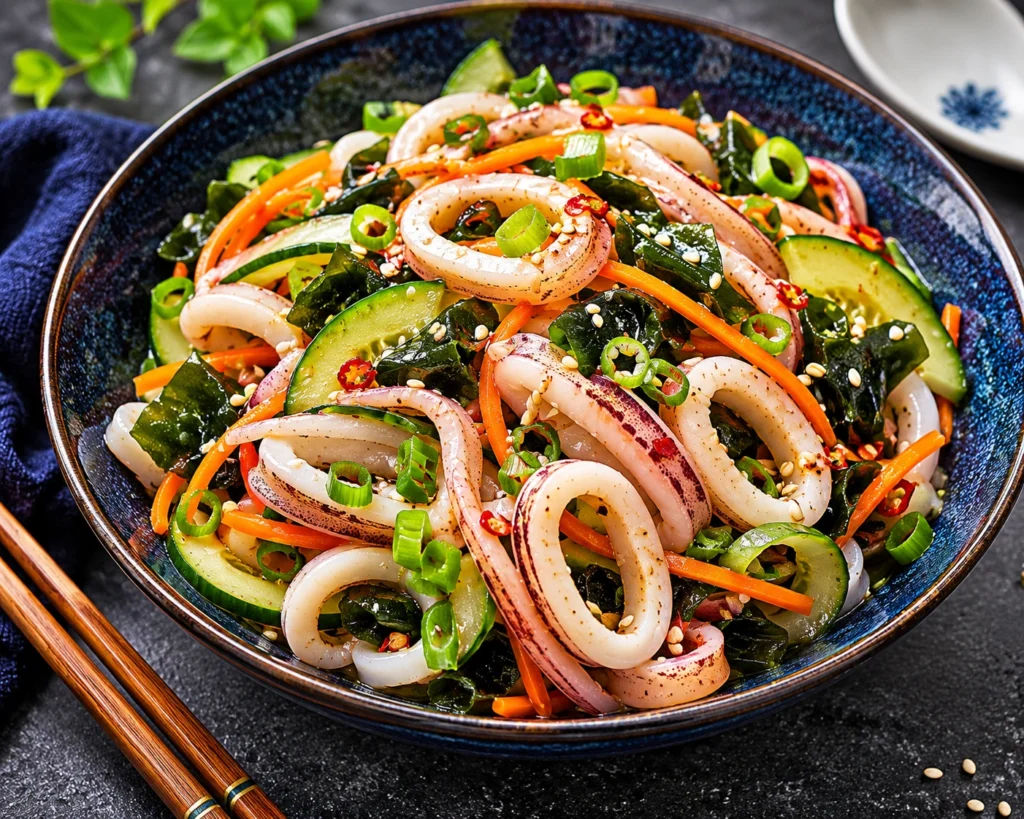
Spoon into bowls. Scatter sesame seeds on top. Chili flakes if you want. That’s it.
Variations I’ve Actually Tried
| Variation | Change | Result |
|---|---|---|
| Spicy ika salad | Add 1 tsp gochujang to the dressing | Deeper, Korean-leaning, excellent |
| Yuzu version | Replace half the rice vinegar with yuzu juice | Fragrant and citrusy, very delicate |
| With wood ear mushrooms | Add ¼ cup rehydrated sliced wood ear mushrooms | Earthier, more varied texture |
| Ika salad bowl | Serve over warm sushi rice with avocado | Full meal, works beautifully |
| Vegan ika salad | Hearts of palm rings instead of squid | Surprisingly similar texture |
What to Eat It With
Plain warm rice is the obvious choice and honestly hard to beat. The contrast between the cold tangy salad and the plain warm rice is one of those combinations that just makes sense.
It also works alongside grilled salmon or miso soup as part of a Japanese-style spread. The acidity in the dressing handles anything rich really well.
If you want to make it a full meal, pile it over sushi rice, add sliced avocado and a soft boiled egg, drizzle a little extra sesame oil over everything. That’s a proper dinner.
Nutrition Per Serving
| Nutrient | Per Serving |
|---|---|
| Calories | 140 to 170 kcal |
| Protein | 18 to 20g |
| Carbohydrates | 8 to 10g |
| Total Fat | 4 to 5g |
| Saturated Fat | 0.5g |
| Sodium | 520 to 580mg |
| Sugar | 3 to 4g |
| Fiber | 1 to 2g |
Squid is genuinely impressive nutritionally — high protein, almost no fat, low calories. Ika salad is one of those dishes that feels like a treat but is actually doing good things for you.
Storage
Up to 2 days in the fridge in a sealed container. It tastes better on day two, not worse — the squid has had more time in the dressing and everything is more unified.
The vegetables soften a bit as they sit. If that bothers you, keep the dressed squid and the cut vegetables separate and combine right before eating.
Freezing doesn’t work. The squid texture falls apart after freezing and thawing and the vegetables go mushy.
Questions I Get About This Recipe
A Japanese cold marinated squid salad, also called ika sansai or chuka ika sansai. Thinly sliced blanched squid tossed with cucumber, carrot, and wakame seaweed in a rice vinegar and soy dressing with ginger and sesame. Always served cold. Popular in Japan, Hawaii, and Japanese-American communities.
Ika is Japanese for squid. Sansai means mountain vegetables. Chuka means Chinese-style. So chuka ika sansai translates roughly to Chinese-style squid with vegetables — referencing both the ingredient and the culinary tradition the dish draws from.
You cooked it too long. Squid firms up very fast past the 90-second mark. Use a timer, use ice water immediately after, and it will be tender every time.
Yes, I use it most of the time. Thaw overnight in the fridge. Pat completely dry before cutting and blanching. The end result is nearly identical.
Not at all if the squid is fresh or properly thawed. Clean squid has a very mild, slightly sweet oceanic flavor. The vinegar dressing also neutralizes any fishiness. If yours tastes fishy, the squid wasn’t fresh.
Same dish. Ika salad is the name used in Japanese-American stores and restaurants. Ika sansai or chuka ika sansai is the Japanese name. You’ll also see it called chuka ika, especially on prepared food packaging.
Japanese supermarkets — Mitsuwa, Marukai, H Mart — carry it refrigerated. Korean supermarkets sometimes stock it too. But I’d encourage you to make it instead. Fresher, cheaper, and you can make the dressing exactly the way you like it.
Ika Salad Recipe
Ingredients
Equipment
Method
- Soak wakame in cold water 5 minutes. Drain and squeeze out water.
- Slice squid into thin rings or strips. Pat completely dry.
- Boil salted water. Cook squid 90 seconds exactly. Transfer immediately to ice water 2 minutes. Drain and pat dry.
- Slice cucumber, julienne carrot, slice green onions.
- Whisk all dressing ingredients in small bowl. Taste and adjust.
- Combine squid, vegetables, and wakame in large bowl. Pour dressing over. Toss gently.
- Cover and refrigerate minimum 20 minutes before serving.
- Top with sesame seeds and chili flakes. Serve cold.
Notes
- 90 seconds maximum for squid — it toughens fast
- Ice bath stops carryover cooking — do not skip
- Keeps 2 days refrigerated — flavor improves overnight
- Keep vegetables separate if you prefer more crunch
- Frozen squid works fine — thaw overnight in fridge
Nutrition Per Serving
- Calories: 155
- Protein: 19g
- Carbohydrates: 9g
- Fat: 4g
- Sodium: 550mg
- Sugar: 3g
- Fiber: 1g