
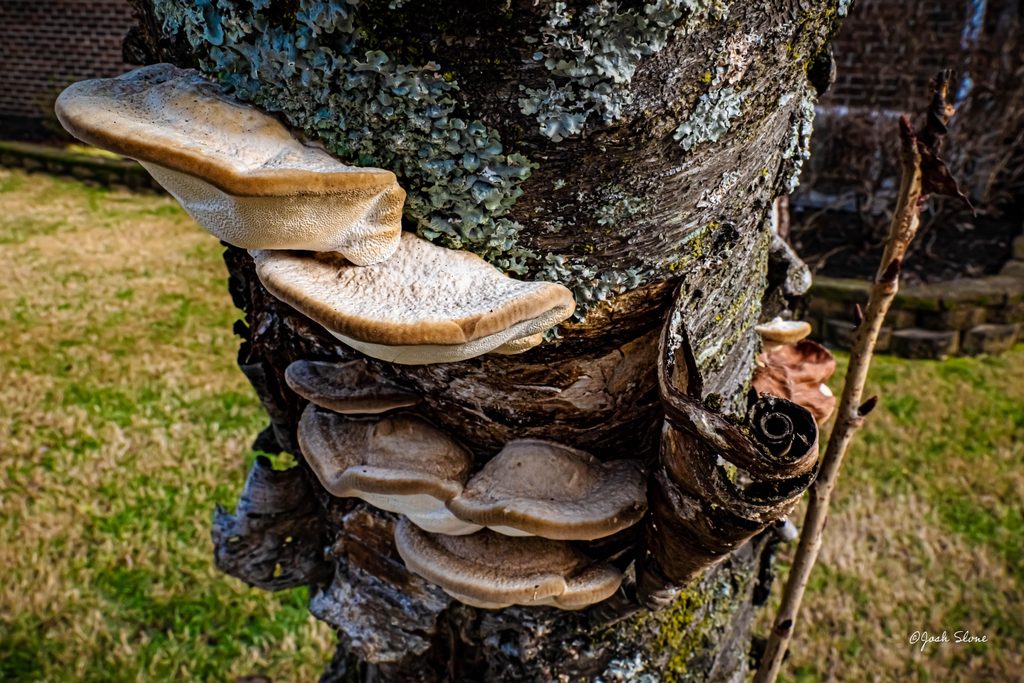
A tree mushroom is not one species. The phrase can refer to oyster mushrooms, wood ears, turkey tail, artist’s conk, honey mushrooms, chicken of the woods, or many other fungi that fruit from trunks, branches, stumps, or buried roots. Some decompose dead wood, some live with trees, and others can be associated with decay in living wood.
The mushroom is only the visible fruiting structure. The main fungal network may extend through wood or soil. Removing the visible cap does not necessarily remove the fungus or correct the condition that allowed it to grow.
| Form | What it looks like | Examples of groups | Useful observation |
|---|---|---|---|
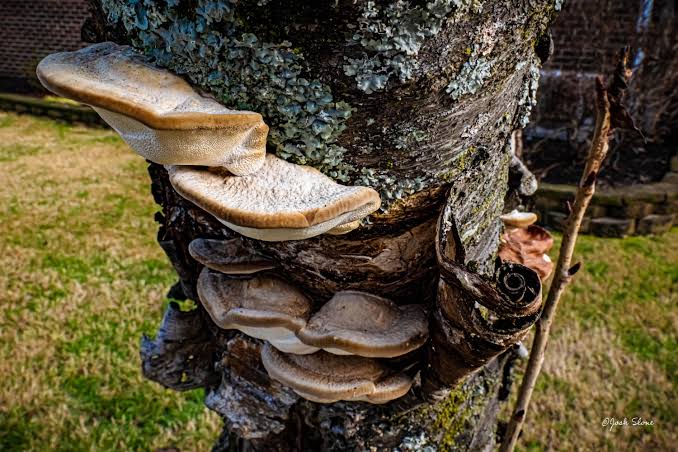
| Shelf or bracket | Flat or hoof-like structure attached to wood | Turkey tail, conks, chicken of the woods | Check pores and texture underneath |
| Gilled cluster | Several cap-and-stem mushrooms from one point | Oyster, honey mushroom groups | Note attachment, stems, gills, and wood type |
| Gelatinous ear | Thin, rubbery, ear-shaped lobes | Wood ear relatives | Observe color and texture when wet and dry |
| Tooth fungus | Spines or teeth beneath or hanging down | Lion’s mane relatives | Record spine pattern and branching |
| Crust | Flat patch closely attached to bark or wood | Many resupinate fungi | Often requires specialist examination |
Why mushrooms grow on trees
Wood contains carbon-rich material that fungi can break down. A fallen log is a natural food source for decomposers. On a living tree, fungi may enter through roots, broken branches, pruning wounds, storm damage, or existing dead wood.
Some fungi fruit only after decay has been present for a long time. Others appear on bark while using a dead branch or buried root. A mushroom near a tree is not automatically growing from the living trunk; it may arise from mulch, soil, an old stump, or a root below the lawn.
Does a tree mushroom mean the tree is dying?
Not always, but it deserves attention. Mushrooms on a dead log are expected decomposers. Fruiting bodies on the trunk, root flare, or large structural roots of a living tree may indicate internal decay or root problems.
The level of risk depends on the fungus, location, amount of decayed wood, tree species, defects, lean, canopy condition, weather exposure, and what could be hit if the tree failed. A photograph of the cap alone cannot answer those questions.
If a large tree could fall toward a home, road, play area, or power line, contact a qualified arborist for an on-site assessment. Do not cut roots or climb a questionable tree to collect a specimen.
How to document a tree-growing mushroom
Take clear photographs before removing anything:
- The full tree and surrounding area
- The mushroom’s exact position on the trunk, root, stump, or soil
- The top surface
- The underside showing gills, pores, teeth, or a smooth surface
- The side attachment to the wood
- Nearby bark, wounds, cavities, or dead branches
- A size reference
Record the tree species if known, whether the wood is alive or dead, the date, recent rainfall, and whether the mushroom returns in the same place.
Features used for identification
Color is one of the least reliable features by itself. Experts may consider:
- Growth form and attachment
- Fresh texture: soft, corky, woody, or gelatinous
- Underside structure
- Cap zoning, hairs, scales, or varnished surface
- Presence or absence of a stem
- Spore-print color
- Odor and bruising reactions
- Host tree species
- Geographic region and season
- Microscopic structures or DNA
A shelf fungus can change color as it ages, and rain can alter texture. Photograph fresh and older growth when possible.
Familiar tree-associated groups
Oyster mushrooms
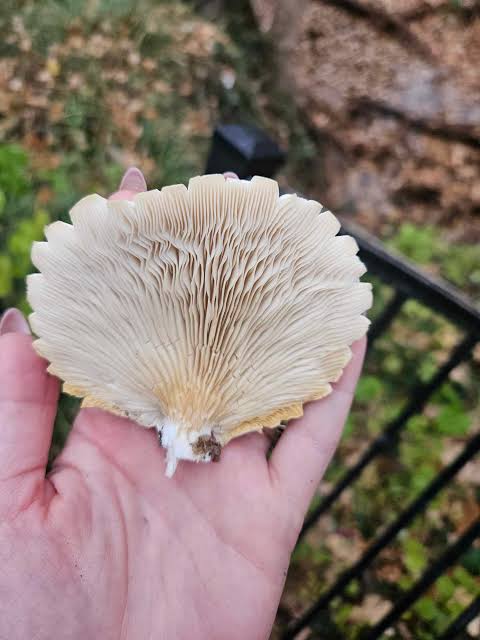
Oyster mushrooms commonly form overlapping, fan-shaped clusters on dead or weakened hardwood. The gills usually run down toward the point of attachment. Several species and look-alikes exist.
Turkey tail
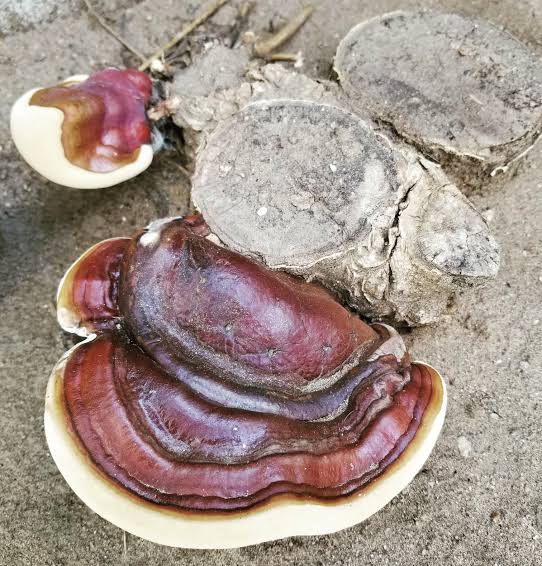
Turkey tail forms thin, tough brackets with colored zones and a pore surface underneath. Many other small brackets resemble it from above.
Chicken of the woods
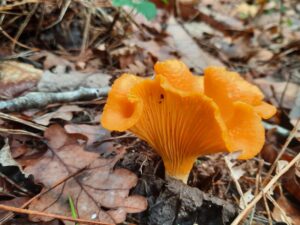
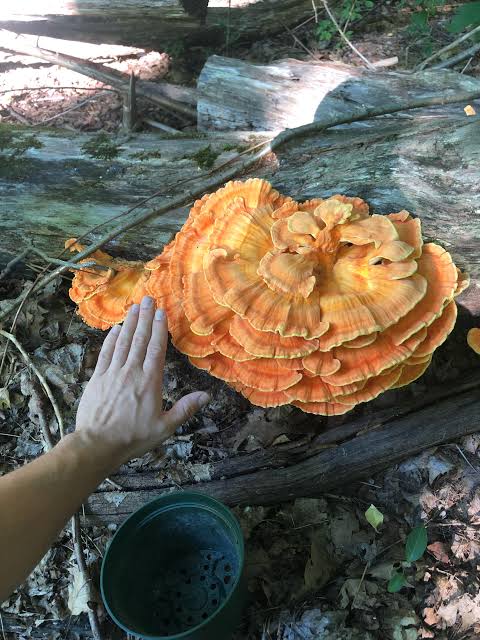
This group produces bright yellow-orange shelves with pores rather than gills. Host tree, location, age, and species-level differences matter.
Honey mushrooms
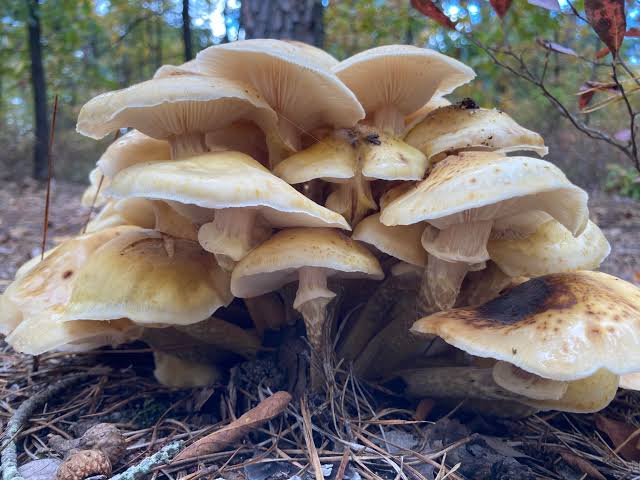
Honey-colored mushrooms can appear in dense clusters at tree bases or from buried roots. The group includes multiple species and can be associated with root rot.
Conks
Large woody brackets may persist for years. Their position can provide clues about the location of decay, but tree-risk interpretation belongs to a trained arborist.
Should you remove mushrooms from a tree?
Removing a fruiting body may prevent spores from dropping in that moment or improve appearance, but it does not remove fungal growth inside wood. Do not seal, paint, or fill a cavity without professional advice.
For a landscape tree, focus on diagnosis and structural condition. Improve appropriate tree care, avoid injuring roots and trunks, and correct irrigation or drainage problems when relevant. Avoid promising that a general fungicide will solve internal wood decay.
Can tree mushrooms be eaten?
Some famous edible mushrooms grow on wood, but “growing on a tree” is not an edibility test. Inedible and dangerous fungi also use wood, and a mushroom may grow from contaminated material.
Never eat a tree mushroom from a web photo comparison. Identification requires the complete specimen, underside, substrate, and regional expertise. Even a correctly identified edible species may be too old, contaminated, or unsuitable for an individual.
Tree mushroom in a yard: what to do
- Keep children and pets from chewing unknown fungi.
- Photograph it before mowing or removing it.
- Check whether it comes from mulch, soil, stump, or living wood.
- Look for cavities, cracks, dieback, or root damage.
- Consult a local extension office, mycological group, or diagnostic lab for fungal identification.
- Contact a qualified arborist when the tree could cause damage if it failed.
Separate fungal identification from tree-risk assessment
A mycologist may identify the fungus, while an arborist evaluates the tree’s structure and the consequences of failure. These are related but different questions. A species name can suggest the kind of decay involved, yet an on-site inspection is still needed to assess cavities, remaining sound wood, roots, lean, wind exposure, and nearby targets.
When requesting help, share wide photographs as well as close-ups. Include when the fruiting body first appeared, whether it returns, recent construction or root damage, irrigation changes, and any falling branches. Do not remove every fruiting body before the appointment; a fresh specimen can support diagnosis.
For a dead log far from people and structures, fungal decay is a normal ecological process. It recycles nutrients and creates habitat. The response should match the location and risk rather than treating every fungus as a landscape emergency.
Frequently asked questions
No. Many are decomposers of dead wood, and the relationship varies by species and tree condition.
No. The internal or underground mycelium may remain after the visible fruiting body is removed.
Moisture and suitable temperatures can trigger fruiting from an established fungal network.
An app can suggest possibilities, but it cannot reliably evaluate every feature or determine tree risk and edibility.
Not automatically. The decision requires an on-site assessment of the tree, fungus, structural defects, and possible targets.