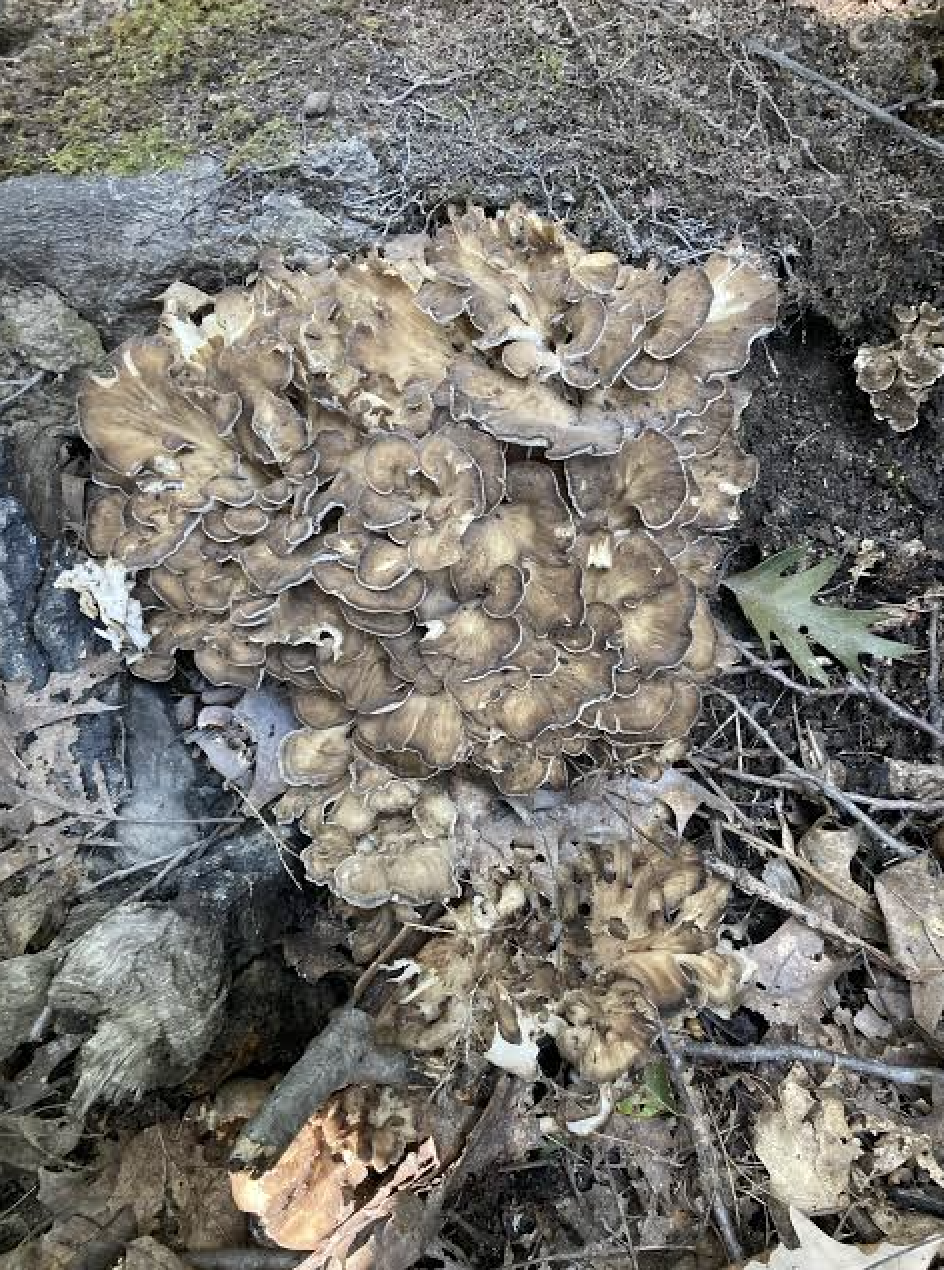

The sheep’s head mushroom is a regional U.S. name for Grifola frondosa, better known as hen of the woods or maitake. It forms a large branching cluster of overlapping gray-brown fronds, usually near the base of mature hardwood trees, especially oaks. The underside has tiny white pores rather than gills.
This mushroom is considered a choice edible when fresh and correctly identified, but the nickname can vary by region. Do not rely on “sheep’s head” as a universal common name.
| Feature | Typical Grifola frondosa characteristic |
|---|---|
| Growth form | Large compound cluster with many spoon- or fan-shaped fronds |
| Cap color | Gray-brown, smoky brown, or tan with paler edges |
| Underside | White to cream pore surface, no gills |
| Stem structure | Repeated branching from a thick shared base |
| Flesh | White and firm when young |
| Habitat | Ground at the base of living or dead hardwoods, often oak |
| Season | Late summer through fall in much of its U.S. range |
| Other names | Maitake, hen of the woods, ram’s head, sheepshead |
Why it is called sheep’s head
The crowded, curled fronds can resemble thick wool on a sheep’s head. In parts of Pennsylvania and Ohio, “sheepshead” has been a familiar regional term. Elsewhere, the same mushroom is more likely to be called hen of the woods or maitake.
Regional names create search confusion. The scientific name Grifola frondosa is the most precise way to verify that two guides discuss the same organism.
What it looks like
A young cluster can begin as a dense mass near a tree base. As it expands, numerous caps branch from a central core. Individual fronds are often two to several inches wide, with wavy pale margins.
The pore surface extends beneath the fronds and may continue down the branches. Fresh flesh is white, solid, and pleasantly aromatic. With age, edges darken, pores discolor, and the entire cluster becomes tougher or more insect damaged.
Large clusters can weigh many pounds, but size alone is not diagnostic. Photograph the whole growth, underside, central branching, and host tree.
Where and when a sheep’s head mushroom grows
Sheep’s head commonly appears at the base of mature oaks, sometimes from buried roots a short distance from the trunk. It may also associate with other hardwoods. A productive tree can fruit again in later years, although timing and size vary.
In many eastern and central U.S. regions, the season runs from late summer into fall. Cooler nights and moisture often trigger growth. Western observations are less common, so regional references matter.
Because the fungus can be associated with wood decay, a cluster near a valuable landscape tree may also justify an arborist’s assessment. Harvesting the mushroom does not remove the internal fungal network.
Look-alikes
Black-staining polypore
Meripilus species can form large rosettes at tree bases. Their flesh stains dark after bruising or cutting, often more strongly than maitake. The fronds may be larger and less finely divided.
Berkeley’s polypore
Bondarzewia berkeleyi forms a massive pale rosette with broad thick caps. It may be edible when very young in some traditions but becomes tough, and it is not the same mushroom.
Umbrella polypore
Polyporus umbellatus or related naming treatments produce many small round caps on branching stalks. The cap structure differs from maitake’s leaf-like fronds.
Chicken of the woods
Bright yellow-orange shelves are structurally and visually different, but beginners sometimes group every large tree-base polypore together.
Look-alike comparison requires fresh specimens, staining tests, pore structure, branch pattern, host, and regional knowledge.
How to harvest responsibly
First confirm that collection is legal. Cut the clean cluster above the dirty attachment rather than pulling up soil and wood. Leave old, decayed, or insect-heavy portions in place.
Take only what you will use. Maitake clusters can be much larger than a household needs, and mature specimens quickly lose quality. Carry them in a rigid basket so the fronds do not compress into a wet mass.
Cleaning a sheep’s head mushroom
The branching structure traps leaves, grit, beetles, and slugs. Cleaning is easiest in stages:
- Cut away the tough, dirty base outdoors.
- Divide the cluster into hand-sized sections.
- Inspect every interior branch.
- Brush loose debris.
- Rinse sections briefly only if necessary.
- Drain and dry thoroughly before cooking.
The central core can be firmer than outer fronds. Slice it thinly for long cooking or use it to flavor stock if it is clean and tender enough.
How to cook a sheep’s head mushroom
Crispy skillet maitake
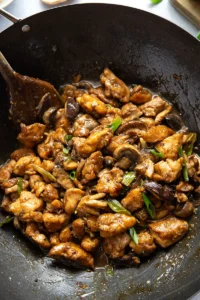
Tear clean fronds into medium pieces. Heat oil in a wide skillet and arrange the pieces in one layer. Press lightly and leave them until deeply brown. Turn, season, and finish with butter, thyme, and lemon.
Roasted clusters
Toss large sections with oil, salt, and pepper. Roast at 425°F until the edges are crisp and the thicker branches are tender. Add garlic near the end to prevent burning.
Pasta and risotto
Brown the mushroom separately, then fold it into pasta or risotto near the end. This preserves the crisp edges instead of softening them throughout the entire cooking time.
Soup
Use younger tender pieces in soup. Brown them first for fuller flavor, and add the cleaned core to broth if it is not woody.
Storage and preservation
Refrigerate the clean, dry cluster in a paper bag or paper-lined breathable container. Large intact clusters can hide moisture and insects, so inspect and divide them soon after harvest.
Cook within a few days for the best texture. For freezing, sauté or blanch according to a tested method, cool, and pack in labeled portions. Maitake can also be dried for soup and powder when a research-based process is followed.
How to use different parts of the cluster
Outer fronds are thin and suited to high-heat sautéing or roasting. Medium branches work well in pasta and soup. The dense core needs more trimming and may be sliced thinly for stock or a longer braise when it remains fresh and insect-free.
Separate these parts before cooking so the edges do not burn while the core remains firm. Put the thick pieces in the pan first, then add delicate fronds later.
Planning around a very large find
Do not carry home more than you can clean while it is fresh. Divide a legal harvest among immediate cooking, a tested preservation method, and a small labeled identification sample. Process the same day when practical.
If sharing, provide only cleaned, confirmed mushroom to informed recipients and explain the species and cooking requirement. Never distribute a mixed bag of unidentified tree-base fungi under a regional nickname.
Frequently asked questions
No. Sheep’s head usually means Grifola frondosa, a layered polypore. Lion’s mane has long white hanging teeth.
In many U.S. regions, sheep’s head, ram’s head, hen of the woods, and maitake refer to the same species.
No. The underside has a fine pore surface.
Yes, a site can fruit in multiple years, although timing and production vary.
Wild maitake should be cooked thoroughly. Try a small serving when eating a new species for the first time.