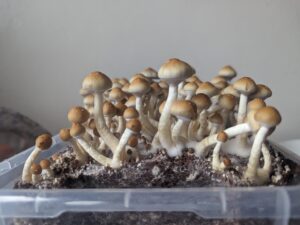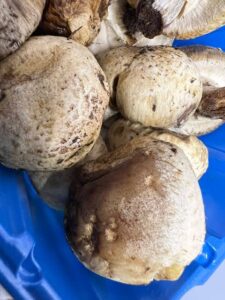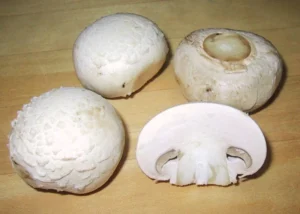
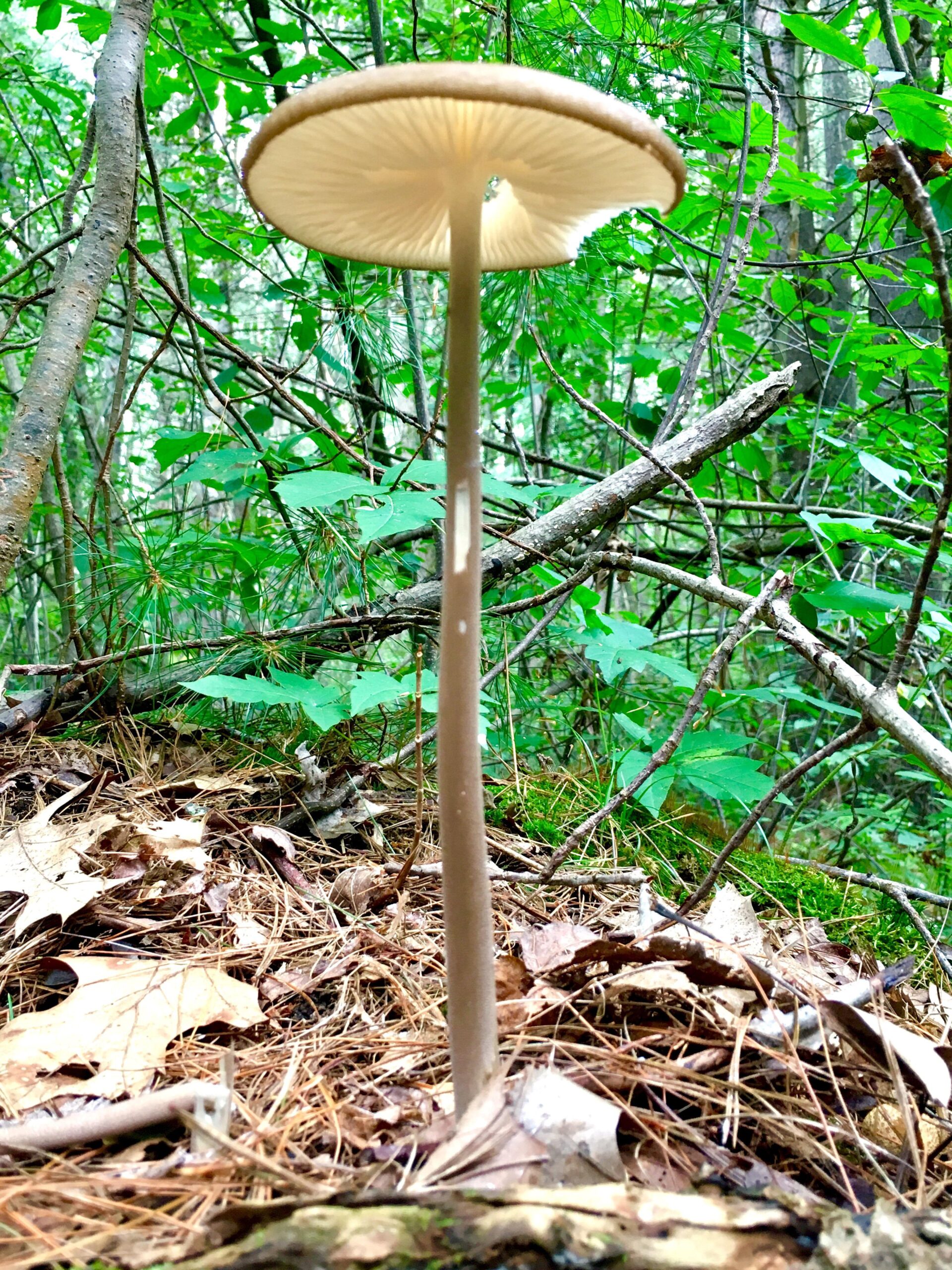

A tall mushroom in a lawn or forest may belong to a parasol, shaggy mane, Amanita, stinkhorn, Panaeolus, Conocybe, or many other groups. Height is visually striking but weak as an identification feature because stem length changes with age, shade, moisture, and surrounding vegetation.
The most important step is to collect and photograph the entire mushroom, including the base. Rings, cups, bulbs, gill attachment, spore color, cap texture, and habitat are far more informative than a height measurement alone.
| Feature | Questions to answer |
|---|---|
| Cap | Is it smooth, scaled, conical, bell-shaped, or flat? |
| Underside | Does it have gills, pores, teeth, or a smooth surface? |
| Gills | Free, attached, notched, or running down the stem? |
| Stem | Hollow or solid, smooth or patterned, fragile or tough? |
| Ring | Is there a skirt-like ring, movable ring, or no ring? |
| Base | Is there a cup, bulb, rooting section, or fused material? |
| Spore print | White, cream, pink, brown, purple-brown, or black? |
| Habitat | Lawn, dung, leaf litter, mulch, or wood? |
Measure the complete mushroom
Place a ruler beside the specimen and photograph it from the side. Measure the cap diameter and total height. A wide cap on a long stem suggests a different growth form from a narrow conical cap on a thin stem.
Do not pull only the visible stalk. Loosen the soil around the base and lift it intact. A buried cup or bulb can be a critical safety feature.
Common tall mushroom forms
Parasol-shaped mushrooms
True parasols and related groups develop long stems and broad, often scaled caps. A ring may encircle the stem, and mature caps open like umbrellas. Some edible parasols have dangerous or illness-causing look-alikes, including lawn species with similar scaling.
The cap pattern, stem pattern, movable ring, staining, spore print, and geography all matter. “Looks like a parasol” is not a final identification.
Amanita shapes
Some Amanita species have elegant tall stems, a ring, pale gills, and a cup or bulb at the base. The genus includes deadly species.
Always expose the complete base. Never assume a tall white mushroom is harmless because the cap is clean or insects have eaten it. White spores, free gills, veil structures, and habitat near trees are important clues.
Shaggy mane
The shaggy mane, Coprinus comatus, begins with a tall cylindrical cap covered in shaggy scales. As it matures, the cap edge turns black and dissolves into ink-like liquid.
Other inky-cap groups can grow nearby. Age, substrate, cap structure, and potential interactions or species-specific cautions require current expert guidance.
Stinkhorns
Stinkhorns grow rapidly and can become tall in a few hours. Many emerge from an egg-like structure and develop a foul-smelling spore slime that attracts flies. Their structure differs from ordinary gilled mushrooms.
They commonly appear in mulch and rich garden beds. Removal improves appearance and odor temporarily but does not remove all underground mycelium.
Small conical lawn mushrooms
Thin-stemmed Conocybe, Panaeolus, and other lawn fungi may look tall relative to their small caps. Spore-print color, cap surface, substrate, and microscopy may be needed. Small size does not mean low risk.
Why stems become unusually long
A mushroom growing through tall grass, deep leaf litter, or thick mulch may elongate to raise its cap into moving air. Low light, high humidity, and rapid growth can also produce a slender stem.
This means the same species can look shorter in an open lawn and taller in dense vegetation. Identification guides use a range of measurements, not one exact height.
Lawn and garden response
Mushrooms feed on organic matter in soil, thatch, mulch, or buried roots. Their appearance does not usually mean the lawn itself is diseased. Fruiting often follows rain or heavy irrigation.
To reduce repeated mushrooms:
- Remove visible caps before they release more spores if appearance matters
- Correct overwatering
- Improve drainage and soil aeration
- Remove buried wood when practical
- Rake thick wet mulch and allow airflow
- Manage excess thatch
Do not dig around major tree roots or apply random fungicides without identifying the actual landscape problem.
How to make a spore print
Choose a mature cap. Remove the stem and place the cap underside-down on half white and half dark paper. Cover it with a bowl and wait several hours.
A white print supports different groups from a black or chocolate-brown print. Record the true color in daylight. A spore print narrows possibilities but still does not prove species or edibility.
Photographing for expert help
Provide a photo series:
- Mushroom in its original habitat
- Entire cap top
- Clear underside
- Side view of cap and stem
- Complete stem base
- Vertical cross-section
- Spore print
- Nearby trees or substrate
Add geographic region, date, smell, staining, growth pattern, and whether it grows from soil or wood. Avoid filters that change color.
Tall mushrooms around children and pets
Unknown lawn mushrooms should be removed promptly from areas used by young children or animals. Place specimens where they cannot be retrieved, and wash hands after handling.
If ingestion may have occurred, keep an intact sample and clear photographs. Seek urgent professional guidance rather than waiting for symptoms or relying on an app.
Can a tall mushroom be eaten?
Height does not indicate edibility. Some famous edible mushrooms are tall, but so are dangerous species. All parts, habitat, spore print, and regional keys must support a species-level identification confirmed by a qualified local expert.
Do not use folk tests such as silver discoloration, easy cap peeling, animal damage, or pleasant smell. Cooking does not make every toxic species safe.
A field-note template
Write a short description in this order: location, substrate, growth pattern, height, cap diameter, cap surface, underside, gill attachment, stem texture, ring, complete base, bruising, odor, and spore print. Add nearby trees and recent weather.
This fixed order prevents the most dramatic feature—the height—from taking over the identification. It also makes the record useful to an expert who was not at the site.
What to do when the mushroom collapses
Tall thin stems can break during transport. Wrap the cap and stem separately in waxed paper and label them as one specimen. Photograph the intact mushroom first. If the base remains in the ground, return for it when safe rather than guessing about a missing structure.
An overmature collapsed mushroom may no longer be identifiable with confidence. Wait for a fresh specimen at the same site and document it from the beginning.
Frequently asked questions
It may be a parasol-type mushroom, an Amanita, or another gilled species. Inspect the ring, stem pattern, base, gills, and spore print.
The fungus was already in the substrate. Moisture triggered rapid fruiting, and surrounding grass or mulch may encourage stem elongation.
Color and height cannot answer that. Some deadly Amanita species are tall and pale, so the full base and expert identification are essential.
Mowing removes the fruiting body, not the underground fungus or buried organic food source.
Ordinary handling for documentation is generally different from ingestion, but wash hands afterward and keep unknown specimens away from food, children, and pets.