

Michigan is a wonderful place to learn about wild fungi. Morels appear in spring, summer rain can bring chanterelles, and fall is a good time to search around mature oaks for hen of the woods.
There is real risk, though. Michigan State University reports that about 2,500 species of large, fleshy mushrooms grow in the state. Only 60 to 100 are generally considered safe to eat, while at least 50 are poisonous. Use this guide to learn about popular edible mushrooms of Michigan, but never use an article, photo, or app as final approval to eat a wild mushroom.
Safety first: Ask an experienced local identifier or certified mushroom expert to examine the complete specimen in person.
Michigan Edible Mushroom Season Chart
Weather can shift fruiting times, so treat these dates as a practical guide rather than a promise.
| Mushroom | Usual Season | Likely Habitat | Helpful Clue |
|---|---|---|---|
| Morel | Late April to mid-June | Hardwood woods, orchards, some burn sites | Pitted cap; hollow inside |
| Chanterelle | Summer to early fall | Soil in hardwood forest | Blunt folds, not true gills |
| Oyster | Often spring | Dead or dying hardwood | Pale, layered shelves |
| Chicken of the woods | May to October | Trunks, stumps, buried roots | Orange-yellow brackets |
| Hen of the woods | September to November | Base of mature oaks | Large gray-brown rosette |
| Black trumpet | July to October | Mossy hardwood forest floor | Thin, dark, hollow funnel |
| Giant puffball | Late summer to early fall | Fields, lawns, open woods | Solid white interior |
Mushrooms may appear earlier in southern Michigan and later in northern counties or the Upper Peninsula. Recent rain, soil warmth, and tree health matter as much as the calendar.
1. Morel Mushrooms
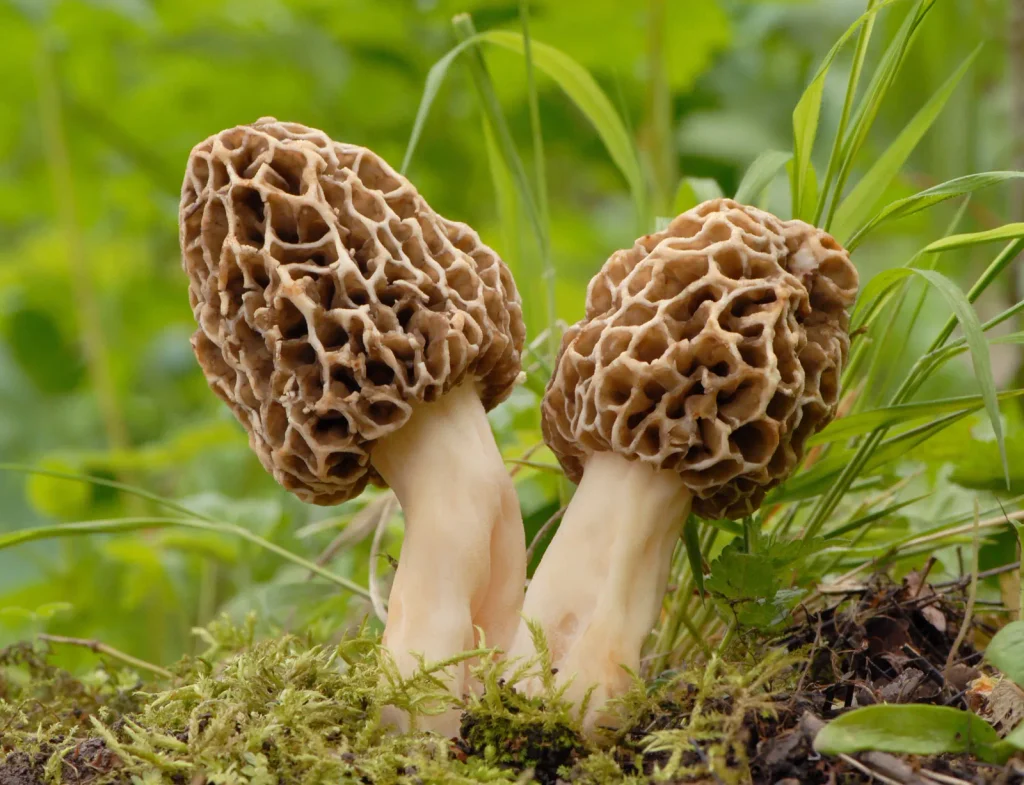
Morels are the best-known edible mushrooms of Michigan. The Michigan DNR places their season from late April to mid-June, with May usually attracting the most hunters. A true morel has a deeply pitted cap and is hollow when sliced from top to bottom. False morels may look wrinkled or brain-like, and some are toxic.
2. Chanterelle Mushrooms
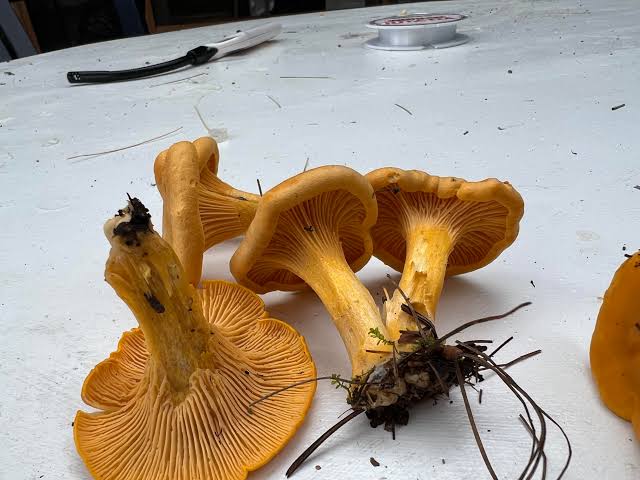
Chanterelles are usually yellow or orange, with blunt, forked ridges running partly down the stem. They grow from soil, often after summer rain. Poisonous jack-o’-lantern mushrooms have sharp, blade-like gills and commonly grow in clusters on wood or buried roots. Color alone is not enough for identification.
3. Oyster Mushrooms
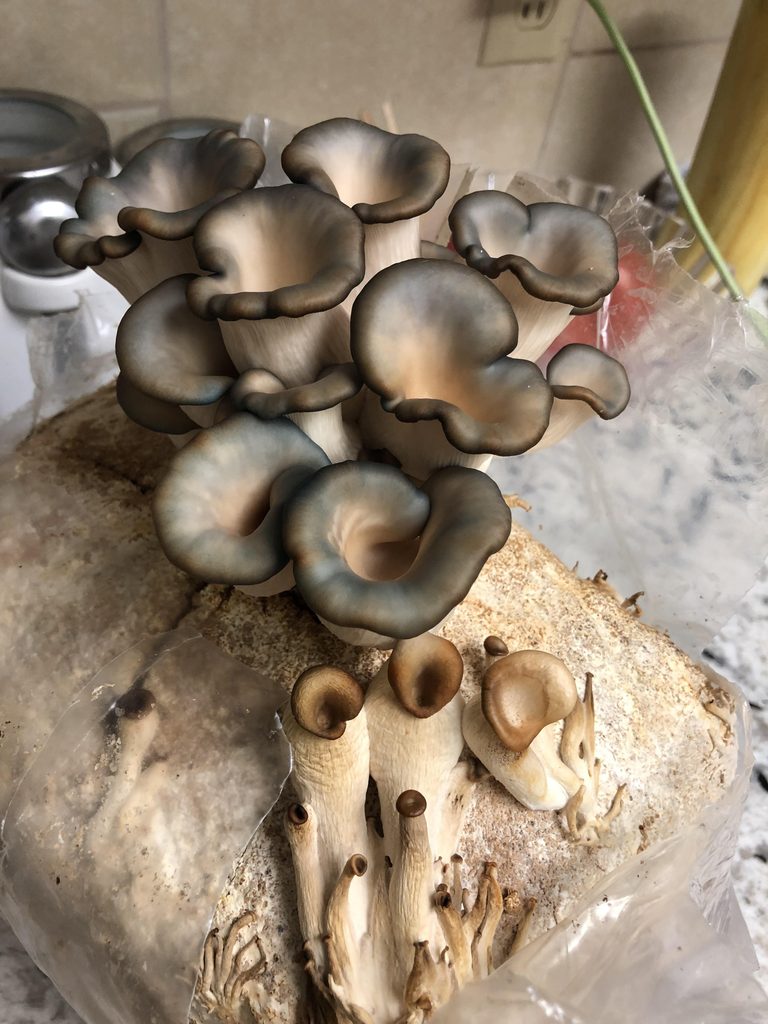
Wild oysters grow in overlapping shelves on dead or dying trees. Their pale caps resemble oyster shells, and the gills run toward a short, off-center stem. Poplar is a common host in Michigan. Other fungi also form shelves, so check the tree, gills, stem, spore print, smell, and complete cluster.
4. Chicken of the Woods
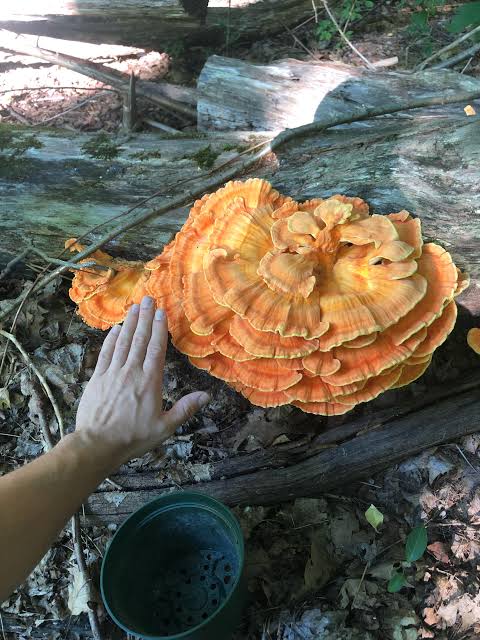
Young chicken of the woods forms bright orange and yellow shelves, often near oak. The underside has tiny pores instead of gills. Tender edges are best; old sections become woody. Even a correctly identified specimen can upset some stomachs, so cook it thoroughly and try a small serving first.
5. Hen of the Woods, or Maitake
Hen of the woods looks like a ruffled gray-brown bouquet at the base of a mature oak. Its many spoon-shaped caps join a thick, pale center. Black-staining polypore is a possible look-alike and darkens strongly after bruising or cutting.
6. Black Trumpet Mushrooms
Black trumpets blend into leaf litter. Their charcoal, gray, or dark-brown bodies look like hollow funnels with wavy rims and no true gills. Michigan’s DNR lists them as a choice edible found in hardwood forests from July through October. When you find one, search the nearby ground carefully.
7. Giant Puffball Mushrooms
A young giant puffball may resemble a white ball in a lawn, field, or open woodland. Cut it from top to bottom. The center must be solid, smooth, and pure white. Reject it if the inside is yellow, brown, powdery, or shows a developing cap, stem, or gills; that last sign may indicate a young Amanita.
Dangerous Look-Alikes to Study
| Edible Target | Possible Look-Alike | What to Examine |
|---|---|---|
| True morel | False morel | Deep pits and hollow interior versus a wrinkled or chambered form |
| Chanterelle | Jack-o’-lantern | Blunt folds on a soil-growing mushroom versus sharp gills on wood |
| Giant puffball | Young Amanita | Plain white center versus a developing mushroom outline |
| Hen of the woods | Black-staining polypore | Strong dark staining after damage |
| Oyster mushroom | Other shelf fungi | Host tree, descending gills, spore print, smell, and growth pattern |
These details are study clues, not an eating checklist. Age, rain, insects, and damage can hide important features.
Where to Look in Michigan
Hardwood forests containing oak, maple, and beech support several Michigan mushrooms. Old orchards and some recently burned areas may produce morels. Dead hardwood, logs, and stumps can host oysters or chicken of the woods, while mature oak bases are classic places to check for maitake.
Habitat helps narrow the search but never proves edibility. Local mushroom clubs and public forays are valuable because beginners can compare several fresh species side by side.
Michigan Foraging Rules
Michigan allows certain wild foods, including mushrooms, to be collected on some public lands. Food gathered from state land is for personal use and cannot be sold. Rules vary among parks, forests, recreation areas, national lands, and local properties, so check the managing agency before picking. Get permission before entering private land.
Commercial sale follows separate state rules. Wild-foraged mushrooms sold to the public must come through approved sources and qualified identification.
Seven Safety Habits That Matter
- Learn beside an experienced local forager before eating any wild find.
- Check the cap, underside, stem, base, habitat, growth pattern, and spore print.
- Keep different species in separate paper bags.
- Leave moldy, waterlogged, or heavily damaged mushrooms outdoors.
- Cook wild mushrooms thoroughly; never eat them raw.
- Try a small portion of a new, confirmed species because reactions can happen.
- Keep one uncooked sample refrigerated in case an expert needs it later.
How to Record a Mushroom for Identification
Photograph the cap, underside, stem, and base. Note whether it grew from soil, living wood, a stump, or buried roots. Record nearby trees, smell, bruising color, date, and whether it grew alone or in a cluster. When collecting is legal, take one complete specimen to a local club or qualified expert. An app may suggest a name, but it cannot accept the risk for you.
Cleaning, Storage, and Cooking Guide
Brush away loose debris. Rinse briefly only when needed, then dry well. Store fresh mushrooms in a paper bag in the refrigerator rather than sealed plastic, and use them soon.
| Mushroom | Simple Cooking Method | Easy Pairings |
|---|---|---|
| Morel | Halve and sauté in butter or oil | Eggs, toast, pasta |
| Chanterelle | Dry-sauté, then add butter | Chicken, rice, herbs |
| Oyster | Brown over medium-high heat | Noodles, stir-fries |
| Chicken of the woods | Cook tender strips fully | Tacos, soup |
| Hen of the woods | Roast or pan-sear the fronds | Pasta, grain bowls |
| Black trumpet | Sauté fresh or use dried | Eggs, sauces, risotto |
| Giant puffball | Slice and pan-fry or bake | Sandwiches, Parmesan-style dishes |
Cooking does not make a poisonous species safe. Identification always comes first.
Frequently Asked Questions
Morels, chanterelles, oysters, chicken of the woods, hen of the woods, black trumpets, and giant puffballs are widely recognized choices. None should be eaten without confident expert identification.
May is famous for morels. Summer can be better for chanterelles and black trumpets, while September and October often bring hen of the woods and puffballs. Rainfall matters as much as the month.
No. It can suggest possibilities, but similar-looking species may carry very different risks. Use an app as one research aid, not as permission to eat.