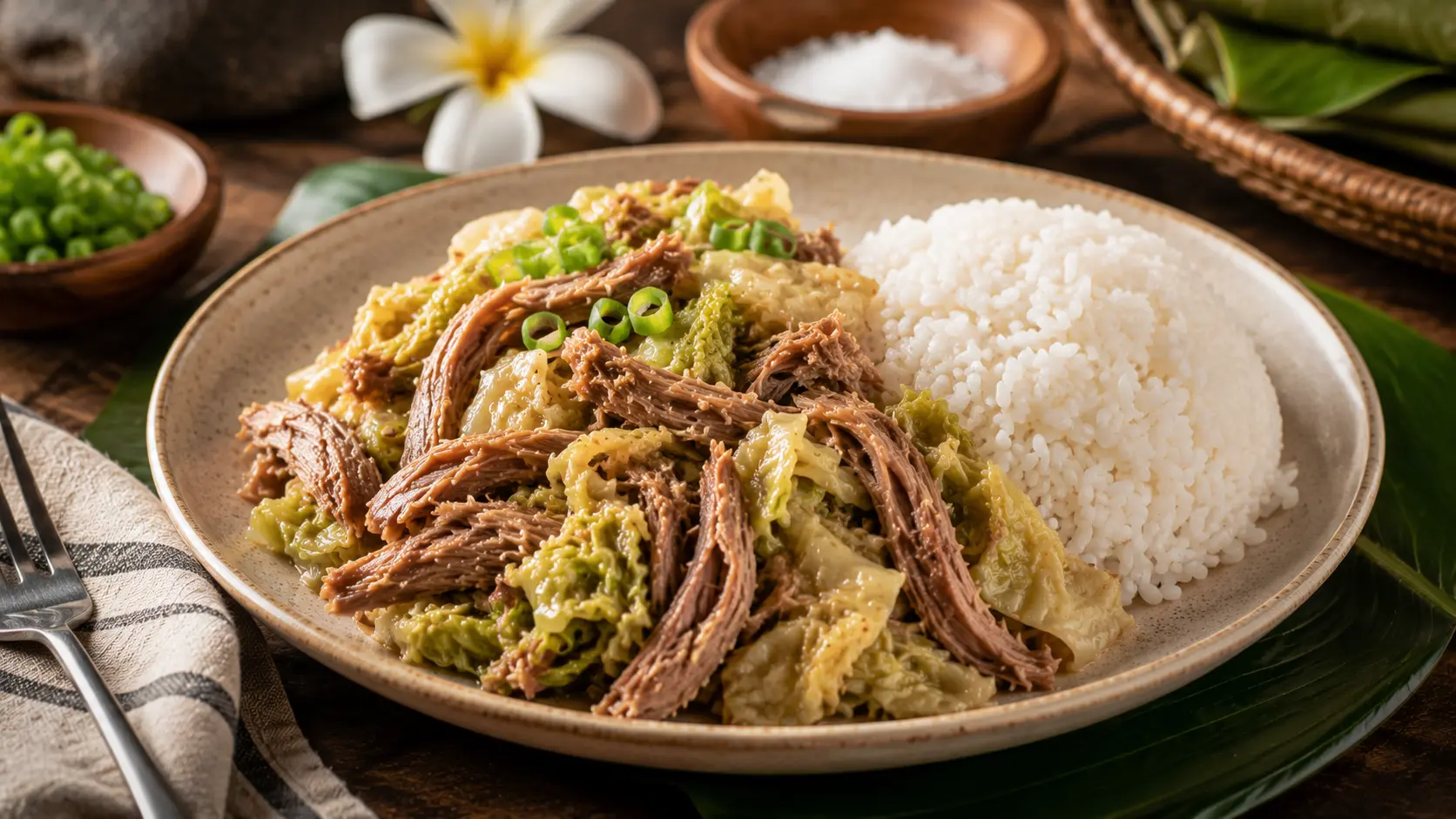
The first time I tried authentic Hawaiian-style Kalua Pork with Cabbage, I expected a simple pulled pork dish.
What arrived on the plate was something completely different.
The pork was incredibly tender, smoky, and juicy, while the cabbage had absorbed all of those rich savory flavors during cooking. It was simple, rustic, and packed with flavor without relying on complicated seasonings or sauces.
That’s what makes this dish so special.
Traditional Hawaiian kalua pork is cooked underground in an imu, a Hawaiian earth oven where the meat slowly roasts for hours until it becomes fall-apart tender. While most home cooks don’t have access to an imu, you can still recreate those incredible flavors using a slow cooker, Dutch oven, or oven.
After testing several methods, I found that combining pork shoulder, Hawaiian-style seasoning, liquid smoke, and cabbage creates a version that’s remarkably close to what you’ll find at Hawaiian family gatherings, luaus, and local restaurants.
This Kalua Pork with Cabbage Recipe delivers everything people love about the original: smoky pork, tender cabbage, minimal ingredients, and incredible flavor.
Whether you’re looking for a comforting family dinner, meal-prep favorite, or a taste of Hawaii at home, this recipe deserves a place in your rotation.
What Is Kalua Pork with Cabbage?
Kalua Pork with Cabbage is a traditional Hawaiian-inspired dish made with slow-cooked pork and tender cabbage.
The word “kalua” refers to the traditional Hawaiian cooking method of roasting meat in an underground imu. The pork is seasoned simply, cooked slowly, and shredded before being combined with cabbage.
Unlike many pulled pork recipes, authentic kalua pork relies on only a few ingredients.
The focus is on the natural flavor of the pork, gentle smokiness, and the sweetness that develops as the cabbage cooks alongside the meat.
That’s what makes this Kalua Pork with Cabbage Recipe both simple and incredibly satisfying.
Why You’ll Love This Kalua Pork with Cabbage Recipe
One of the reasons this dish has remained popular for generations is its simplicity.
A handful of ingredients transform into a meal that’s rich, comforting, and packed with flavor.
Before we start cooking, here’s why this recipe stands out.
| Feature | Why It Matters |
|---|---|
| Easy Preparation | Minimal hands-on work |
| Authentic Hawaiian Flavor | Traditional taste at home |
| Family Friendly | Mild and comforting |
| Great for Meal Prep | Reheats beautifully |
| Budget Friendly | Uses affordable ingredients |
| Naturally Gluten-Free | Suitable for many diets |
The simplicity of the recipe is exactly what makes it so good.
What Does Kalua Pork with Cabbage Taste Like?
Many people expect the dish to taste heavily smoked or strongly seasoned.
In reality, the flavor is much more balanced.
The pork becomes incredibly tender and juicy while developing a gentle smoky flavor. The cabbage softens and absorbs the flavorful cooking juices, creating a slightly sweet and savory side that complements the richness of the meat.
The overall flavor profile is smoky, savory, slightly salty, and deeply comforting.
That’s why this Kalua Pork with Cabbage Recipe has become a staple throughout Hawaii.
Ingredients
One of the best things about this recipe is how short the ingredient list is.
Traditional Hawaiian cooking often focuses on quality ingredients and simple preparation rather than complicated seasoning blends.
For the Kalua Pork
These ingredients create the signature smoky flavor and tender texture.
| Ingredient | Amount |
|---|---|
| Pork Shoulder (Boston Butt) | 5 pounds |
| Hawaiian Sea Salt | 2 tablespoons |
| Liquid Smoke | 2 tablespoons |
| Water | 1 cup |
Pork shoulder is the preferred cut because its fat content keeps the meat juicy during the long cooking process.
For the Cabbage
The cabbage cooks directly in the flavorful pork juices.
| Ingredient | Amount |
|---|---|
| Green Cabbage | 1 large head |
| Pork Cooking Juices | As needed |
The cabbage requires very little seasoning because it absorbs flavor from the pork.
Why Pork Shoulder Works Best
Not all cuts of pork produce the same results.
Choosing the right cut is one of the most important decisions you’ll make when preparing this dish.
| Cut | Result |
|---|---|
| Pork Shoulder | Tender and juicy |
| Pork Butt | Excellent shredding texture |
| Pork Loin | Too lean |
| Pork Tenderloin | Can dry out |
Pork shoulder consistently produces the most authentic Kalua Pork with Cabbage Recipe.
Its fat slowly renders during cooking, creating the rich texture the dish is known for.
How to Make Kalua Pork with Cabbage Recipe
The secret to this recipe isn’t complicated seasoning.
It’s patience.
Allowing the pork to cook slowly creates the tender texture and rich flavor that make this dish so popular.
Step 1 – Prepare the Pork
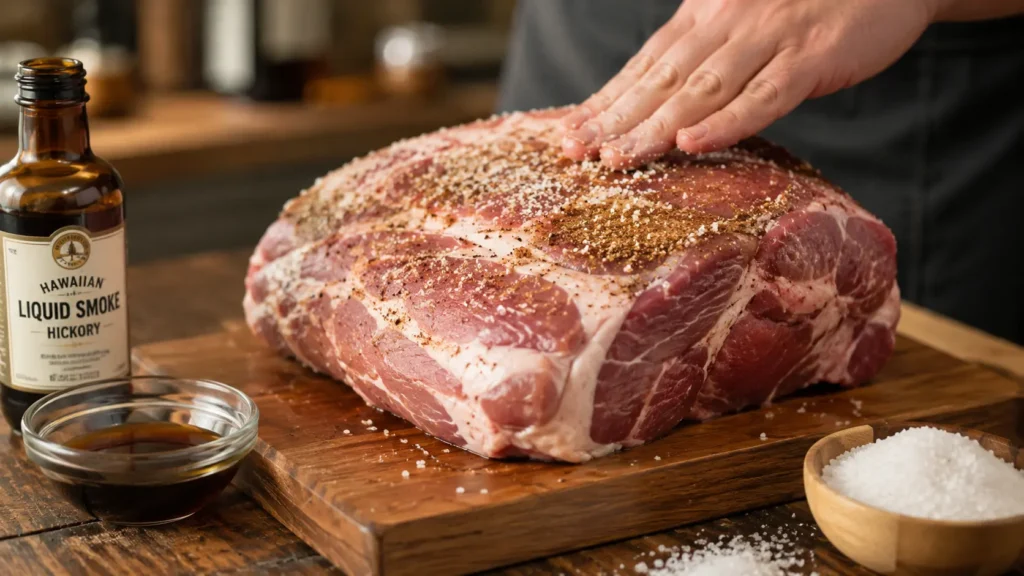
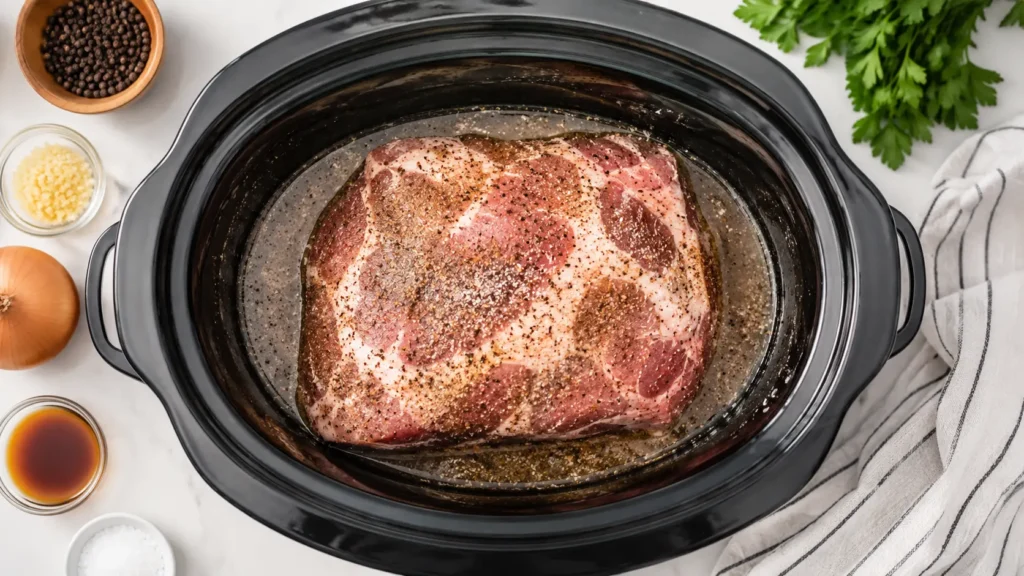
Pat the pork shoulder dry using paper towels. Place it in a slow cooker, Dutch oven, or roasting pan.
Rub the pork evenly with Hawaiian sea salt on all sides. Drizzle the liquid smoke over the meat and gently massage it into the surface.
This simple seasoning method is traditional and allows the natural flavor of the pork to remain the star of the dish. Don’t worry if it seems like very little seasoning. The long cooking time concentrates the flavors beautifully.
Step 2 – Add Water and Begin Cooking
Pour one cup of water around the pork, being careful not to wash off the seasoning.
Cover the slow cooker or roasting pan tightly. If using an oven, cover with heavy-duty foil to trap moisture during cooking.
The added moisture helps create a tender cooking environment while preventing the pork from drying out. This step is essential for achieving that signature fall-apart texture.
Step 3 – Slow Cook the Pork
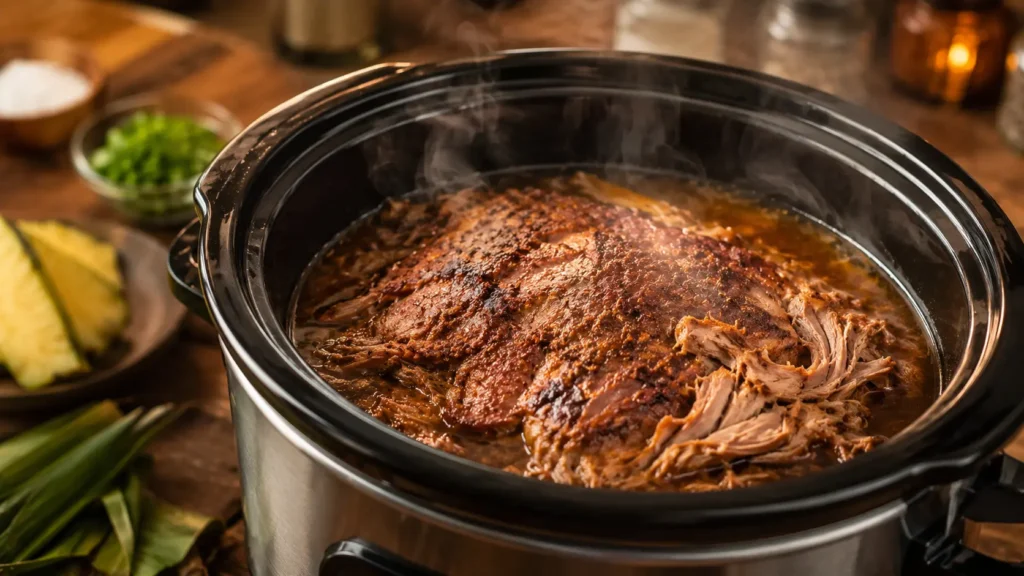
Cook the pork on low for 10 to 12 hours in a slow cooker or at 300°F in the oven for approximately 5 to 6 hours.
Avoid opening the lid too often during cooking. Each time the lid is removed, valuable heat and moisture escape.
As the pork cooks, the connective tissues break down and the meat becomes incredibly tender. By the end of cooking, it should pull apart easily with a fork.
Step 4 – Shred the Pork
Carefully transfer the cooked pork to a large cutting board or platter.
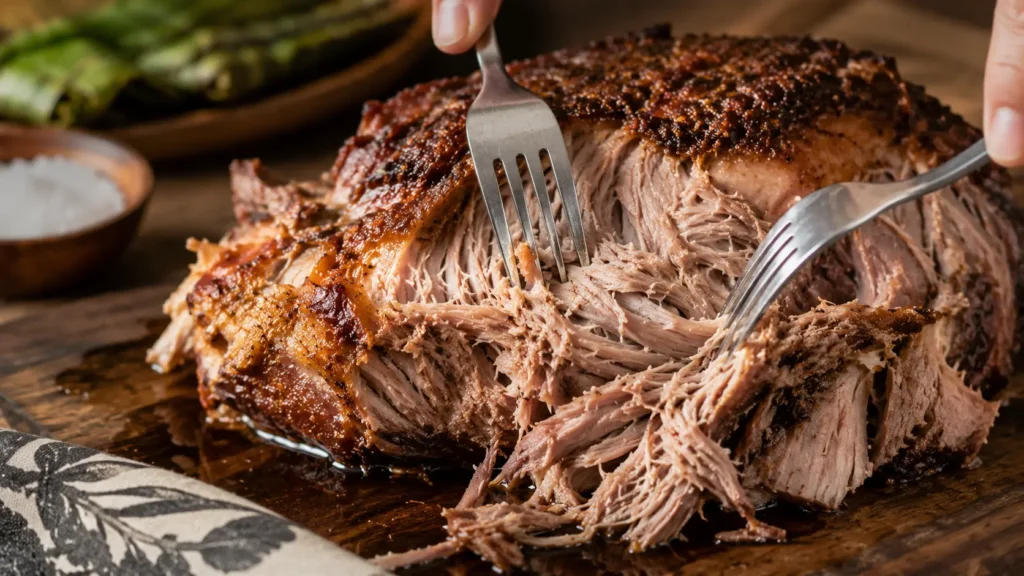
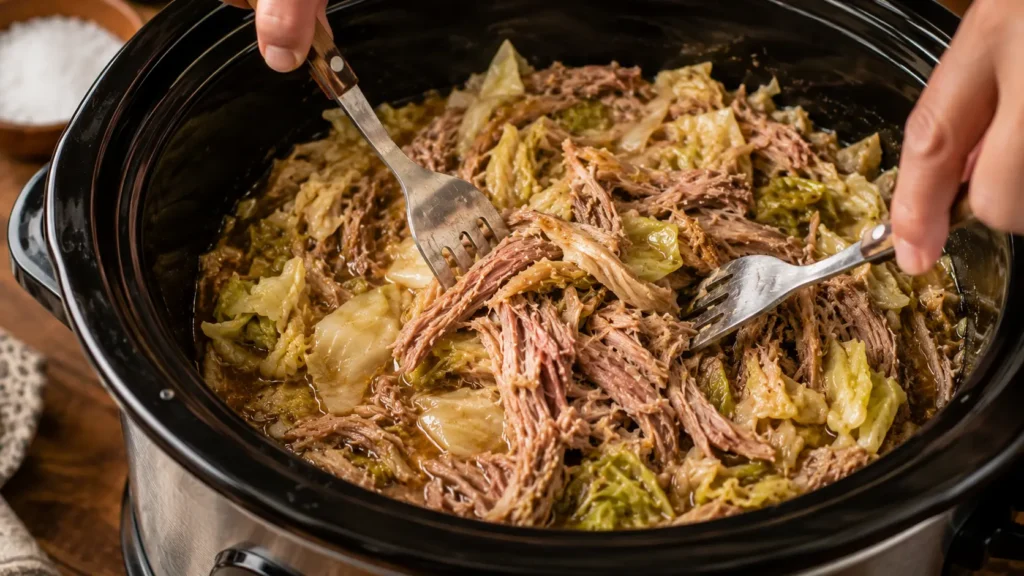
Using two forks, shred the meat into bite-sized pieces while removing any large pieces of fat.
The pork should be incredibly juicy and tender at this stage. Mix some of the cooking juices back into the shredded meat to keep it moist and flavorful.
Step 5 – Prepare the Cabbage
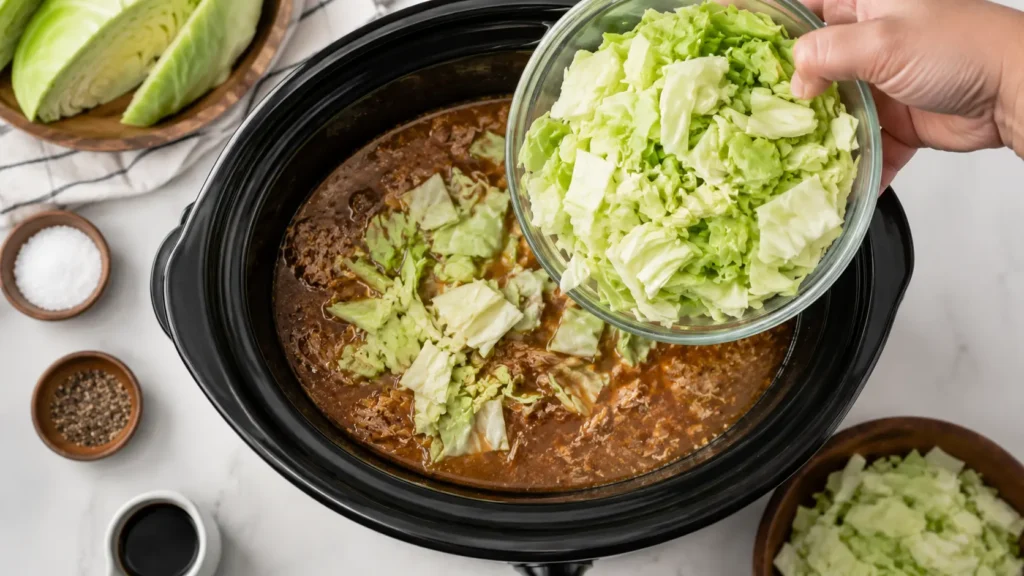
Cut the cabbage into large chunks or thick shreds.
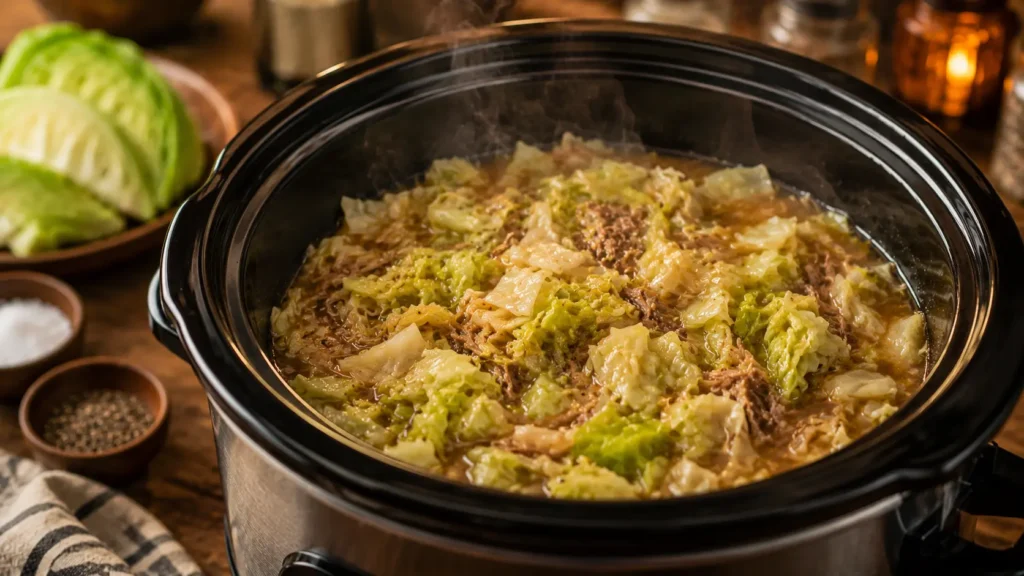
Add the cabbage directly into the pot with the reserved pork juices. Stir gently so the cabbage becomes coated with the flavorful liquid.
The cabbage doesn’t need much seasoning because it absorbs the smoky pork flavors during cooking.
Step 6 – Cook the Cabbage
Cover and cook the cabbage for approximately 20 to 30 minutes, or until it becomes tender but not mushy.
The cabbage will shrink significantly as it cooks and absorb the rich cooking juices.
This step transforms a simple vegetable into one of the most flavorful parts of the meal. The slight sweetness of the cabbage balances the richness of the pork perfectly.
Step 7 – Combine Everything Together
Return the shredded pork to the pot and gently mix it with the cooked cabbage.
Allow everything to cook together for another 5 to 10 minutes so the flavors can blend.
This final step brings the entire dish together and ensures every bite contains both tender pork and flavorful cabbage.
Step 8 – Serve and Enjoy
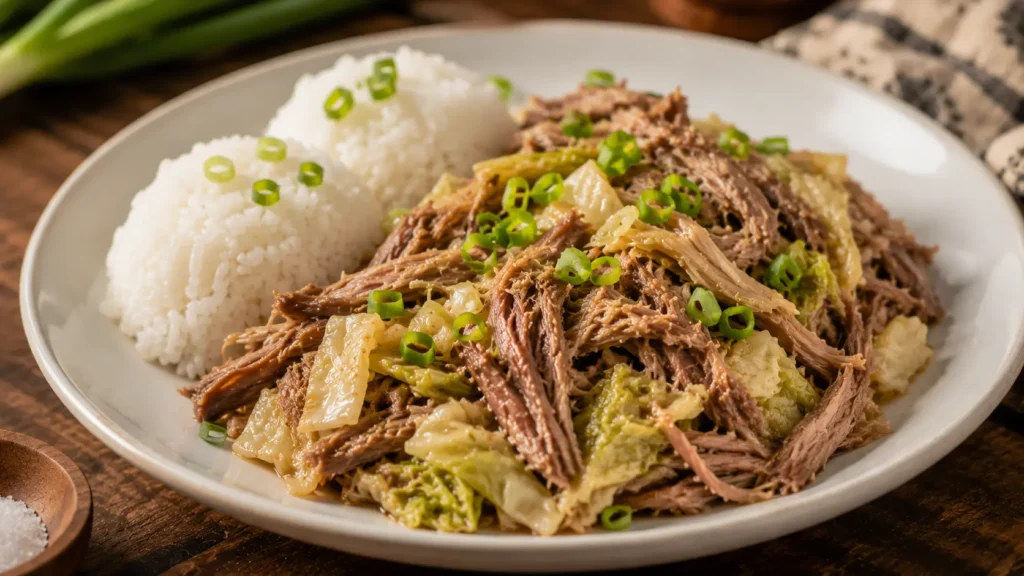
Transfer the Kalua Pork with Cabbage to a serving platter and serve immediately.
The dish is delicious on its own, but it also pairs beautifully with steamed rice or traditional Hawaiian side dishes.
A simple squeeze of fresh lemon can brighten the flavors even further.
What to Serve with Kalua Pork with Cabbage
This dish is often served as part of a larger Hawaiian-style meal.
Simple side dishes work best because they allow the pork to remain the focus.
| Side Dish | Why It Works |
|---|---|
| Steamed White Rice | Traditional pairing |
| Hawaiian Mac Salad | Creamy contrast |
| Sweet Rolls | Great for leftovers |
| Grilled Pineapple | Adds sweetness |
| Roasted Sweet Potatoes | Complements the pork |
| Fresh Fruit Salad | Light and refreshing |
These sides help create a complete island-inspired meal.
Expert Tips for the Best Results
Small details can make a big difference when preparing kalua pork.
The tips below consistently produced the best results during testing.
| Tip | Benefit |
|---|---|
| Use Pork Shoulder | Best texture |
| Cook Low and Slow | Tender meat |
| Don’t Skip Liquid Smoke | Authentic flavor |
| Save Cooking Juices | More moisture |
| Add Cabbage Later | Better texture |
These simple adjustments can dramatically improve the final dish.
Common Mistakes to Avoid
Even though the recipe is simple, a few mistakes can affect the final result.
Fortunately, they’re easy to avoid.
| Mistake | Result |
|---|---|
| Using Lean Pork | Dry meat |
| Overcooking Cabbage | Mushy texture |
| Too Much Liquid Smoke | Overpowering flavor |
| Cooking Too Fast | Tough pork |
| Discarding Juices | Less flavor |
Keeping the process simple usually produces the best results.
Storage and Reheating
One reason people love this recipe is how well it stores.
In many cases, the leftovers taste even better the next day.
| Storage Method | Time |
|---|---|
| Refrigerator | Up to 4 Days |
| Freezer | Up to 3 Months |
Reheat gently on the stovetop or in the microwave with a small amount of reserved cooking liquid.
Nutrition Information
The values below are estimates and may vary based on ingredients used.
| Nutrient | Amount |
|---|---|
| Calories | 420 |
| Protein | 32g |
| Fat | 28g |
| Carbohydrates | 8g |
| Fiber | 3g |
| Sodium | 640mg |
Frequently Asked Questions
Kalua pork uses very simple seasoning, typically Hawaiian salt and liquid smoke, while traditional pulled pork often includes barbecue rubs and sauces.
Absolutely. A slow cooker is one of the easiest and most popular ways to prepare this dish at home.
Traditional kalua pork is cooked in an underground imu. Liquid smoke helps recreate that signature smoky flavor when cooking indoors.
Green cabbage is traditional, but red cabbage can be used if preferred. Keep in mind that it will slightly change the appearance and flavor.
Yes. The pork and cabbage freeze surprisingly well and can be stored for up to three months when properly sealed.
Why This Kalua Pork with Cabbage Recipe Is Worth Making
Some recipes become popular because they’re trendy.
Others become popular because they simply work.
This Kalua Pork with Cabbage Recipe falls into the second category. The combination of tender pork, smoky flavor, and perfectly cooked cabbage creates a meal that’s comforting, satisfying, and surprisingly easy to prepare.
Whether you’re introducing your family to Hawaiian-inspired cooking or recreating a favorite dish from a trip to the islands, this recipe delivers authentic flavor with minimal effort.
Once you make it, don’t be surprised if it becomes one of those dependable recipes you return to again and again.

Kalua Pork with Cabbage Recipe
Ingredients
Equipment
Method
- Pat the pork shoulder dry with paper towels. Rub evenly with Hawaiian sea salt and drizzle the liquid smoke over the entire surface of the pork.
- Place the pork into a slow cooker or Dutch oven. Pour the water around the pork and cover tightly.
- Cook on LOW for 10–12 hours in a slow cooker or at 300°F for 5–6 hours in the oven until the pork is fork-tender.
- Remove the pork from the cooking vessel and shred it using two forks. Reserve the cooking juices.
- Add the chopped cabbage to the slow cooker or pot with some of the reserved cooking juices.
- Cover and cook for 20–30 minutes until the cabbage becomes tender but still holds its shape.
- Return the shredded pork to the pot and toss gently with the cooked cabbage.
- Cook for an additional 5–10 minutes so the flavors combine, then serve warm.
Notes
- Pork shoulder is the best cut for authentic kalua pork.
- Do not skip the liquid smoke, as it creates the signature Hawaiian flavor.
- Save the cooking juices to keep the pork moist and flavorful.
- Add the cabbage near the end of cooking to prevent it from becoming mushy.
- Leftovers taste even better the next day.