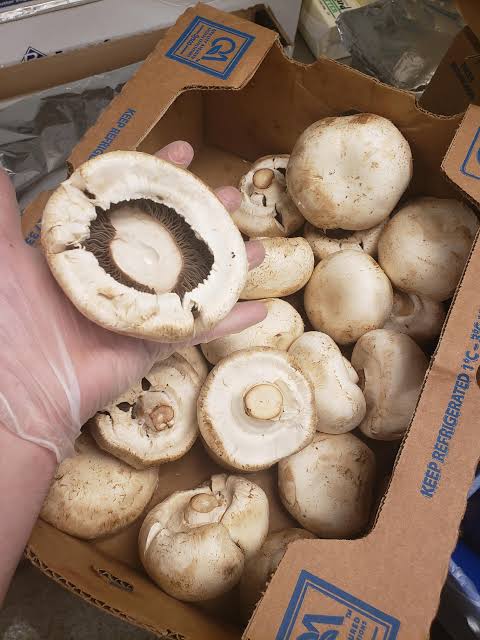

If you have wondered what are button mushrooms, they are the small, young form of the widely cultivated species Agaricus bisporus. In U.S. grocery stores they are usually white, mild in flavor, and sold whole or sliced. The same species is also marketed in brown forms and at later stages as cremini, baby bella, or portabella mushrooms.
Their mild taste, low cost, and dependable texture make them useful in breakfast dishes, soup, pizza, pasta, casseroles, gravy, stuffing, and simple skillet sides.
| Feature | Button mushroom details |
|---|---|
| Scientific name | Agaricus bisporus |
| Typical stage | Young, compact cap |
| Common colors | White; brown strains are sold as cremini or baby bella |
| Flavor | Mild, savory, slightly earthy |
| Texture | Firm when fresh; tender after cooking |
| Best methods | Sautéing, roasting, grilling on skewers, simmering, stuffing |
| Storage | Refrigerated, unwashed, and ventilated |
Button vs. cremini vs. portabella
These grocery names are more closely related than many shoppers realize. White button and brown cremini are forms of Agaricus bisporus. A portabella is the mature open-cap stage, usually from the brown strain.
| Market name | Appearance | Flavor and use |
|---|---|---|
| White button | Small white cap, often closed | Mild; works in almost any recipe |
| Cremini or baby bella | Small brown cap | Slightly deeper, earthier flavor |
| Portabella | Large mature brown cap | Firmer and stronger; suited to grilling and roasting |
Age, size, color strain, and branding can affect the label. The underlying species connection explains why these mushrooms can often substitute for one another.
What do they taste like?
Raw button mushrooms have a gentle earthy character. Cooking removes surface moisture, softens the flesh, and develops savory browned flavors. Their neutrality makes them a useful base for garlic, herbs, cheese, tomato, cream, wine, soy sauce, and many spice blends.
Thin slices cook quickly but can shrink substantially. Halves and quarters provide a meatier bite. Whole small buttons are good for roasting, skewers, and pickling-style preparations.
How to buy fresh button mushrooms
Choose mushrooms that are firm, dry, and relatively even in color. A little growing medium is normal. Avoid packages with pooled liquid, widespread wet spots, collapsed caps, fuzzy growth, or a strong unpleasant odor.
A closed veil beneath the cap is often associated with a younger mushroom, but a slightly open veil is still usable. For stuffing, buy larger caps of similar size. For quick sautéing, choose small to medium mushrooms that can be halved or quartered.
How to clean and cut them
Remove loose growing material with a brush or towel. If needed, rinse quickly under cool water and dry immediately. Do not leave them soaking.
Trim the dry stem end. The rest of a tender stem is edible and does not need to be discarded. Choose the cut based on the dish:
- Slices: omelets, pizza, pasta, and sandwiches
- Halves: quick sides and skewers
- Quarters: roasting and stews
- Whole: small roasted mushrooms or marinated appetizers
- Fine dice: sauces, fillings, meatloaf, and plant-forward ground-meat blends
Best way to sauté button mushrooms
- Heat a wide skillet over medium-high heat.
- Add enough oil to lightly coat the surface.
- Arrange dry mushrooms in a single layer.
- Leave them alone long enough for the first side to brown.
- Stir and continue cooking until released liquid evaporates.
- Add salt, pepper, garlic, butter, or herbs near the end.
An overcrowded pan traps steam. If cooking a large amount, work in batches or use the oven.
How to roast them
Heat the oven to 425°F. Toss whole small mushrooms or quarters with oil, salt, and pepper. Spread them in one layer on a rimmed sheet pan. Roast until browned and tender, stirring once. Finish with parsley and lemon juice.
Do not pour too much marinade onto the tray. Excess liquid prevents strong browning. Add watery sauces after roasting or serve them on the side.
Easy meal ideas
Garlic mushrooms on toast
Sauté quartered buttons until brown, then add garlic and a small amount of butter. Spoon over toast and finish with herbs.
Mushroom pasta
Brown sliced mushrooms, add shallot, and loosen the pan with pasta water. Toss with noodles, Parmesan, and black pepper.
Mushroom tacos
Cook chopped mushrooms with onion, cumin, smoked paprika, and chili powder. Serve with cabbage, salsa, and lime.
Soup and gravy
Brown the mushrooms before adding broth. That extra step creates a fuller flavor than putting raw slices directly into liquid.
Blended burgers or meatballs
Finely chop cooked mushrooms and combine them with ground meat or a plant-based mixture. The mushrooms add moisture and savory flavor.
Are button mushrooms eaten raw?
They are commonly served raw in salads and on vegetable trays, but cooking improves flavor and texture for many people. Clean produce carefully and follow any package directions. People with individual dietary or health restrictions should follow guidance from their qualified clinician.
How to store them
Keep button mushrooms in the refrigerator, unwashed, in a ventilated package or paper bag. Do not seal damp mushrooms in airtight plastic. Whole mushrooms generally retain quality longer than sliced ones.
Use them while firm and dry. Widespread slime, mold, leaking tissue, or a sour odor are reasons to discard the package. Slightly dry mushrooms can be cooked promptly in soup, sauce, or stuffing.
Can button mushrooms replace other varieties?
They can replace cremini in many recipes with a lighter flavor. They do not exactly reproduce the shape of oyster mushrooms, the aroma of shiitake, or the ruffled texture of maitake. When the recipe depends on a specialty mushroom’s structure, use the named type if possible.
For an economical mushroom mix, combine buttons with a smaller amount of shiitake or oyster mushrooms. The buttons add volume while the specialty variety adds character.
A one-pound meal-prep plan
A standard one-pound package can support several meals. Quarter half the mushrooms and roast them for a side dish. Finely chop one-fourth and brown it with onion for tacos, meatballs, or pasta sauce. Slice the final portion for breakfast or pizza.
Cook the chopped and quartered batches close together so the package is used while fresh. Cool extra cooked mushrooms promptly and store them in separate labeled containers. Keeping neutral seasoning on the meal-prep batch makes it easier to turn the same mushrooms into Italian, Mexican, or Asian-inspired dishes later.
Nutrition in context
Button mushrooms contribute nutrients while remaining low in calories, but preparation changes the complete meal. Butter, cream, cheese, and salty sauces can contribute far more calories or sodium than the mushrooms themselves. A balanced plate might combine browned mushrooms with whole grains, vegetables, beans, eggs, fish, or lean meat according to personal needs.
Nutrition values also vary with serving size and product. Use the package label or a dependable food database when exact numbers matter rather than copying one universal figure.
Frequently asked questions
White buttons and brown baby bellas are related market forms of Agaricus bisporus. Portabellas are the mature open-cap form, usually of the brown strain.
No. Fresh cultivated buttons normally need only brushing or a quick rinse and drying.
Yes, when tender. Trim the dry tip and cook the remaining stem with the cap.
They contain substantial water. Cooking releases that moisture and concentrates the solids.
Garlic, thyme, parsley, black pepper, butter, lemon, Parmesan, soy sauce, and paprika are dependable choices.