
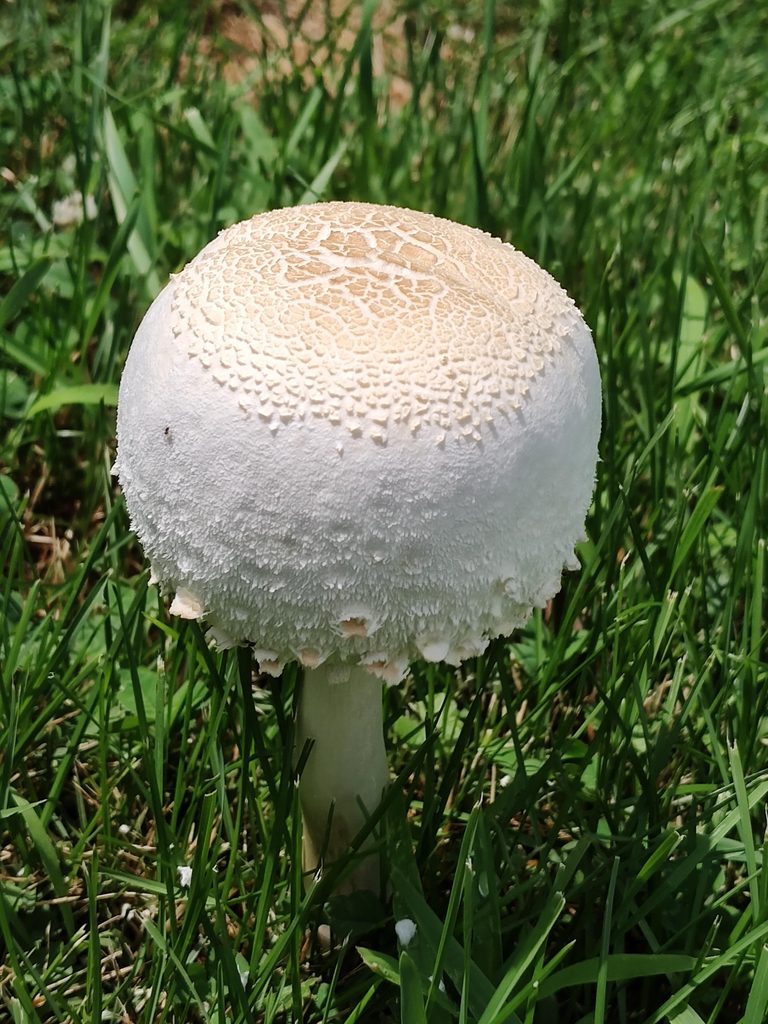
The phrase big white mushrooms can describe several completely different fungi. In an American grocery store, it usually means mature white button mushrooms or pale portabella-style caps. In a yard or forest, it may refer to a puffball, parasol-shaped species, or another wild fungus that cannot be identified safely by color and size alone.
That difference matters. Cultivated mushrooms sold as food can be prepared with ordinary produce-safety steps. A wild white mushroom needs expert identification before anyone considers eating it. This guide explains the common possibilities without treating appearance as proof of edibility.
| Mushroom people may mean | Typical appearance | Where found | Kitchen status |
|---|---|---|---|
| Mature white button | Broad pale cap with a short stem | Grocery stores | Common cultivated food |
| White portabella strain | Large open cap, sometimes with visible gills | Grocery or farmers market | Good for roasting and grilling |
| Giant puffball | Round, ball-like body without a normal cap and stem | Lawns, fields, woodland edges | Wild; expert confirmation required |
| Parasol-shaped mushroom | Tall stem and wide pale cap | Lawns or woods | Includes confusing species; do not guess |
| White shelf fungus | Fan or bracket attached to wood | Logs and trees | Identification varies by species |
Are big white mushrooms just older button mushrooms?
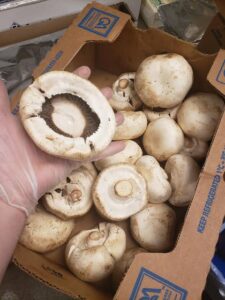
Sometimes. White button, cremini, and portabella mushrooms are color strains or maturity stages associated with Agaricus bisporus. A button is harvested young while its cap remains compact. A mature cap expands, exposes more of the gill area, and develops a stronger flavor and firmer bite.
Stores do not use one perfectly consistent name. A package may say large white, stuffing mushroom, jumbo mushroom, or white cap. Read the label instead of assuming every large pale cap is a portabella. Size can also vary with growing conditions and the farm’s grading system.
How to choose large cultivated mushrooms
Look for caps that feel firm and relatively dry. Minor surface marks are normal, but avoid packages with pooled liquid, widespread slime, fuzzy growth, or a sour odor. A partially open veil is not automatically a defect; it often indicates maturity.
For stuffing, select caps of similar diameter so they finish at the same time. For grilling, flatter caps provide more surface contact. For slicing, thick closed caps usually hold their shape well.
Useful buying questions
- Are the mushrooms cultivated and sold for food?
- Are they whole, firm, and dry rather than wet?
- Does the package have ventilation?
- Will their size fit the planned skillet, grill, or baking dish?
- Are you paying for a specialty name when ordinary large white caps would work?
How to clean big white mushrooms
Brush away loose material or wipe each cap with a lightly damp towel. A quick rinse under cool running water is fine when the mushrooms are dried immediately. Do not soak them in a bowl, because water can remain in the gills and make browning harder.
Trim only the dry end of a tender stem. If a stem is fibrous, remove it and save it for stock, soup, gravy, or a stuffing mixture. Peeling a cultivated mushroom is usually unnecessary. If the underside is open, check for trapped growing medium and remove it gently.
Best ways to cook them
Roast thick slices
Heat the oven to 425°F. Cut the caps into thick slices or quarters, toss lightly with oil, salt, and pepper, and spread them in one layer. Roast until the edges brown and released moisture evaporates, turning once if needed. Garlic, thyme, rosemary, or smoked paprika can be added near the end.
Sauté in a wide skillet
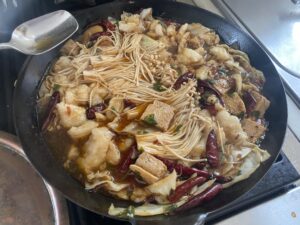
Preheat a wide pan, add a thin layer of oil, and arrange the mushrooms without piling them up. Leave them undisturbed until the first side develops color. Stir, continue cooking, and season after much of the water has cooked away. Finish with butter, herbs, lemon, or a splash of soy sauce.
Grill whole caps
Remove tough stems and brush the caps lightly with oil. Grill over medium-high heat until marked and tender, turning once. Avoid a long watery marinade. A short coating of oil, garlic, vinegar, and herbs adds flavor without making the surface soggy.
Stuff and bake
Chop the stems and cook them with onion or shallot. Cool the mixture, then combine it with breadcrumbs, Parmesan, herbs, or cream cheese. Fill the caps without packing them too tightly and bake until the tops are golden and the mushrooms are tender.
Flavor pairings that work
Large cultivated caps have a mild savory flavor that becomes deeper with browning. They pair well with garlic, onion, thyme, parsley, black pepper, Parmesan, Swiss cheese, cream, tomatoes, spinach, balsamic vinegar, soy sauce, and Worcestershire-style sauce.
For a main dish, serve roasted caps over polenta, place grilled caps in sandwiches, or slice them into pasta. For appetizers, choose evenly sized caps and add a breadcrumb-based filling. For breakfast, sauté them with eggs and potatoes.
Storage and meal prep
Keep fresh cultivated mushrooms refrigerated, unwashed, and protected from trapped moisture. A ventilated original package or a loosely folded paper bag works well. Use them while they remain firm and dry.
Cooked mushrooms should be cooled promptly and stored in a covered container. If they are part of a dish containing meat, dairy, rice, or another perishable ingredient, follow the storage limit of the complete dish.
Why wild white mushrooms are difficult to identify
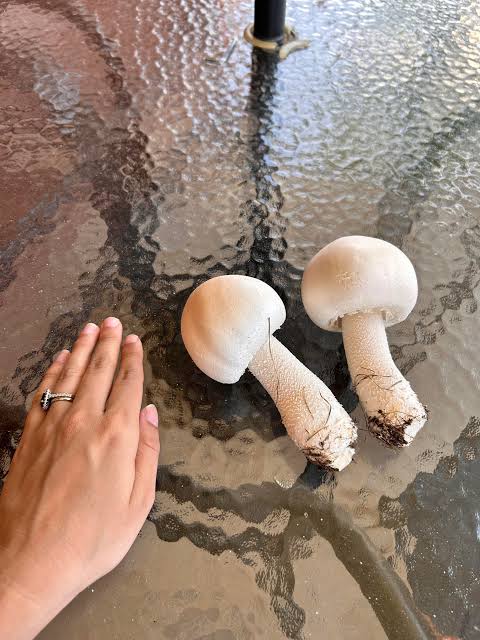
Color, cap width, and height are only starting observations. Identification may also require the cap surface, gill attachment, spore-print color, stem base, veil remnants, bruising, odor, habitat, nearby tree species, and microscopic features.
Several unrelated wild mushrooms can look like big white mushrooms at one stage of growth. A young mushroom may also look round before its cap opens, which creates confusion with puffballs. Cutting through a specimen can reveal internal structures, but this is still not a substitute for expert confirmation.
Never use a short web article, image search, or phone app as the final decision for eating a wild mushroom. Cooking does not make every dangerous species safe.
A practical kitchen plan for one large package
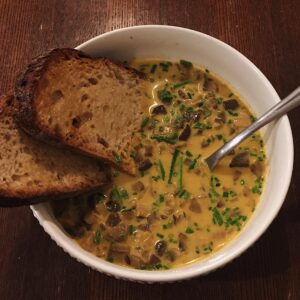
Use the largest, most even caps first for stuffing or grilling. Slice firm medium caps for a skillet dinner, and dice the stems and irregular pieces for soup or sauce. This approach matches each shape to a job and reduces waste.
If the package weighs one pound, roast half as a side dish and brown the rest with onion. Refrigerate the cooked second portion promptly for next-day eggs, pasta, or grain bowls. Season the first batch simply, then change the flavor later with salsa, pesto, gravy, or soy-ginger sauce.
Keep the pieces thick when a substantial texture matters. A large cap cut paper-thin will shrink quickly and no longer feel like a “meaty” mushroom. For sandwiches and bowls, slices around one-half inch provide a better final bite.
Frequently asked questions
They are usually mature cultivated white mushrooms selected for their broad, hollow caps. Check the package label for the specific variety.
Yes, when the stems are tender and the mushrooms are cultivated food products. Chop the stems for filling, sauce, stock, or soup.
Whole caps generally need more time than slices. Thickness and pan crowding matter more than diameter alone.
No. A giant puffball has a very different structure and is a wild fungus. Similar color does not make the two interchangeable.
As Agaricus bisporus matures, its gills darken. Normal mature gills differ from wet decay, mold, or an unpleasant odor.