
Several edible orange mushrooms are prized in North America, including chanterelles, chicken of the woods, lobster mushrooms, and some orange milkcaps. However, orange is only a color description. Jack-o’-lantern mushrooms and other confusing species can grow in similar seasons and habitats.
Safe identification depends on structure, substrate, spore features, geography, age, and expert confirmation. This guide introduces major groups but cannot identify a collected specimen.
| Group | Key structure | Typical habitat | Important caution |
|---|---|---|---|
| Chanterelles | Blunt ridges or false gills running down stem | Soil near partner trees | Confused with true-gilled orange mushrooms |
| Chicken of the woods | Layered shelves with pores underneath | Living or dead wood | Host tree, species, and age matter |
| Lobster mushroom | Hard orange-red outer surface, distorted shape | Forest floor | Parasitized host must be correctly understood |
| Saffron milkcap group | Gills and colored latex when cut | Soil with partner trees | Similar milkcaps require regional expertise |
| Orange bolete groups | Pores, not gills, under cap | Soil near trees | Species-level identification is essential |
| Jack-o’-lantern | True sharp gills, often clustered on wood | Stumps, roots, buried wood | Not edible; common chanterelle confusion |
Chanterelles
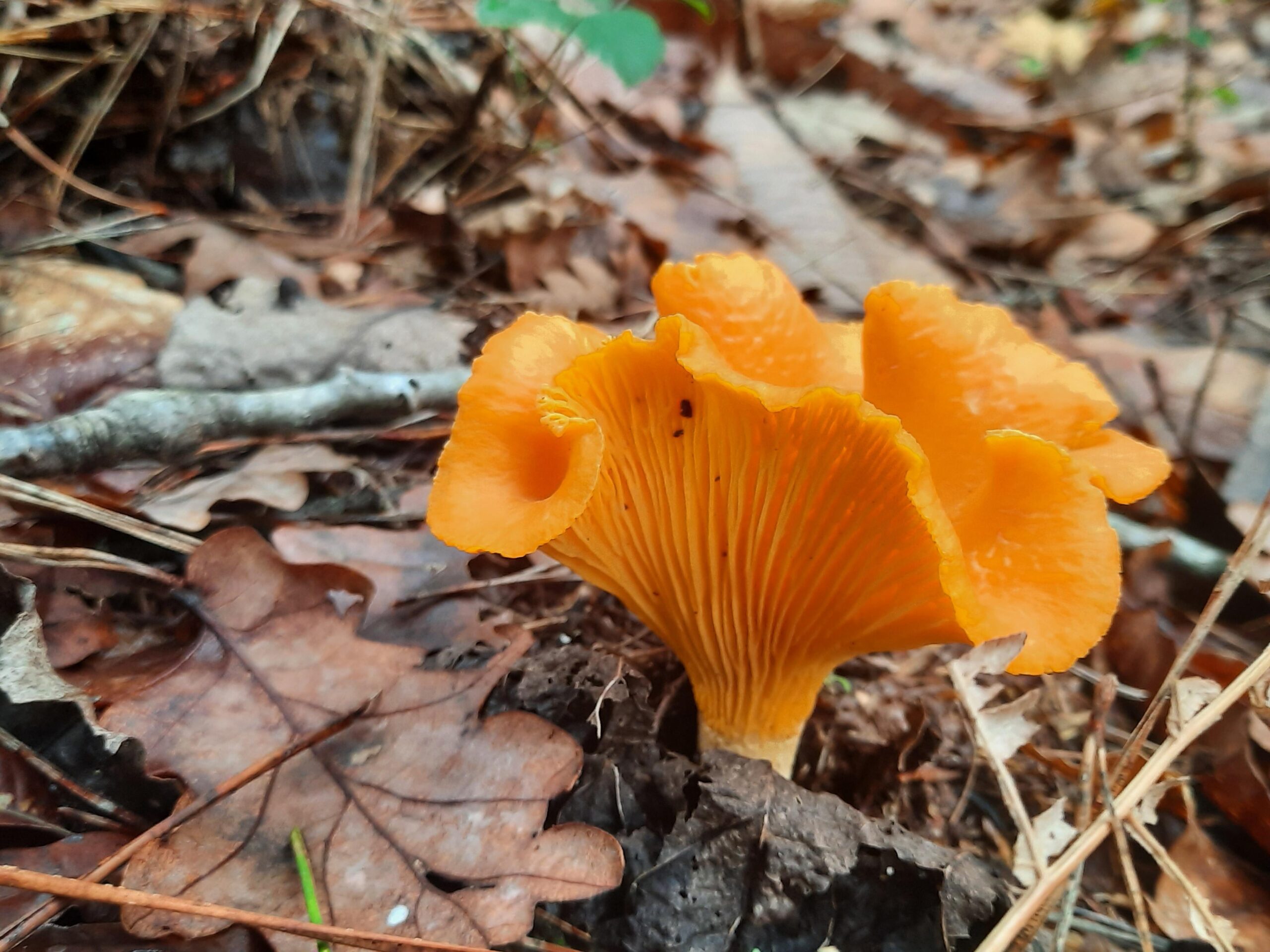
Chanterelles in Cantharellus are among the best-known orange to yellow mushrooms. Rather than thin blade-like true gills, many have blunt folds or ridges that run down the stem. The cap and stem usually form a continuous, solid body.
They grow from soil in association with living trees, not as dense bouquets directly from a stump. Color ranges from pale yellow to deep orange, and regional species differ.

Chanterelle look-alikes
Jack-o’-lantern mushrooms form clusters from wood or buried roots and have true, sharp gills. False chanterelles also have more distinctly gill-like undersides and different textures. A checklist helps, but it does not replace local confirmation.
Chicken of the woods
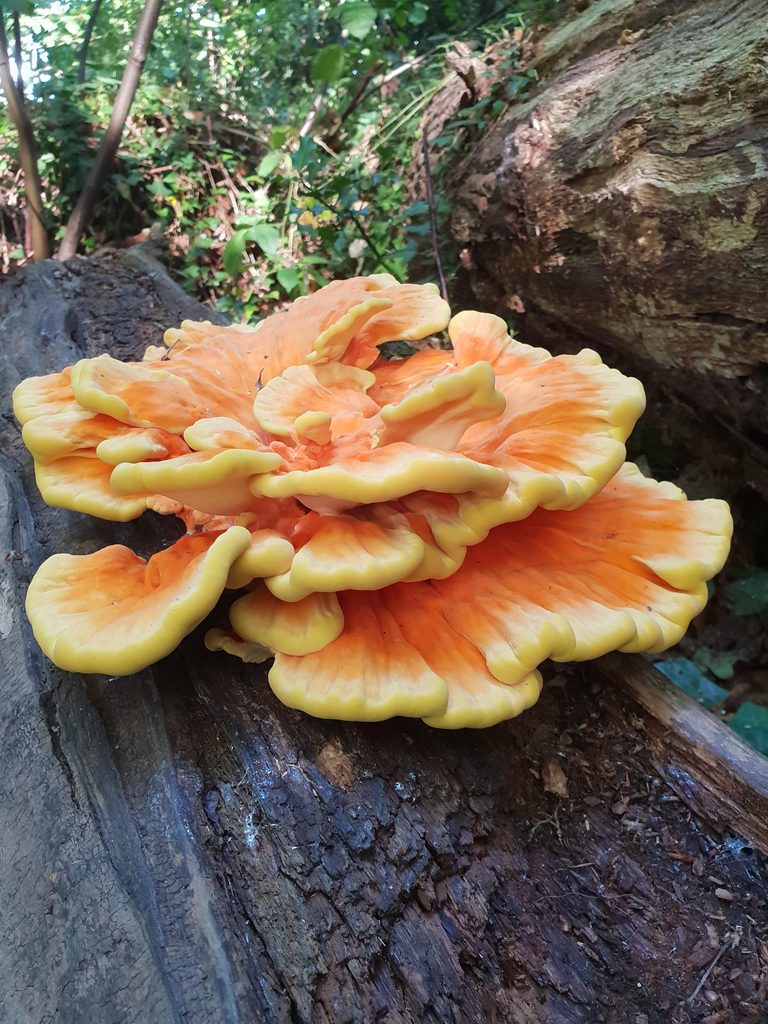
Species in the Laetiporus group form bright yellow-orange shelves. The underside has tiny pores rather than gills. Fresh margins can be tender, while older sections become chalky, tough, or insect damaged.
Identification includes the host tree, geographic range, pore color, growth form, and species complex. Some people experience adverse reactions even to correctly identified chicken of the woods, so verified specimens are cooked thoroughly and first portions are kept small.
Lobster mushrooms
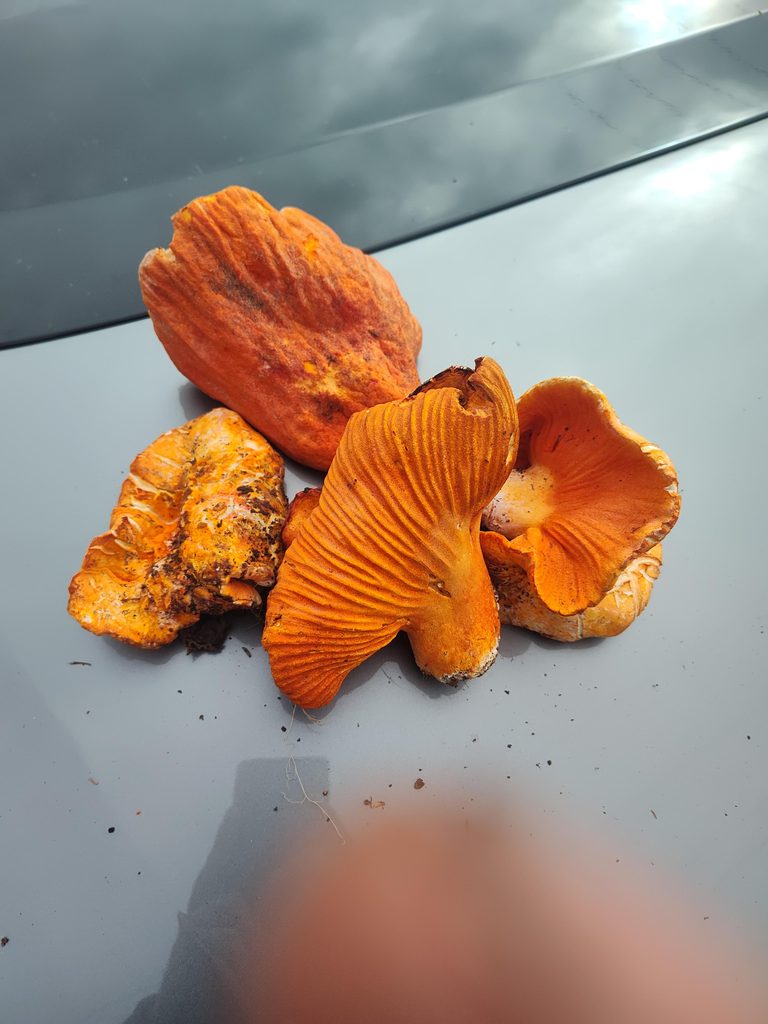
A lobster mushroom is a host mushroom transformed by the parasitic fungus Hypomyces lactifluorum. The result is usually a dense, irregular body with an orange-red outer crust and a seafood-like aroma.
Because the host’s original features are altered, beginners should learn this mushroom with a knowledgeable local forager. Old specimens can become soft, fishy, or decayed and should not be used.
Orange milkcaps
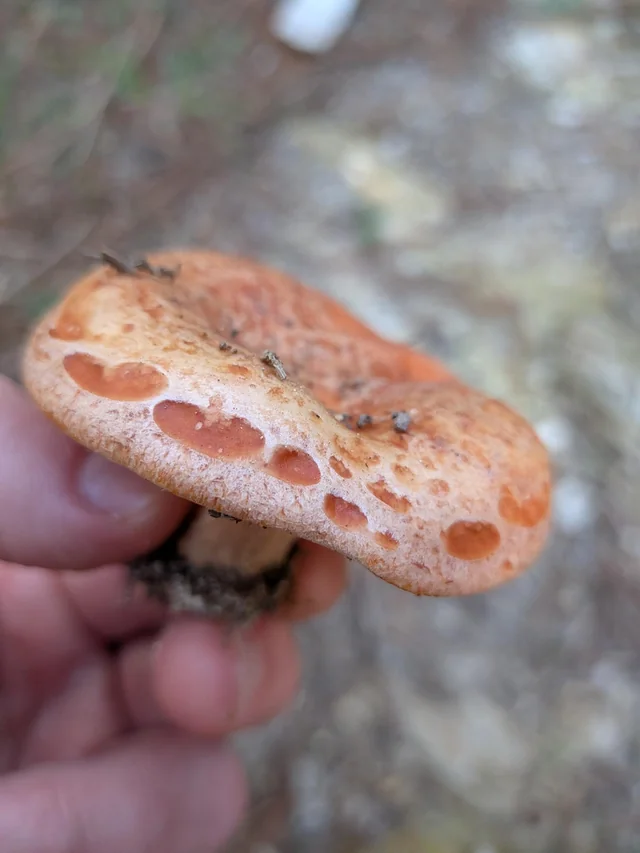
Some edible milkcaps have orange caps, gills, and latex. Cutting the gills may release colored milk, and the flesh may stain. These reactions can be important, but the group contains many species and regional differences.
Record the partner trees, latex color, staining sequence, taste only when an expert key specifically allows it, and spore features. Never use orange milk as a universal edible sign.
Orange boletes
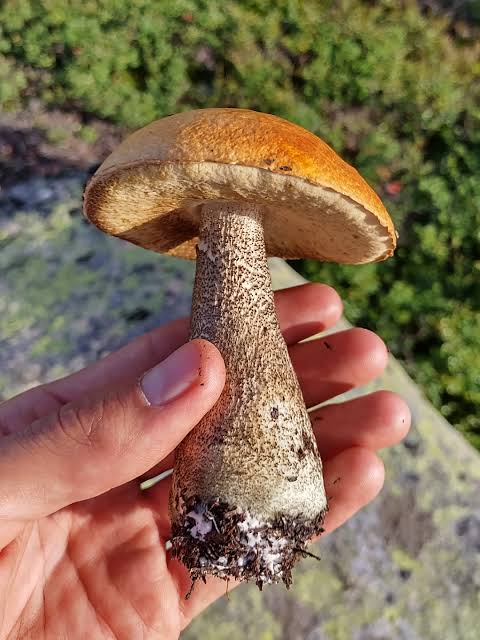
Boletes have a sponge-like layer of tubes and pores under the cap rather than gills. Some edible species have orange or red-orange caps. Identification may depend on the stem pattern, pore color, bruising, taste, host tree, and microscopic features.
Old rules such as “avoid every bolete that stains blue” are oversimplified. Some edible species bruise blue, while other boletes are bitter or problematic. Use a current regional key and expert confirmation.
Jack-o’-lantern mushrooms
Jack-o’-lanterns (Omphalotus species) are a critical orange look-alike group. They often grow in dense clusters from stumps, roots, or buried wood. The underside has true, crowded gills.
Do not rely on reported glow, because bioluminescence may be faint or invisible under ordinary conditions. Growth from wood, cluster formation, gill structure, and the entire specimen are more useful clues.
How to study edible orange mushrooms
Photograph and record:
- The complete habitat and growth pattern
- Whether it comes from soil, wood, or buried roots
- Cap top and margin
- Underside: true gills, ridges, pores, teeth, or smooth surface
- Complete stem base
- Interior flesh after a clean vertical cut
- Bruising, staining, or latex over time
- Spore-print color when relevant
- Nearby trees and geographic region
- Odor and texture
Do not combine specimens merely because they are the same color. Two orange mushrooms growing inches apart may be different species.
Cleaning and cooking confirmed edible orange mushrooms
Cleaning method depends on structure. Brush chanterelle ridges, trim chicken-of-the-woods shelf edges, and inspect lobster mushrooms for soft cavities. Use a quick rinse only when needed, then dry well.
Cook wild mushrooms thoroughly. Brown them in a wide pan so moisture evaporates. Simple butter or oil, salt, shallot, herbs, and a small amount of acid let the mushroom’s flavor remain clear.
Try only a small serving of one new species at a time. Do not serve a new wild mushroom to a group without explaining its identity and source.
Storage
Keep verified edible species separated in labeled paper bags in the refrigerator. Include the species name, date, and collection location. Cook them promptly.
Preserve only sound specimens. Follow research-based directions for drying or freezing. Drying does not make an unidentified mushroom safe and can remove visible features needed for later identification.
Orange color can change after collection
Sunlight, rain, age, bruising, and refrigeration may shift a cap from bright orange to yellow, brown, salmon, or dull tan. Some milkcaps also stain green after damage. Photograph fresh mushrooms outdoors before moving them.
Color names are subjective. One person may describe a cap as pumpkin orange while another calls it golden yellow. Pair color with structural terms such as “blunt decurrent ridges,” “round pores,” or “crowded sharp gills.” Those descriptions transfer more reliably between observers.
Beginner study exercise
Use confirmed market mushrooms to practice describing structures before studying wild collections. Turn over an oyster mushroom to see decurrent gills, examine a portabella’s true gills, and inspect the pores of a commercially sold bolete when available.
Then photograph an unknown orange mushroom without touching it. Write down substrate, growth pattern, underside, stem, and nearby trees before looking at an app. This reduces the tendency to force the specimen into the first colorful search result.
A safe purchase alternative
When a wild orange species cannot be confirmed, buy cultivated or professionally foraged mushrooms from a reputable seller. Ask for the species name and origin. Chanterelles and lobster mushrooms may appear seasonally at specialty markets, while cultivated oyster or maitake can deliver a distinctive texture year-round.
Retail availability is not a reason to copy identification from a market display to a wild specimen. Use the purchased product for cooking and the wild find for study.
Frequently asked questions
No. Orange color occurs across edible, inedible, and dangerous species.
Chanterelles usually have blunt ridges and grow from soil with trees. Jack-o’-lanterns have true gills and commonly cluster from wood or buried roots. Expert confirmation is still required.
Young shelves often are, but color fades with age, weather, and species. Structure and host are also important.
No. The underside, stem base, substrate, habitat, and other reactions are necessary.
No. Heat does not neutralize every mushroom toxin.