
Mushrooms do not all belong in the pan at the same time. A thick king oyster stem needs a different cut and cooking time than a thin enoki bundle. Maitake becomes crisp around its frilly edges, while portabella needs enough heat to cook through its broad cap.
Learning how to cook different types of mushrooms begins with texture. Dense mushrooms can be sliced thin or cooked longer. Delicate mushrooms should stay in larger pieces and need less time. Dried mushrooms must be rehydrated, while fresh mushrooms usually benefit from direct heat and enough room for moisture to escape.
| Mushroom | Best preparation | Good method | Starting cook time |
|---|---|---|---|
| White button | Halve, quarter, or slice | Sauté or roast | 6–10 minutes |
| Cremini | Quarter or thick-slice | Sauté, roast, stew | 7–12 minutes |
| Portabella | Remove stem; leave cap whole or slice | Grill or roast | 10–15 minutes |
| Shiitake | Remove tough stem; slice cap | Stir-fry or simmer | 5–8 minutes |
| Oyster | Tear into medium pieces | Sear or roast | 5–8 minutes |
| King oyster | Cut into coins or planks | Sear or grill | 8–12 minutes |
| Maitake | Break into clusters | Roast or pan-sear | 6–10 minutes |
| Enoki | Trim base; divide into bundles | Soup or hot pot | Follow package; usually a few minutes |
| Shimeji | Trim base; separate stems | Stir-fry or simmer | 5–8 minutes |
| Lion’s mane | Cut thick or tear into chunks | Press and sear | 8–12 minutes |
These are starting points for fresh mushrooms. Pan temperature, moisture, piece size, and desired browning change the exact time. Use visual cues as well as the clock.
Before cooking: clean and cut by structure
Clean cultivated mushrooms with a soft brush or a quick rinse, then dry them. Avoid washing them days in advance. A wet surface delays browning, but a small amount of water from a quick rinse is manageable when you dry the pieces.
Cut by density:
- Quarter small button and cremini mushrooms for juicy centers.
- Remove tough shiitake stems and slice only the caps.
- Tear oyster and maitake clusters to preserve their natural edges.
- Slice king oyster stems into 1/4-inch planks or coins.
- Keep portabella caps whole for grilling or cut them into thick strips.
- Trim the root block from enoki and shimeji, then separate the cluster.
- Cut lion’s mane into thick slices so it does not fall apart.
The goal is not identical shape. The goal is pieces that finish cooking at roughly the same time.
Method 1: sautéing
Sautéing is best for button, cremini, shiitake, oyster, maitake, and sliced king oyster.
- Heat a wide skillet over medium-high heat.
- Add a thin layer of oil.
- Place mushrooms in one layer, starting with the densest pieces.
- Leave the first side undisturbed long enough to brown.
- Turn or stir and continue until released liquid evaporates.
- Add butter, garlic, shallot, or herbs near the end.
- Season and finish with lemon juice or vinegar.
Do not fill the pan from edge to edge in several layers. Use two batches if necessary. Browning happens after surface water has evaporated and the mushroom makes direct contact with the hot pan.
Method 2: roasting
Roasting works well for cremini, button, portabella, oyster, maitake, and king oyster. It is also convenient for large batches.
Heat the oven to 425°F. Toss one pound of prepared mushrooms with about two tablespoons of oil, salt, and pepper. Spread them over a large sheet pan without heavy overlap. Roast for 18–25 minutes, turning once.
Delicate oyster or maitake edges may finish sooner than dense cremini quarters. Check the pan at 12–15 minutes and remove small browned pieces if needed. Add garlic during the second half of cooking to prevent burning.
Method 3: grilling
Portabella and king oyster are the easiest mushrooms to grill because their pieces are large and firm. Remove the portabella stem, brush the cap lightly with oil, and season both sides. Cut king oyster lengthwise into thick planks.
Grill over medium-high heat until marked and tender, usually several minutes per side. Small mushrooms need skewers or a grill basket. Do not use very thin slices because they dry out quickly and can fall through the grate.
Marinades add flavor, but long soaking can make mushrooms wet and salty. A short coating before grilling is enough.
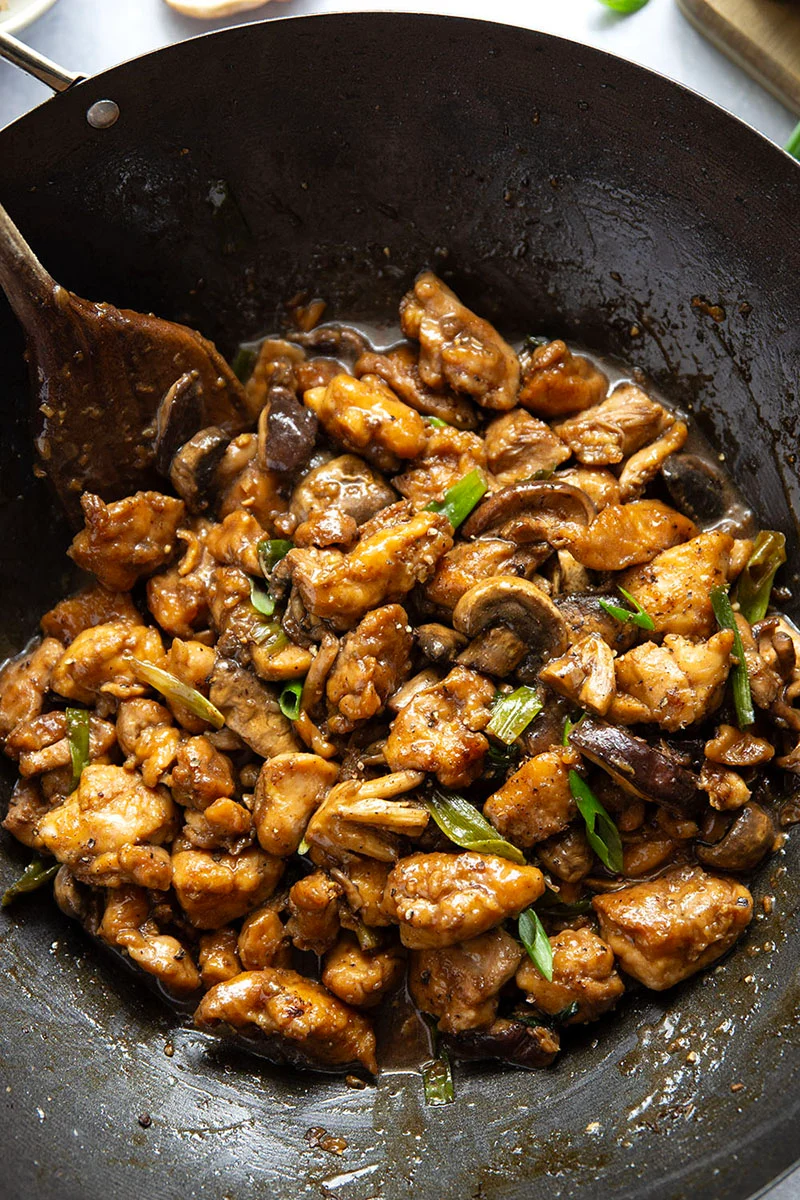
Method 4: stir-frying
Shiitake, shimeji, oyster, king oyster, and cremini work well in stir-fries. Prepare the sauce before heating the wok because the cooking stage moves quickly.
Cook mushrooms in hot oil before adding a large amount of sauce. Start with king oyster or thick cremini, then add shiitake and shimeji. Delicate oyster pieces can go in later. Once the surfaces have color, add aromatics and sauce.
If vegetables are part of the dish, cook them according to density. Carrots and broccoli stems need more time than snow peas or scallions. A crowded wok steams food, so cook in rounds when needed.
Method 5: soup and hot pot
Shiitake, enoki, shimeji, oyster, and wood ear are common choices for broth. Shiitake and thick king oyster pieces can enter early because they hold their shape and add flavor. Enoki and thin maitake pieces should go in later.
Keep the broth at a steady simmer and add food in small batches. Follow package directions for varieties such as enoki. Use separate utensils for raw ingredients and cooked food when meat or seafood is on the table.
For a clear soup, avoid heavily browning every mushroom. For a richer Western-style soup, brown cremini or button mushrooms before adding stock.
How to cook a mixed batch
When several varieties share one pan, sort them into three groups:
- Dense: King oyster, portabella, cremini
- Medium: Shiitake, shimeji, button
- Delicate: Oyster, maitake, enoki
Add dense pieces first. Once they begin to soften and color, add medium pieces. Delicate mushrooms go in last. This staged approach is the most useful lesson in how to cook different types of mushrooms without making some pieces tough and others limp.
You can also cook each variety separately and combine them at the end. This takes more time but gives the best control when making a restaurant-style mushroom plate.
Frequently asked questions
A quick rinse is fine when followed by thorough drying. Do not soak ordinary cultivated mushrooms or wash them long before use.
For beginners, season after the first browning stage. This makes released moisture easier to manage and helps prevent accidental oversalting.
Cremini, white button, portabella, and cultivated oyster mushrooms are widely available and work with simple methods.
Sautéing in a wide, hot skillet gives the most control. Roasting is convenient when cooking a larger batch.