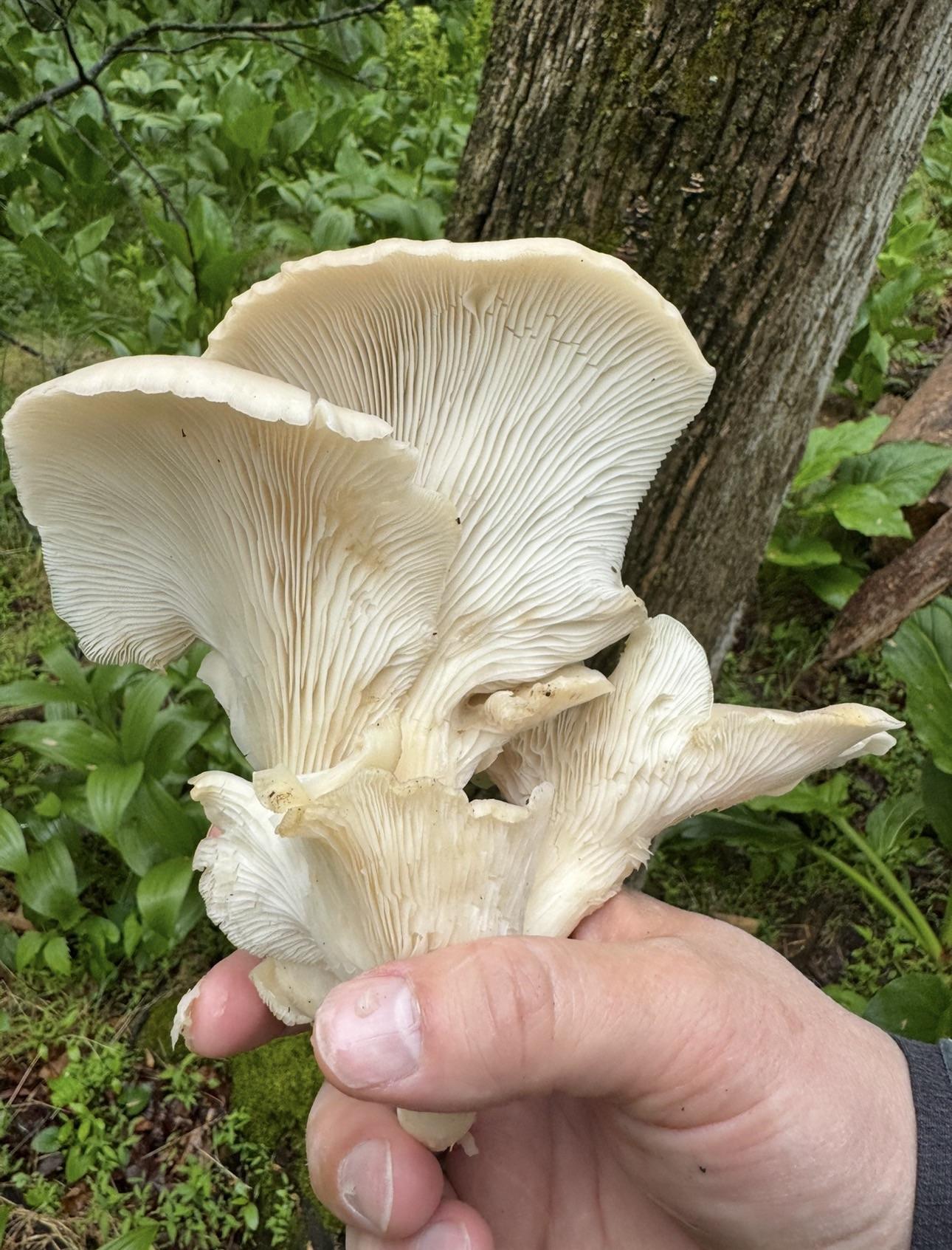

The phrase oyster mushroom Pleurotus refers to a genus of wood-growing mushrooms with fan- or oyster-shaped caps and gills that often run down toward a short side stem. Pleurotus ostreatus is the classic oyster mushroom, but grocery stores and farms also sell related species and cultivated forms in gray, white, tan, pink, yellow, and blue-gray colors.
University of Florida IFAS notes that all known Pleurotus species are edible, but wild identification still requires care because shape and color vary and unrelated look-alikes exist.
Oyster mushroom Pleurotus overview
| Common market name | Scientific group | Typical color | Useful kitchen trait |
|---|---|---|---|
| Pearl oyster | Pleurotus ostreatus complex | Gray, tan, or pale | Tender cap, mild savory flavor |
| Phoenix or lung oyster | Pleurotus pulmonarius | White to pale tan | Often fruits in warmer conditions |
| Blue oyster | Cultivated Pleurotus strains/species | Blue-gray when young | Color fades with maturity and heat |
| Pink oyster | Pleurotus djamor group | Pink to salmon | Delicate; best cooked promptly |
| Golden oyster | Pleurotus citrinopileatus | Bright yellow | Fragile caps, mild nutty taste |
| King oyster | Pleurotus eryngii | Tan cap, thick central stem | Dense stem suited to slicing and searing |
Names on commercial packages may simplify species or strain information. Read the label and ask the grower when exact identity matters.
Typical oyster mushroom Pleurotus structure
Most familiar oysters form overlapping shelves on wood. Caps are smooth and fan-shaped, with a side attachment or short off-center stem. Gills are close and extend down toward the attachment. The spore print is generally white to pale lilac-gray, depending on species and conditions.
King oysters look different because cultivation produces a thick upright stem and smaller cap. This demonstrates why one “oyster shape” cannot describe the entire genus.
Where Pleurotus grows
Oyster mushrooms are decomposers or weak pathogens of hardwood. Wild fruiting bodies appear on logs, stumps, branches, and stressed trees. Cultivators grow them on pasteurized straw, supplemented sawdust, agricultural byproducts, or prepared blocks.
A cluster that appears to grow from soil may be attached to buried wood. Photograph the substrate and full attachment point before collecting a wild specimen.
Wild look-alikes
Angel wings and several white shelf-like fungi can resemble pale oysters. Other gilled wood mushrooms may also form clusters. Identification can depend on cap texture, stem, gill pattern, spore print, host wood, geography, season, and microscopic features.
Do not use an app photo as the final food decision. The UF/IFAS guide specifically cautions that morphology varies among individuals and should not be used alone.
How to buy oyster mushrooms
Choose clusters with dry, flexible caps and clean edges. A light natural aroma is normal. Avoid packages with pooled liquid, widespread slime, mold, or a sour smell.
Blue, pink, and golden oysters can fade after harvest. Color loss does not automatically mean spoilage, but texture and odor still need inspection. Pink oysters are especially delicate and should be cooked soon.
Cleaning and trimming oyster mushroom Pleurotus clusters
Cut away the tough shared base. Separate large clusters into pieces and brush away substrate. Use a quick rinse only when necessary, then dry immediately.
For pearl, blue, pink, and golden oysters, tear along the natural grain rather than chopping every cap. King oyster stems are the prized part and can be sliced into rounds, planks, or cubes.
Best cooking methods
High-heat sauté
Heat a wide skillet and add a thin layer of oil. Place torn clusters in one layer and leave them until browned. Turn once, then add butter, garlic, herbs, salt, and pepper near the end.
Roasting
Toss medium clusters lightly with oil and roast at 425°F. Ruffled edges become crisp. Remove small pieces before they dry out.
Grilling
Use large clusters or thick king oyster planks. Brush lightly with oil and grill over medium-high heat. Avoid a long watery marinade.
King oyster “scallops”
Cut thick stems into rounds and score the flat sides shallowly. Sear until deeply brown, then finish with garlic, lemon, and herbs. The name describes presentation, not seafood content.
Flavor pairings
Oyster mushrooms match garlic, shallot, thyme, parsley, ginger, scallions, soy sauce, miso, lemon, vinegar, Parmesan, cream, smoked paprika, and chile.
Pink oysters can develop a bacon-like aroma when browned, while king oysters offer a dense neutral texture. Golden oysters are delicate and work well in quick sautés or egg dishes.
Storage
Keep oysters refrigerated in a breathable paper bag or a rigid paper-lined container that prevents crushing. Do not wash before storage. Use delicate colored varieties early.
Cooked oysters should be cooled promptly and kept in a covered container. Reheat in a skillet or oven for a better texture than steaming them in a microwave.
Growing kits
Home kits commonly contain an inoculated block that fruits when humidity, fresh air, temperature, and light meet the supplier’s instructions. Cut only where directed, mist as instructed, and allow air exchange.
Long stems and tiny caps can indicate excessive carbon dioxide or poor fresh-air exchange. Dry cracked caps may indicate inadequate humidity. Follow the specific kit rather than a universal schedule.
Oyster mushrooms and trees
Finding oysters on a dead log is a normal decomposition event. Fruiting from a living landscape tree can be associated with dead or weakened wood. If the tree is large and could hit people or property, a qualified arborist should assess it.
Removing the mushroom cluster does not remove the fungal network inside the wood.
How Pleurotus differs from a typical button mushroom
Button mushrooms grow from compost and have a central stem with gills that remain free from it. Most clustered Pleurotus grows from wood, has a side attachment, and develops gills that run toward the stem or base.
The textures also behave differently. A button can be quartered into a solid bite, while an oyster tears into layered strips with delicate edges. Substituting one for the other works in soup and pasta, but the final shape will differ.
A one-cluster meal plan
Use broad caps for searing, thin edges for a quick stir-fry, and the tender upper stems for soup. Trim the hard shared base and save any clean flavorful trimmings for stock.
For two meals, cook the entire cluster while fresh. Serve half as a side dish and refrigerate the other half promptly for eggs, noodles, tacos, or toast. Neutral garlic-herb seasoning keeps the second portion flexible.
Cultivated color does not stay fixed
Blue, pink, and yellow forms look most vivid when young. Light exposure, temperature, maturity, and cooking change the pigment. A pink oyster may turn tan after heat, while a blue oyster often becomes gray.
Color fading is expected, but a sour odor, wet collapse, slime, or mold is not. Judge freshness through texture, smell, and storage history rather than expecting the retail color to remain permanent.
Sustainability and substrate questions
Oyster growers can use straw and agricultural byproducts as substrates. Ask a local grower what the mushrooms were produced on and how soon they were harvested. That information may be more useful for freshness than cap color alone.
Frequently asked questions
It is the genus. Individual species include Pleurotus ostreatus, P. pulmonarius, P. eryngii, and others.
Yes, but the shared base of clustered oysters may be tough. King oyster stems are especially valued.
Blue color often fades as caps mature and during cooking. Texture, aroma, and storage condition are better spoilage checks.
Yes, they grow from wood. Cultivated oysters are also produced on prepared straw or sawdust-based substrates.
No. Many unrelated fungi form shelves. Wild specimens require complete identification.