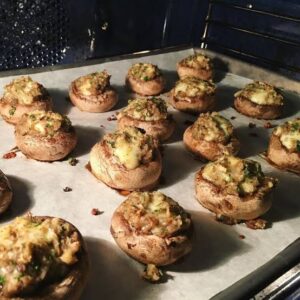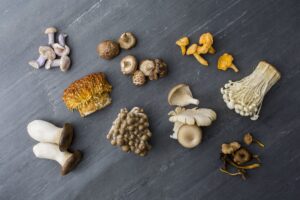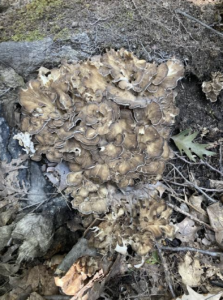
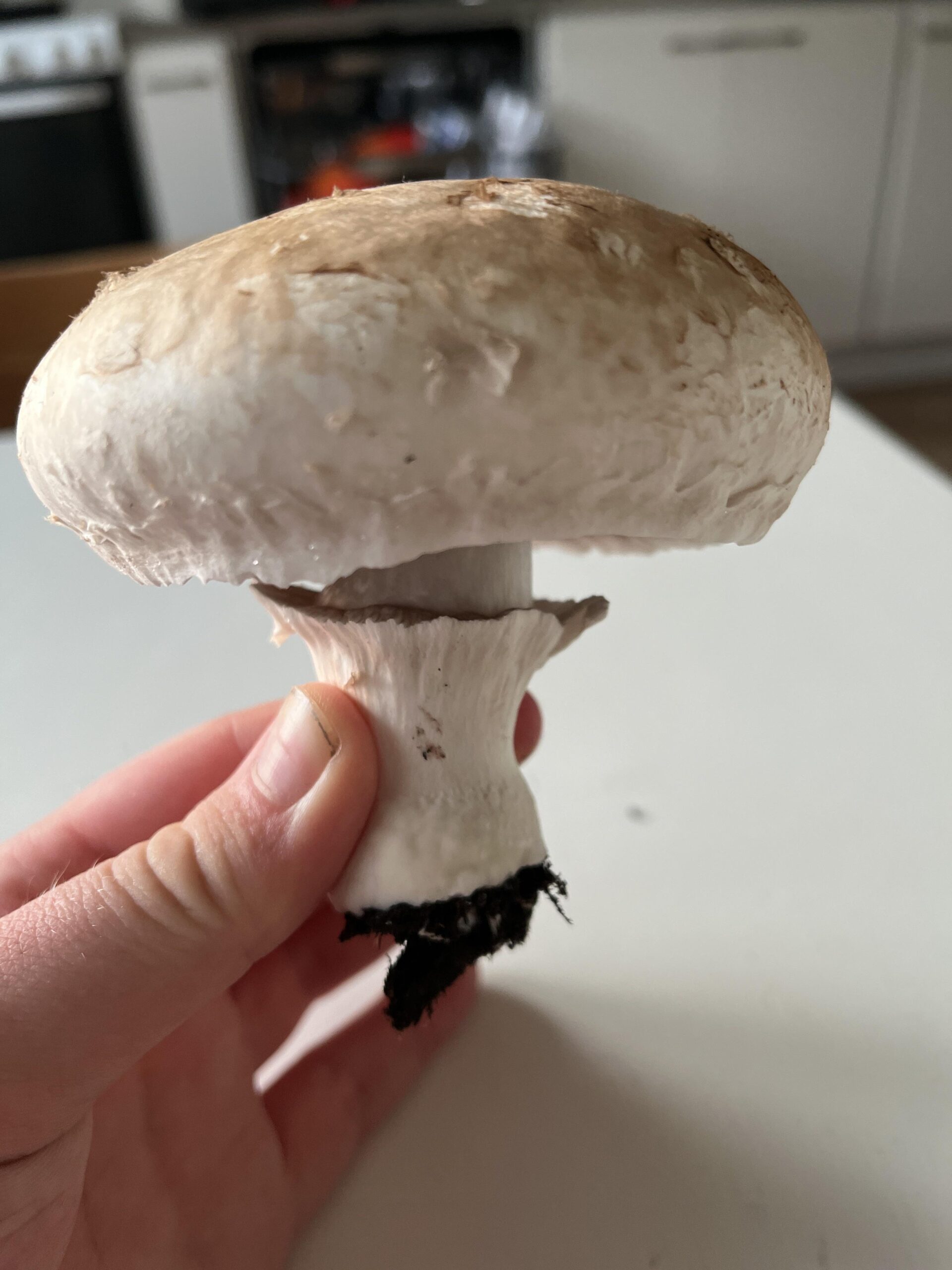

There is no single scientific name of a mushroom because “mushroom” is a general word for the visible fruiting body made by many fungi. Each species has its own scientific name. The common white button mushroom is Agaricus bisporus, the oyster mushroom is commonly represented by Pleurotus ostreatus, and hen of the woods is Grifola frondosa.
Scientific names help people distinguish organisms that share a common name or have different names in different regions. They also connect a mushroom to research, field guides, databases, and close relatives.
Common mushrooms and scientific names
| Common name | Scientific name | Helpful note |
|---|---|---|
| White button, cremini, portabella | Agaricus bisporus | Different colors or maturity stages of a major cultivated species |
| Oyster mushroom | Pleurotus ostreatus | One of several species sold under the oyster name |
| Shiitake | Lentinula edodes | Cultivated wood-growing mushroom |
| Hen of the woods, maitake | Grifola frondosa | Clustered polypore, often near oak bases |
| Lion’s mane | Hericium erinaceus | Tooth fungus with hanging spines |
| Morel | Morchella species | A genus containing multiple species |
| Chanterelle | Cantharellus species | Common name covers a group, not one universal species |
| Wood blewit | Lepista nuda | Also placed as Collybia nuda in some modern treatments |
Taxonomy changes as researchers compare anatomy, ecology, and DNA. That is why a current source may use a different genus from an older field guide.
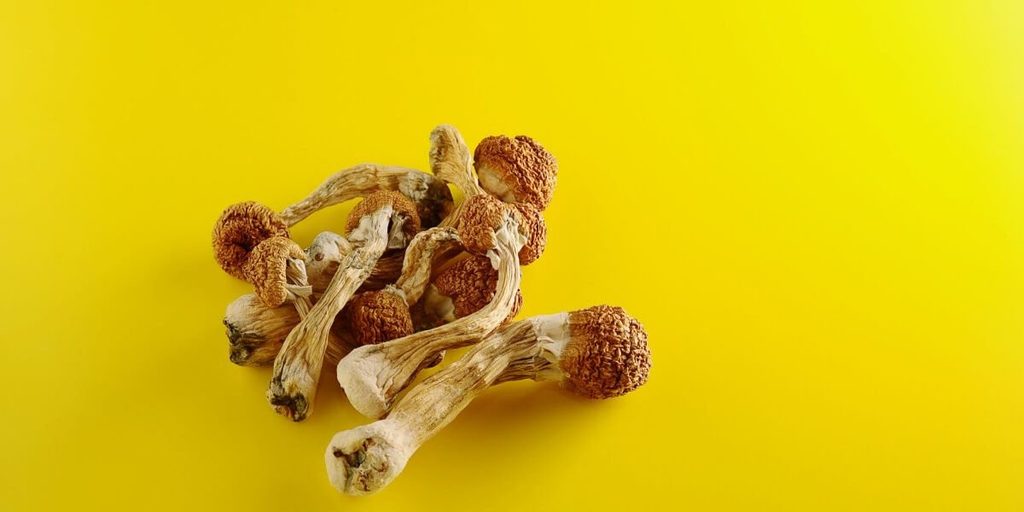
The two-part naming system
Most species names use binomial nomenclature: a genus followed by a specific epithet. In Agaricus bisporus, Agaricus is the genus and bisporus is the specific epithet. Together they form the species name.
The genus begins with a capital letter. The specific epithet begins with a lowercase letter. Both words are italicized when typed: Agaricus bisporus. In handwriting, the two words are traditionally underlined separately.
After the full name appears once, the genus may be abbreviated when the meaning is clear: A. bisporus. Do not capitalize the second word or use the specific epithet by itself as though it were a complete species name.
What “sp.” and “spp.” mean
Field notes and scientific writing often use shortened labels:
- sp. means one unidentified or unspecified species within a genus. Morchella sp. refers to one morel species that has not been named in that context.
- spp. means multiple species within the genus. Morchella spp. refers to several morel species.
- cf. indicates that a specimen resembles a named species but the identification needs confirmation.
- aff. suggests affinity with a named species while acknowledging meaningful differences.
These labels are useful because a confident genus-level identification is not the same as a confirmed species.
Why common names create confusion
Common names are easy to remember but are not standardized everywhere. “Sheep’s head” can mean maitake in parts of the United States, while similar regional names may refer to something else. “Tree mushroom” could describe oyster mushrooms, wood ear, shelf fungi, or simply any fruiting body attached to wood.
One common name may cover a group of species. The word “chanterelle,” for example, does not identify one species worldwide. Conversely, one species may have several common names. Agaricus bisporus is sold as button, white mushroom, cremini, baby bella, and portabella depending on color, maturity, and marketing.
Using the scientific name narrows the intended organism, but even that name should be checked against a current taxonomic authority.
How fungi fit into classification
A simplified hierarchy moves from broad groups to a species:
- Kingdom
- Phylum
- Class
- Order
- Family
- Genus
- Species
The button mushroom belongs to Kingdom Fungi, phylum Basidiomycota, order Agaricales, family Agaricaceae, genus Agaricus, and species Agaricus bisporus. Not every mushroom has gills or belongs to Agaricales. Morels are ascomycetes, while many brackets, corals, puffballs, and tooth fungi occupy other branches of the fungal tree.
Is a mushroom the whole organism?
Usually not. The mushroom that appears above soil or wood is a reproductive structure. Much of the organism exists as mycelium: fine fungal threads growing through a substrate such as soil, wood, compost, or leaf litter.
This is similar to seeing fruit without seeing the whole plant, although fungi are not plants. A scientific name identifies the fungal species, not just the temporary visible structure.
Why names change
A species may move to a new genus when new evidence shows that the old grouping did not reflect evolutionary relationships. DNA sequencing has led to many revisions. Researchers also examine type specimens, original descriptions, naming priority, and formal nomenclature rules.
Older names often remain searchable as synonyms. A database record may list an accepted name and several historical combinations. When preparing educational or SEO content, include the currently accepted name and mention a widely used synonym only when it helps the reader.
How to verify a mushroom’s scientific name
Start with a reputable taxonomy database, museum, university, government field guide, or peer-reviewed source. Search the common name, then confirm the accepted species name, synonyms, geographic range, and date of the record.
Do not rely on a retailer label for wild identification. Commercial labels may use broad culinary names, and a single market category can include several related species. A photograph also cannot show every diagnostic feature.
For a collected wild specimen, experts may evaluate:
- Cap and stem structure
- Gills, pores, teeth, or a smooth fertile surface
- Spore-print color
- Veils, rings, and the complete stem base
- Odor, texture, bruising, and latex
- Substrate and nearby trees
- Microscopic features or DNA
How to use scientific names in content
Introduce the common name first for readability, followed by the scientific name in parentheses: “white button mushroom (Agaricus bisporus).” Continue with the common name unless the distinction among species is important.
Italicize genus and species, but do not italicize higher ranks such as Agaricaceae or Basidiomycota. Common names are usually lowercase unless they contain a proper noun.
How to read a name followed by an author
Scientific publications sometimes place an abbreviated author name after the species, such as a botanist or mycologist who formally described or recombined it. Parentheses can show that the species was originally described in a different genus before another author moved it.
Ordinary recipe and consumer content rarely needs the author citation. The two-part name is clearer for general readers. Academic work, formal species checklists, and taxonomic databases may require the complete authority.
Also check whether a database marks the record as accepted, synonym, provisional, or unresolved. Copying the longest-looking Latin label does not guarantee it is the currently preferred name.
Quick formatting checklist
- Capitalize only the genus.
- Italicize genus and specific epithet.
- Spell out the genus on first use.
- Use “sp.” for one unspecified species and “spp.” for several.
- Verify accepted status and date in a current authority.
Frequently asked questions
If “common mushroom” means the cultivated white button mushroom, the name is Agaricus bisporus.
Fungi is the kingdom that includes mushrooms, molds, yeasts, and many other organisms. It is not a species name.
One may be an older synonym, or different taxonomic authorities may be handling new evidence differently. Check the date and accepted-name status.
They are generally marketed forms of Agaricus bisporus, harvested at different stages or from different color strains.
Only after the specimen itself has been identified correctly. Reading a species description does not confirm that an unknown mushroom belongs to that species.